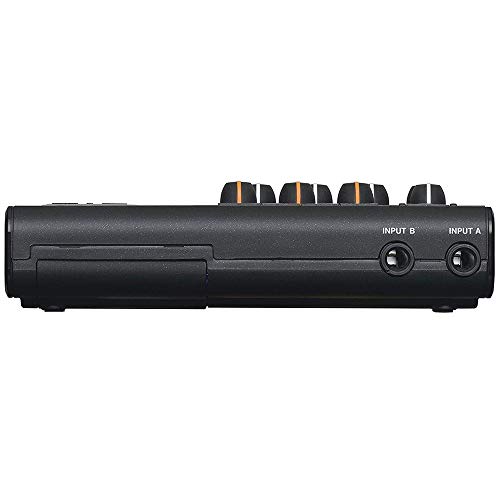
Determine Your Primary Use Case
The first step in selecting a portable recorder is defining your workflow. If you are a field reporter, you need a device with excellent built-in microphones and high-quality preamps to handle unpredictable ambient noise. If you are a musician looking to capture live performances, you should prioritize multi-track capabilities and XLR inputs, which allow you to connect external microphones and instruments independently. Podcasters, on the other hand, often benefit from devices that offer simplified interfaces and perhaps even integrated loopback functions for recording computer audio. Identifying whether you are a 'capturer' (recording what is already there) or a 'creator' (plugging in gear to build a track) will narrow your search significantly.
Portable recorders generally fall into two camps: those with integrated microphones and those designed as digital audio workstations (DAWs) for external gear. Integrated microphones are convenient for quick snapshots or ambient recording, but you must check the polar patterns. XY configurations are excellent for stereo imaging, while mid-side (MS) setups offer more flexibility in post-production. If you plan on using professional microphones, the number and type of inputs are critical. Look for balanced XLR inputs with phantom power (+48V) support. This ensures you can power condenser microphones without needing an external battery pack. A device with four or more inputs allows for much more complex layering than a standard two-input model.
Preamp Quality and Dynamic Range
The most overlooked aspect of portable recorders is the quality of the internal preamps. A recorder might have many inputs, but if the preamps are noisy, your recordings will suffer from a constant 'hiss'—especially when recording quiet sources like a delicate acoustic guitar or a whispered podcast. Look for devices that boast a high signal-to-noise ratio and low equivalent input noise (EIN). Furthermore, consider the bit depth and sample rate. While 16-bit is the standard for basic audio, 24-bit recording is the professional baseline, providing much more headroom and preventing digital clipping during loud peaks. For those working in high-fidelity environments, 32-bit float recording is a revolutionary feature that virtually eliminates the risk of clipping, allowing you to recover audio that was previously too loud or too quiet.
Connectivity and Data Management
A portable recorder is only as good as its ability to move data into your editing software. Check for USB connectivity that allows the device to function as an audio interface. This lets you use the recorder's high-quality preamps to record directly into your laptop. Additionally, consider storage reliability. While many devices use SD cards, ensure the device supports high-capacity cards and has a robust file management system. If you are recording long-form content, battery life and the ability to use external power banks are essential considerations to avoid losing a session mid-take.
Portability vs. Functionality
Finally, weigh the trade-off between features and form factor. A device with a large touchscreen and dozens of knobs offers tactile control that is invaluable in a studio setting, but it may be cumbersome to use in a handheld field recording scenario. If your work involves hiking or moving through tight spaces, prioritize weight and ergonomics. If your 'portable' studio is actually a mobile van or a hotel room, you can afford a slightly larger footprint in exchange for more physical controls and better visual feedback via a larger display.