Understanding Clay Composition and Use Cases
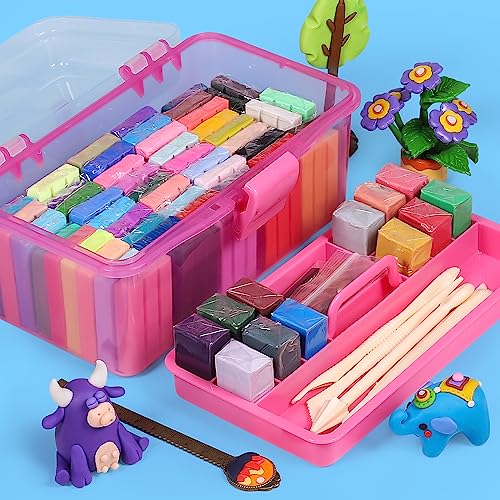
The first decision you must make is determining the intended final state of your piece. The ifergoo collection typically differentiates between air-dry clays and traditional kiln-fired clays. Air-dry clays are the gold standard for beginners, children, and mixed-media artists because they do not require the high-temperature environment of a ceramic kiln. These are ideal for decorative items, jewelry, and small figurines. However, if you intend to create functional items like coffee mugs or ramen bowls that hold liquid, you must look for clays designed for high-temperature firing. Always verify if the clay is intended for stoneware, earthenware, or porcelain-style finishes, as each has a different level of plasticity and vitrification.
Plasticity and Workability
Plasticity refers to how easily the clay can be manipulated without cracking or breaking. When selecting a clay, consider your technique. If you are practicing coil building or slab construction, you need a clay with high plasticity—one that stays moist and pliable as you work. If a clay is too 'short' (meaning it lacks plasticity), it will crumble as you attempt to bend it. Conversely, for fine detail work or carving, a clay with a slightly more stable, less 'mushy' consistency might be preferable to prevent your delicate shapes from collapsing under their own weight.
Texture and Grit: The Role of Grogs
One of the most overlooked aspects of choosing pottery clay is the texture. Some clays are incredibly smooth, making them perfect for fine porcelain-like finishes and intricate surface detailing. Other clays contain 'grog'—pre-fired, crushed clay particles that give the body a gritty, sandy texture. Grog is not a defect. It is a functional additive. Grog provides structural integrity, helping larger sculptural pieces stand upright without sagging, and it significantly reduces shrinkage and warping during the drying and firing stages. If you are building large, heavy sculptures, prioritize a clay with a moderate grit. If you are making delicate ornaments, stick to the smooth-body options.
Shrinkage Rates and Dimensional Accuracy
Every clay body shrinks as it loses moisture during the drying process and again during the firing process. This is a critical factor if you are making pieces that must fit together, such as a lid for a jar or a handle for a mug. Before committing to a specific type of clay, check the estimated shrinkage percentage. High-shrinkage clays are beautiful but require much more planning regarding the initial size of your work. A professional-grade clay will have consistent shrinkage rates, allowing you to predict the final dimensions of your masterpiece with reasonable accuracy.
Decision Logic for Your Purchase
To make the right choice, follow this logic: Start with your equipment. No kiln? Stick to air-dry. Next, consider your technique. Hand-building and heavy sculpture? Choose a gritty, grog-heavy clay. Fine detailing and small trinkets? Choose a smooth, high-plasticity clay. Finally, consider your end goal. Is it purely decorative or functional? This will dictate whether you need a clay body capable of being glazed and made food-safe through high-heat vitrification.