#TOP1

Understanding the complexities of poverty requires more than just a cursory glance at statistics. It demands a deep dive into the systemic, psychological, and economic forces that trap individuals and communities in cycles of deprivation. When searching for books on the economics of poverty, you aren't just looking for data—you are looking for a lens through which to view human struggle and societal structure. Whether you are a student of macroeconomics, a social worker, or a concerned citizen, the literature in this category ranges from dense academic treatises to visceral, narrative-driven accounts of lived experience. Choosing the right book means deciding whether you want to understand the 'why' of policy failure or the 'how' of individual survival.
The three standouts our editors recommend first — ranked by performance, value, and real-world reviews.


When Helping Hurts: How to Alleviate Poverty Without Hurting the Poor . . . and Yourself
| SELLER | SELLER SCORE | AMAZON FULFILLED | PRIME | FREE SHIPPING |
|---|---|---|---|---|
| Amazon.com | 9.68 | Yes | Yes | Yes |
You are sitting in a community planning meeting, heart full of intentions to help, but suddenly realize your proposed solution might actually dismantle the local economy you aim to support. This is the exact tension Moody Publishers addresses in When Helping Hurts. It is a sobering, essential read for anyone involved in nonprofit work, missionary journeys, or local community outreach. Instead of offering easy platitudes, the book dives into the complex mechanics of poverty and the unintended consequences of well-meaning aid. This specific copy is a used book in good condition, making it an incredibly accessible resource for students or organizers on a budget. It forces you to pause and rethink your entire approach to service before you do more harm than good.

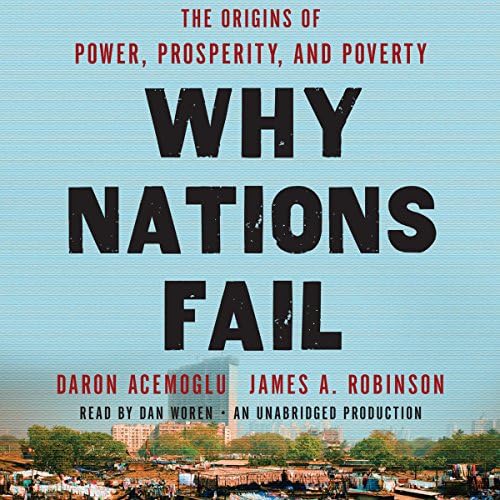
Why Nations Fail: The Origins of Power, Prosperity, and Poverty
| SELLER | SELLER SCORE | AMAZON FULFILLED | PRIME | FREE SHIPPING |
|---|---|---|---|---|
| No | No | No |
After weeks of listening to this deep dive, I finally understand why some economies soar while others remain trapped in cycles of poverty. This Audible production transforms complex political science and economic theory into a gripping narrative that stays with you long after you hit pause. The narration carries the weight of the heavy subject matter without ever feeling dry or academic, making it easy to digest during a morning commute or a long evening walk. It moves beyond simple statistics to explore the fundamental origins of power and prosperity, challenging how you view global stability. If you want a lecture that feels more like a high-stakes investigation into human history, this is an essential addition to your digital library.

A Framework for Understanding Poverty - A Cognitive Approach (Sixth Edition)
| SELLER | SELLER SCORE | AMAZON FULFILLED | PRIME | FREE SHIPPING |
|---|---|---|---|---|
| Amazon.com | 9.68 | Yes | Yes | Yes |
Standard economic models often fail to capture the mental complexities that define the lived experience of financial hardship. This sixth edition of A Framework for Understanding Poverty shifts the focus toward a cognitive approach, offering a much-needed psychological dimension to the study of socioeconomic struggle. Instead of looking solely at external resources, the text explores how the cognitive demands of scarcity shape decision-making and long-term planning. It is an essential resource for anyone looking to move beyond surface-level statistics and understand the internal mechanisms that influence how individuals navigate systemic instability. For students and policymakers alike, this edition provides a sophisticated lens that bridges the gap between mental processes and social outcomes.
| SELLER | SELLER SCORE | AMAZON FULFILLED | PRIME | FREE SHIPPING |
|---|---|---|---|---|
| Amazon.com | 9.68 | Yes | Yes | Yes |
Poverty, by America is a profound sociological deep dive that challenges everything you thought you knew about economic inequality. This isn't just another dry academic text. It’s a compelling exploration of why scarcity persists in one of the wealthiest nations on earth. Reading through its pages feels like having a high-stakes conversation about the systemic structures that shape our daily lives. The narrative is sharp and urgent, making complex socioeconomic concepts feel immediate and personal. It offers an incredibly accessible way to engage with one of the most pressing issues of our time. If you want a book that lingers in your mind long after you close the cover, this is the one to grab.
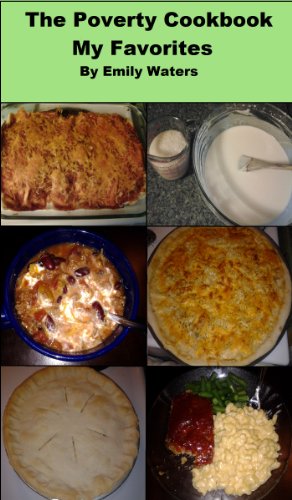
The Poverty Cookbook: My Favorites
| SELLER | SELLER SCORE | AMAZON FULFILLED | PRIME | FREE SHIPPING |
|---|---|---|---|---|
| Amazon.com Services LLC | 0.00 | No | No | No |
The Poverty Cookbook: My Favorites stands out as an incredibly accessible digital resource for anyone looking to stretch a tight budget without sacrificing flavor. At just ninety-nine cents, this ebook offers a practical approach to meal planning that feels deeply personal and grounded in reality. I found the concept refreshing because it moves away from the polished, expensive aesthetic of typical culinary guides and focuses instead on what actually works when resources are limited. It is a quick, low-cost download that delivers immediate value to your digital library, making it a smart choice for students, budget-conscious families, or anyone navigating financial constraints. It is less about gourmet presentation and more about the honest, essential art of making much out of very little.


On Our Street: Our First Talk About Poverty (The World Around Us, 1)
| SELLER | SELLER SCORE | AMAZON FULFILLED | PRIME | FREE SHIPPING |
|---|---|---|---|---|
| Amazon.com | 9.68 | Yes | Yes | Yes |
Teaching complex social issues to young children often feels like walking a tightrope between being too vague and being too heavy. On Our Street: Our First Talk About Poverty manages to navigate this delicate balance by introducing the concept of economic hardship through a lens that is accessible rather than overwhelming. As the first installment in The World Around Us series, this book serves as a foundational tool for families looking to foster empathy and awareness in their little ones. It approaches a difficult subject with a gentleness that makes it approachable for early readers, turning a potentially daunting conversation into a meaningful moment of connection. It is a rare resource that treats children as capable of understanding the nuances of the world they inhabit.

Children's Book: The Other Side: Children's Picture Book On Being Grateful (Books about Gratitude)
| SELLER | SELLER SCORE | AMAZON FULFILLED | PRIME | FREE SHIPPING |
|---|---|---|---|---|
| Amazon.com | 9.68 | Yes | Yes | Yes |
The Other Side offers a meaningful perspective on emotional intelligence that most generic children's stories fail to capture. Instead of just lecturing kids on being good, this picture book uses a narrative approach to explore the concept of gratitude in a way that actually resonates with young minds. It functions as more than just a bedtime read. It serves as a gentle tool for teaching children how to shift their focus toward the positive aspects of life. At a price point, it is an accessible addition to any home library or classroom setting. If you want to move beyond simple moralizing and actually start conversations about appreciation, this book provides the perfect starting point for parents and educators alike.


Poverty: A Very Short Introduction (Very Short Introductions)
| SELLER | SELLER SCORE | AMAZON FULFILLED | PRIME | FREE SHIPPING |
|---|---|---|---|---|
| Amazon.com | 9.68 | Yes | Yes | Yes |
Social scientists and curious students alike require this concise volume to cut through the noise of modern economic debate. Oxford University Press has mastered the art of the condensed deep-dive with this entry, offering a sophisticated look at the complexities of global deprivation without the bloat of a massive textbook. It manages to distill massive, systemic issues into a digestible format that respects the reader's time while maintaining academic rigor. Instead of getting lost in endless statistics, you get a focused perspective that clarifies why poverty persists and how it functions within our global structures. It is an essential, low-cost toolkit for anyone looking to build a foundational understanding of one of the world's most pressing challenges.

Handbook on In-Work Poverty
| SELLER | SELLER SCORE | AMAZON FULFILLED | PRIME | FREE SHIPPING |
|---|---|---|---|---|
| BOOKS etc. _ | 9.84 | No | No | No |
The sheer density of academic research packed into this volume demands a dedicated workspace and a significant mental commitment. This handbook serves as a heavy-hitting resource for anyone attempting to untangle the complex socioeconomic threads of the working poor. It is clearly positioned as a specialized professional tool rather than casual reading. You can tell immediately that this is intended for researchers, policymakers, or students who need a rigorous, deep-dive analysis of systemic economic struggles. While the cost is substantial, the depth of information suggests it is a foundational text for high-level sociological or economic study. It is a serious, no-nonsense acquisition for a serious academic library.
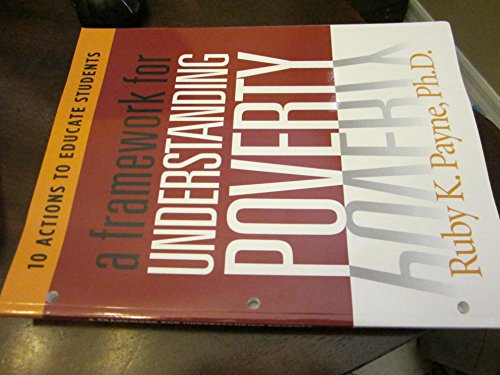
A Framework for Understanding Poverty Workbook(Revised)
| SELLER | SELLER SCORE | AMAZON FULFILLED | PRIME | FREE SHIPPING |
|---|---|---|---|---|
| International Book Sales | 9.82 | No | No | No |
How can we truly address systemic inequality without first mastering the underlying mechanics of economic hardship? This revised workbook serves as a critical educational tool for anyone looking to move beyond surface-level assumptions about social struggle. Instead of offering mere platitudes, it provides a structured methodology for dissecting the complex layers of poverty. While the content is dense and requires focused study, the practical nature of the workbook format makes the academic concepts feel much more grounded and applicable. At a very accessible price point, it functions as an essential resource for students, social workers, or advocates who need a disciplined approach to understanding the systemic drivers of financial instability.

Encountering Poverty: Thinking and Acting in an Unequal World (Poverty, Interrupted Book 2)
| SELLER | SELLER SCORE | AMAZON FULFILLED | PRIME | FREE SHIPPING |
|---|---|---|---|---|
| Amazon.com Services LLC | 0.00 | No | No | No |
Encountering Poverty stands as an essential deep dive for social justice advocates and academics seeking to bridge the gap between theory and practice. As the second installment in the Poverty, Interrupted series, this digital ebook moves beyond mere statistics to explore the complex realities of living in an unequal world. It challenges readers to rethink their own perspectives and, more importantly, how they choose to act in response to systemic hardship. Because it is available for immediate download, you can start engaging with these critical frameworks right away. It is a dense, thoughtful resource that demands attention, making it a vital addition to any digital library focused on sociology or social reform.

The first step in selecting a book on poverty economics is determining which analytical lens you wish to employ. Economics is not a monolith. It is divided into several schools of thought that interpret poverty very differently. If you are interested in how global markets and trade policies impact developing nations, look for titles focused on Development Economics. If you prefer to understand how local labor markets, minimum wage laws, and taxation affect the working class, prioritize Microeconomics or Labor Economics. Some readers may even prefer a Behavioral Economics approach, which examines how the cognitive load of scarcity affects decision-making processes. Knowing your preferred framework will prevent you from feeling frustrated by a book that uses a methodology you find unconvincing.
One of the most critical decision factors is the balance between quantitative data and qualitative storytelling. Data-driven books are essential for understanding scale. These works rely heavily on econometric modeling, longitudinal studies, and statistical trends to prove that poverty is a systemic phenomenon rather than a series of isolated incidents. These are excellent for academic rigor but can sometimes feel detached from the human element. Conversely, narrative-driven books use ethnography and personal testimony to bring the numbers to life. While these are emotionally resonant and provide vital context on the 'human cost' of economic policy, they should ideally be paired with a data-heavy text to ensure you are seeing both the forest and the trees.
You must decide if you want to study poverty as a global phenomenon or a localized issue. Global poverty studies often focus on the 'North-South divide,' discussing debt cycles, post-colonial economic structures, and the impact of international aid. These books provide a macro view of how wealth is distributed across the planet. Domestic poverty studies, however, focus on the nuances of specific national economies—such as the racial wealth gap, urban decay, or the rural decline in developed nations. If you want to understand the mechanics of the global supply chain, go global. If you want to understand the struggle of the modern working class in your own backyard, go domestic.
In the field of economics, every author carries a theoretical bias. Some authors advocate for market-driven solutions and deregulation as the primary way to lift people out of poverty, while others argue for robust social safety nets and government intervention. When reading, it is important to recognize the author's ideological leaning. A high-quality guide to this category involves reading authors from opposing sides of the debate. This allows you to synthesize a more complete picture of the issue rather than simply confirming your existing prejudices. Look for authors with institutional affiliations—such as universities or recognized research institutes—to ensure their findings are grounded in peer-reviewed methodology.
Quick answers about Poverty Books before you buy.
Share of top-ranked products by brand, from our editorial analysis.
We've carried out a comprehensive analysis of 11,341 reviews on Poverty Books, using our selection criteria to identify the best options in the politics & social sciences. Our findings reveal that most customers typically select Poverty Books priced around $34.20, with top brands including broadway books, basic books, audible, createspace independent publishing platform and oxford university press, usa and moody publishers.
Our team of expert editors reviewed these high-quality items and handpicked the top 11 Poverty Books for your consideration. We've also done extensive research on numerous sellers, identifying the best ones in the politics & social sciences category — including amazon.com, penguin random house publisher services, books etc. _ and amazon.com services llc and international book sales.
We are dedicated to assisting our users in finding the right economics Products based on their needs, saving them considerable time when choosing which Poverty Books to buy. We take pride in the number of satisfied users we've helped through our thorough and insightful reviews.
Compare the top 11 picks at a glance — select a column to sort.


