Understanding Complexity Levels
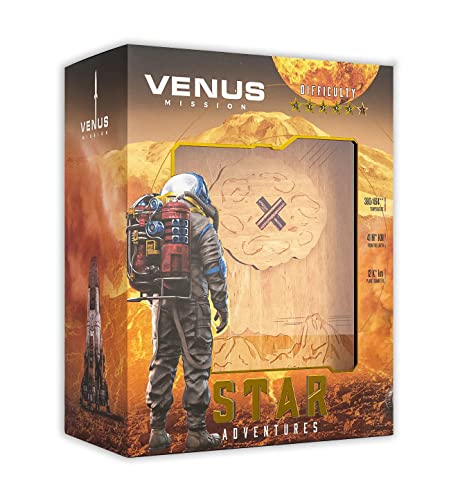
The most critical decision factor when selecting a puzzle box is the intended difficulty level. Puzzle boxes are generally categorized by the number of steps or 'moves' required to reach the center. A beginner-level box might involve a single sliding panel or a hidden button, focusing on the satisfaction of the 'click.' Intermediate boxes often incorporate sequential logic, where move A must be performed to unlock mechanism B. For the true expert, look for boxes that utilize multi-layered logic, such as combining magnetic triggers with gravity-based shifts. Before purchasing, consider your own patience threshold. A box that is too simple will lose its charm quickly, while one that is overly obtuse can lead to frustration rather than engagement.
Material and Build Quality
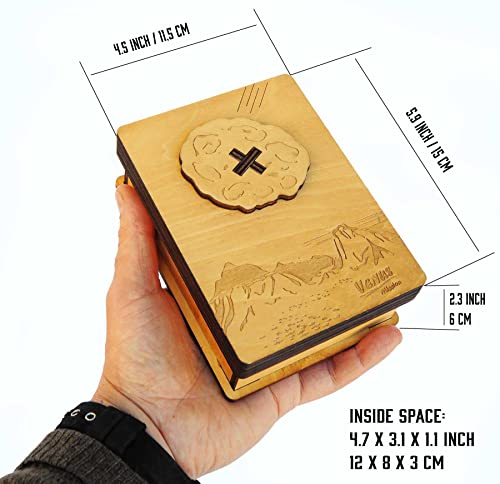
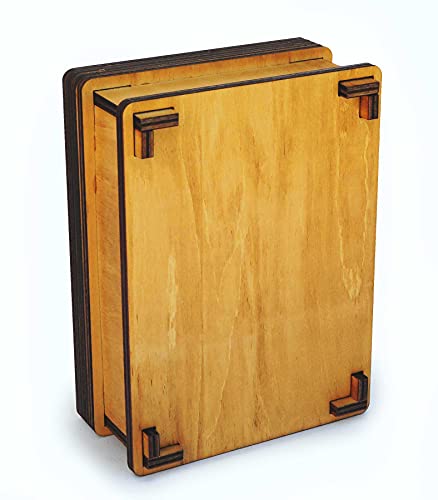
The material of the box dictates both the tactile experience and the longevity of the mechanisms. Wooden puzzle boxes are the traditional choice, offering a warm, organic feel and a classic aesthetic. High-quality wood ensures that the tolerances between sliding parts are tight, preventing the 'wobble' that can ruin the illusion of a seamless object. Metal puzzle boxes, often made of brass or steel, offer a more industrial and high-tech feel. These are typically more durable and can house more complex, precision-engineered magnetic or gear-driven components. When evaluating a box, consider how the material affects the sound and weight. A heavy, solid-feeling box often suggests more intricate internal workings than a lightweight, hollow one.
Mechanism Types: Mechanical vs. Magnetic
Modern puzzle boxes generally fall into two mechanical camps. Mechanical boxes rely on physical displacement—sliding, rotating, or pressing components to trigger a latch. These are highly rewarding because they provide direct physical feedback. Magnetic puzzle boxes, on the other hand, use hidden magnets to move internal pins or locks. These can feel almost magical because the 'key' is often invisible, requiring the user to sense the magnetic pull through the walls of the box. If you prefer a tangible, clockwork experience, lean toward mechanical designs. If you enjoy the mystery of unseen forces, magnetic or hybrid models are superior.
The 'Aha!' Factor and Replayability
A great puzzle box is defined by its 'Aha!' moment—that instant when a seemingly impossible barrier suddenly gives way due to a clever realization. When shopping, look for descriptions that hint at the type of logic required: is it a sequence puzzle, a spatial puzzle, or a sensory puzzle? Furthermore, consider replayability. Some boxes are designed as 'one-and-done' challenges, whereas others, particularly those with adjustable settings or modular components, allow you to revisit the challenge. For collectors, the elegance of the solution is just as important as the difficulty itself. A box that solves with a graceful, fluid motion is far more satisfying than one that requires brute force.