Frame Construction and Material Durability
The most critical component of any umbrella is its skeleton. When evaluating generic options, look closely at the material used for the ribs and the center shaft. Aluminum frames are common in budget models because they are lightweight, but they are prone to bending under moderate wind pressure. For a more durable experience, seek out fiberglass ribs. Fiberglass offers a unique advantage: it is flexible. Instead of snapping or permanently deforming during a gust, fiberglass ribs can bend and then spring back to their original shape. For the center shaft, steel provides maximum rigidity, while high-grade aluminum is a better compromise for those prioritizing a lightweight carry. Avoid umbrellas with thin, plastic-heavy frames if you live in a coastal or high-wind area, as these are likely to fail during your first storm.
Canopy Fabric and Water Repellency
The canopy is your primary shield, and its effectiveness depends on the weave and coating of the fabric. Most umbrellas use polyester or nylon, but the way these fabrics are treated makes all the difference. Look for fabrics labeled as 'Pongee.' Pongee is a high-density weave that is naturally more water-resistant and dries much faster than standard polyester. A superior canopy will feature a Teflon or similar hydrophobic coating, which causes water to bead up and roll off instantly rather than soaking into the fibers. This feature is vital because it prevents the umbrella from becoming heavy and sodden after use, making it easier to shake dry before heading indoors.
Mechanism and Portability
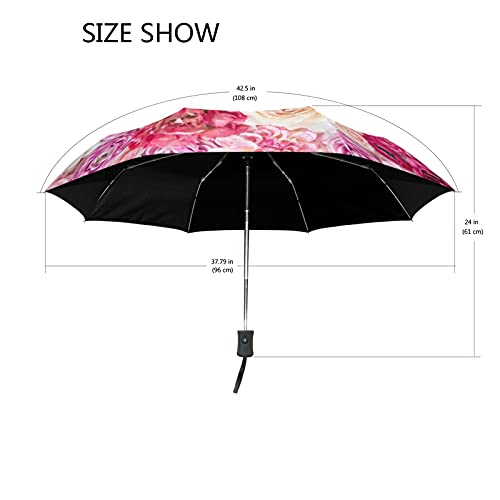
Umbrellas generally fall into three functional categories: manual, auto-open, and auto-open/close. Manual umbrellas are often the most reliable because they have fewer moving parts that can jam or break over time. Auto-open models offer convenience, allowing you to deploy the canopy with a single hand—a lifesaver when you are balancing groceries or a phone. However, the 'auto-open/close' mechanism, which collapses the canopy with a button press, is the most complex and prone to mechanical failure. When choosing a portable umbrella, consider the 'foldability.' A compact three-fold design is ideal for commuters and fits easily into a backpack, whereas a large stick umbrella provides much better coverage but requires a dedicated hook or bag space.
Wind Resistance and Aerodynamics
To avoid the dreaded 'inside-out' umbrella syndrome, check if the model features a double-canopy or vented design. A vented canopy consists of two layers of fabric with overlapping openings. These openings allow wind to pass through the umbrella rather than catching it like a sail, significantly reducing the lift and drag that causes umbrellas to flip. If you are purchasing an umbrella for urban environments where wind tunnels are common between buildings, a vented design is an absolute necessity. Even a generic umbrella can perform like a premium model if it utilizes this aerodynamic principle.