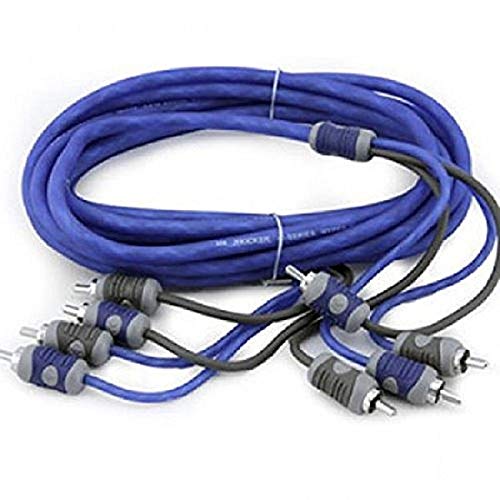
Understanding Signal Integrity and Shielding
In a vehicle, your RCA cables run alongside power wires, alternator lines, and various electronic modules that generate significant electromagnetic interference (EMI) and radio frequency interference (RFI). When choosing Kicker RCA cables, the most critical factor is the quality of the shielding. High-quality cables utilize multi-layer shielding—often a combination of braided copper and foil—to wrap the internal conductors. This creates a Faraday cage effect that prevents external noise from leaking into your audio signal. If you are running long cable paths or installing a high-powered amplifier, prioritize cables with dense, heavy-duty shielding to prevent that dreaded 'alternator whine' from entering your music.
Gauge and Conductor Material
The thickness of the internal conductor, often measured by the gauge of the wire, dictates how much signal loss occurs over distance. While RCA cables carry low-level signals rather than high-current power, a larger conductor diameter reduces resistance. Kicker's engineering typically focuses on high-purity oxygen-free copper (OFC), which provides superior conductivity compared to cheaper copper-clad aluminum (CCA) alternatives. OFC conductors ensure that the signal remains crisp and that the transient response—the ability of the music to sound fast and impactful—is preserved, especially in bass-heavy setups.
Connector Durability and Fitment
The connection point is where most failures occur. Look for RCA plugs that feature gold-plated connectors. Gold is highly resistant to corrosion and oxidation, which is vital in the humid or temperature-fluctuating environment of a car. Furthermore, the physical build of the connector matters. A robust, strain-relief design prevents the cable from fraying or snapping at the junction where the wire meets the plug. Ensure the connectors are tight-fitting to maintain a constant, low-resistance contact with your amplifier's input jacks. A loose connection can lead to intermittent signal dropouts or increased noise floors.
Length and Routing Strategy
One of the most common mistakes in car audio installation is buying cables that are too long. While it might seem safer to have extra slack, excessively long RCA cables increase the surface area for interference pickup and can lead to slight signal attenuation. Measure your installation path carefully, accounting for bends around seat frames, center consoles, and trunk linings. The goal is to find the shortest possible route that allows for a clean, non-stressed installation. Remember to route your RCA cables on the opposite side of the vehicle from your main power cables to further minimize the risk of induction noise.
Determining Your Specific Needs
When making your final selection, consider the complexity of your system. If you are running a simple single-subwoofer setup, a pair of high-quality, shielded RCA cables will suffice. However, if you are running a multi-channel component system or a dual-subwoofer configuration, you may need pre-terminated sets that include multiple pairs. Always match the cable's capability to the output of your amplifier. If you are driving a high-end digital amplifier, the precision of your RCA interconnects becomes even more paramount to maintaining the fidelity of the digital-to-analog conversion.