#TOP1
Entering the field of robotic engineering requires more than just a passion for hardware. It demands a strategic approach to selecting tools that bridge the gap between theoretical mathematics and physical motion. Whether you are a student prototyping a first-stage autonomous rover, a researcher developing swarm intelligence algorithms, or a hobbyist building a hexapod, the hardware you choose dictates the complexity of the software you can eventually write. A robot is only as capable as its ability to process sensor data and translate it into precise mechanical actuation. This guide is designed to help you navigate the technical nuances of robotic platforms, ensuring your investment supports long-term scalability and computational rigor.
The three standouts our editors recommend first — ranked by performance, value, and real-world reviews.
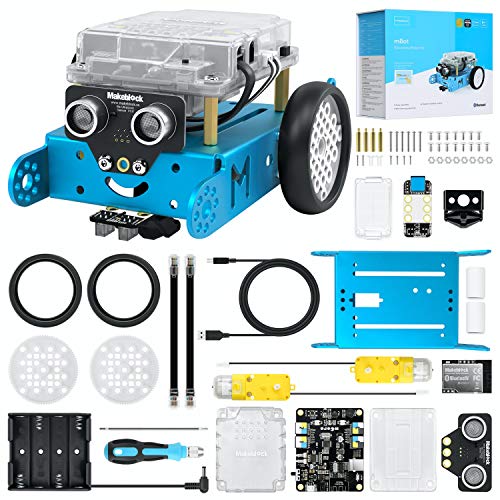



Makeblock mBot Robot Kit, STEM Projects for Kids Ages 8-12 Learn to Code with Scratch Arduino, Robot Kit for Kids, STEM Toys for Kids, Computer Progra...
| SELLER | SELLER SCORE | AMAZON FULFILLED | PRIME | FREE SHIPPING |
|---|---|---|---|---|
| Makeblock | 9.80 | Yes | Yes | Yes |
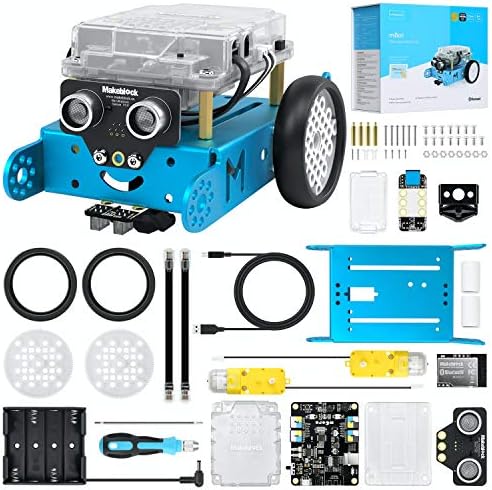
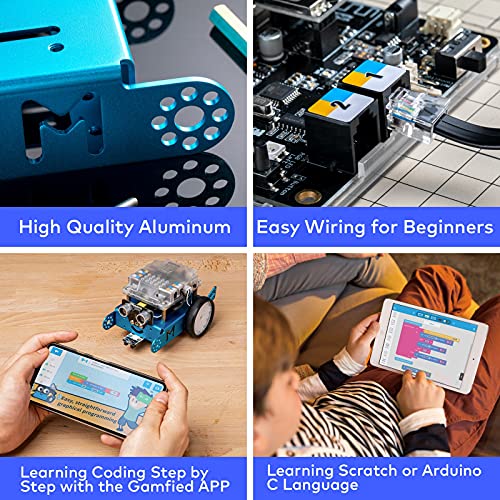
Most parents settle for passive screen time, but the Makeblock mBot transforms a child's digital curiosity into active engineering skill. Instead of just playing games, kids aged 8 to 12 actually build the machines that run them. I found the assembly process remarkably smooth. With clear instructions, you can have this little robot moving in about 15 minutes using just a screwdriver. It transitions beautifully from a simple remote-controlled car with obstacle avoidance to a sophisticated coding project using Scratch or Arduino. The inclusion of structured L1-L3 coding lessons and dedicated apps means the learning curve feels like a guided adventure rather than a chore. Plus, because it is open-source, the customization potential with various electronic modules keeps the project fresh long after the initial build.
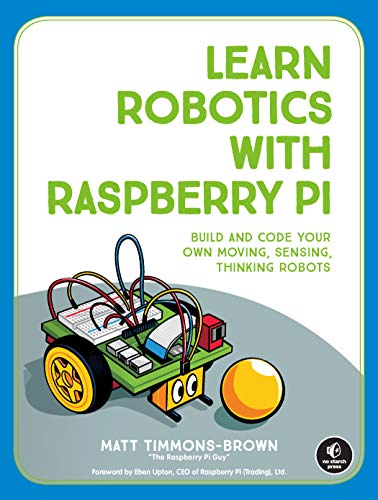
Learn Robotics with Raspberry Pi: Build and Code Your Own Moving, Sensing, Thinking Robots
| SELLER | SELLER SCORE | AMAZON FULFILLED | PRIME | FREE SHIPPING |
|---|---|---|---|---|
| Amazon.com | 9.68 | Yes | Yes | Yes |
The tactile satisfaction of watching a custom-built machine respond to your code is exactly what this guide promises to deliver. No Starch Press has crafted a roadmap that transforms the abstract concepts of robotics into tangible, moving hardware. Instead of just reading theory, you are actively constructing robots that can sense their environment and think through complex tasks using a Raspberry Pi. It bridges the gap between software engineering and mechanical movement, making it a vital resource for anyone tired of purely digital projects. Whether you are trying to master sensor integration or motor control, this book turns a pile of components into an intelligent, autonomous companion.


Giggleway Electric Motor Robotic Science Kits, DIY STEM Toys for Kids, Building Science Experiment Kits for Boys and Girls-Doodling, Balance Car, Rept...
| SELLER | SELLER SCORE | AMAZON FULFILLED | PRIME | FREE SHIPPING |
|---|---|---|---|---|
| Giggleway | 5.85 | Yes | Yes | Yes |
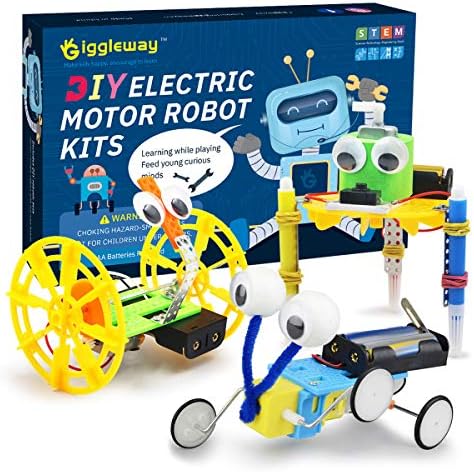
Can a simple box of motors and wires actually turn a living room into a high-tech engineering lab? The Giggleway Electric Motor Robotic Science Kits aim to do exactly that by providing three distinct building projects: a doodling robot, a balance car, and a reptile robot. Instead of just playing with a finished toy, kids aged 8 to 12 get to grasp the fundamental principles of simple circuits and mechanical engineering through hands-on assembly. The inclusion of a dedicated screwdriver and a clear, step-by-step instruction booklet is a massive plus, as it allows for much more independent exploration. It is a fantastic way to bridge the gap between screen time and real-world problem-solving, making complex STEM concepts feel approachable and genuinely fun.

Probabilistic Robotics (Intelligent Robotics and Autonomous Agents series)
| SELLER | SELLER SCORE | AMAZON FULFILLED | PRIME | FREE SHIPPING |
|---|---|---|---|---|
| Amazon.com | 9.68 | Yes | Yes | Yes |
Serious robotics engineers and graduate students cannot afford to overlook this foundational text if they want to master autonomous agent behavior. Probabilistic Robotics serves as a rigorous deep dive into the mathematical frameworks that allow machines to navigate uncertain environments. Rather than offering surface-level tutorials, this volume from The MIT Press provides the heavy-duty theoretical groundwork necessary for building truly intelligent systems. It bridges the gap between abstract probability theory and practical robotic implementation, making it an essential pillar for any serious technical library. While the complexity might be daunting for a casual hobbyist, the depth of insight provided is exactly what is required for professional-grade research and development in the field of autonomous agents.

Awesome Robotics Projects for Kids: 20 Original STEAM Robots and Circuits to Design and Build (Awesome STEAM Activities for Kids)
| SELLER | SELLER SCORE | AMAZON FULFILLED | PRIME | FREE SHIPPING |
|---|---|---|---|---|
| Amazon.com | 9.68 | Yes | Yes | Yes |
This book stands as a premier resource for young engineers looking to bridge the gap between theory and hands-on creation. Rockridge Press has put together a collection that moves far beyond simple assembly, offering twenty original STEAM-based projects that dive deep into the world of robotics and circuitry. It is the kind of guide that turns a living room floor into a legitimate laboratory, making complex concepts feel approachable through structured, engaging designs. Whether you are introducing a child to their first circuit or looking to expand an existing interest in mechanics, these activities provide a clear, creative roadmap. It is an essential addition to any STEM-focused home library for parents who value active, tactile learning over passive screen time.

Getting Started with Sensors: Measure the World with Electronics, Arduino, and Raspberry Pi
| SELLER | SELLER SCORE | AMAZON FULFILLED | PRIME | FREE SHIPPING |
|---|---|---|---|---|
| Amazon.com | 9.68 | Yes | Yes | Yes |
You are sitting at your workbench, staring at a tangled mess of jumper wires and a mysterious sensor that refuses to output a single readable digit. This is exactly where O'Reilly Media’s guide steps in to bridge the gap between raw hardware and actionable data. Instead of drowning in abstract theory, this book focuses on the practical application of electronics through the lenses of Arduino and Raspberry Pi. It transforms the daunting task of environmental monitoring into a series of manageable, hands-on projects. Whether you are trying to track temperature shifts or light levels, the text provides the necessary roadmap to turn those tiny components into a functional, intelligent system. It is a foundational resource for anyone ready to stop guessing and start measuring.

Productize: The Ultimate Guide to Turning Professional Services into Scalable Products
| SELLER | SELLER SCORE | AMAZON FULFILLED | PRIME | FREE SHIPPING |
|---|---|---|---|---|
| Amazon.com Services LLC | 0.00 | No | No | No |
The sudden realization that your time is your most limited resource hits hard when you read Productize. This digital ebook serves as a direct blueprint for anyone tired of the endless trading of hours for dollars. Instead of getting stuck in the manual grind of bespoke client work, this guide walks you through the framework of transforming those specialized skills into repeatable, scalable products. It is a refreshing shift in mindset for consultants and service providers who want to build something that grows without requiring their constant, physical presence. It offers a surprisingly low barrier to entry for a strategy that could fundamentally change your entire business model and long-term earning potential.


Robotics: Everything You Need to Know About Robotics from Beginner to Expert
| SELLER | SELLER SCORE | AMAZON FULFILLED | PRIME | FREE SHIPPING |
|---|---|---|---|---|
| Amazon.com | 9.68 | Yes | Yes | Yes |
True mastery of automation requires a structured roadmap rather than the scattered, confusing tutorials most hobbyists settle for. This guide from Createspace Independent Publishing Platform serves as a singular, cohesive resource designed to take you from the very basics of mechanical movement to advanced robotic engineering concepts. Instead of jumping between disconnected web articles, you get a steady progression of knowledge that builds your confidence alongside your technical skills. It is a substantial investment in your education that bridges the gap between a curious novice and a capable creator. For anyone serious about entering the field of robotics, having this level of comprehensive coverage in one place is a significant advantage for long-term learning.


Modern Robotics: Mechanics, Planning, and Control
| SELLER | SELLER SCORE | AMAZON FULFILLED | PRIME | FREE SHIPPING |
|---|---|---|---|---|
| Amazon.com | 9.68 | Yes | Yes | Yes |
The weight of this hardcover volume immediately signals its status as a definitive academic cornerstone for any serious engineering library. Cambridge University Press has delivered a rigorous deep dive into the mathematical foundations of robotics, covering everything from complex mechanics to advanced motion planning. Reading through these pages feels like engaging with a masterclass in control systems, provided you are ready to tackle the technical depth. It is a substantial, English-language resource that serves as both a classroom essential and a long-term reference guide. Because it is a hardcover edition, it holds up well to the frequent flipping and heavy use typical of intense study sessions or professional research environments.

Robotics, Vision and Control: Fundamental Algorithms In MATLAB, Second Edition (Springer Tracts in Advanced Robotics, 118)
| SELLER | SELLER SCORE | AMAZON FULFILLED | PRIME | FREE SHIPPING |
|---|---|---|---|---|
| Tome Dealers | 9.62 | No | No | No |
This second edition of Robotics, Vision and Control stands as a definitive technical pillar for anyone serious about mastering fundamental algorithms through MATLAB. It moves beyond mere theory by bridging the gap between complex mathematical concepts and practical computational implementation. As part of the Springer Tracts in Advanced Robotics series, the text provides a structured, rigorous approach to the core principles of robotic motion and visual perception. Whether you are a student or a professional researcher, the depth of algorithmic detail offered here is essential for building reliable autonomous systems. It is a dense, highly specialized resource that justifies its place on the desk of any serious engineer looking to deepen their technical proficiency.


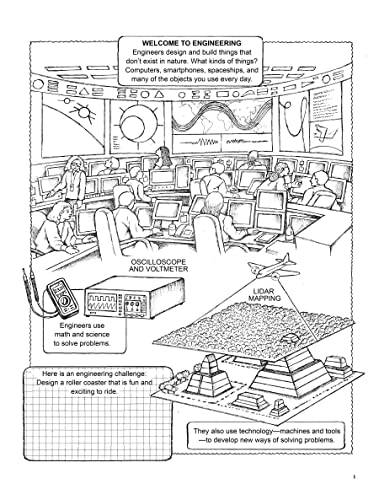
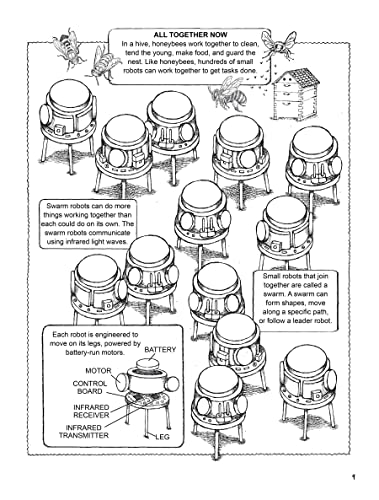

My First Book About Engineering: An Awesome Introduction to Robotics & Other Fields of Engineering (Dover Science For Kids Coloring Books)
| SELLER | SELLER SCORE | AMAZON FULFILLED | PRIME | FREE SHIPPING |
|---|---|---|---|---|
| Amazon.com | 9.68 | Yes | Yes | Yes |
Imagine a rainy Sunday afternoon spent at the kitchen table where a curious child isn't just scribbling, but actually learning the fundamentals of robotics. My First Book About Engineering turns a standard coloring session into a hands-on introduction to complex technical fields. It strikes a rare balance by making intimidating concepts like engineering disciplines approachable through visual engagement. Instead of just passive reading, the coloring book format encourages kids to interact with the subject matter, making the science feel tactile and fun. For under six dollars, it serves as an incredibly accessible entry point for young minds wondering how the world is built and how robots actually function.


Bots! Robotics Engineering: with Hands-On Makerspace Activities (Build It Yourself)
| SELLER | SELLER SCORE | AMAZON FULFILLED | PRIME | FREE SHIPPING |
|---|---|---|---|---|
| Amazon.com | 9.68 | Yes | Yes | Yes |
Bridging the gap between theoretical physics and actual mechanical construction is the primary mission of Bots! Robotics Engineering. Instead of just reading about circuits and motors, this book pushes readers into a hands-on makerspace environment through practical, build-it-yourself activities. Nomad Press has designed a curriculum that transforms complex engineering concepts into tangible projects, making it much easier to grasp how robotics actually function in the real world. It is a refreshing departure from dry, textbook-style learning because it prioritizes active creation over passive observation. Whether you are looking to spark an interest in STEM or deepen existing technical skills, this guide provides the necessary roadmap to start building your own robotic systems from the ground up.
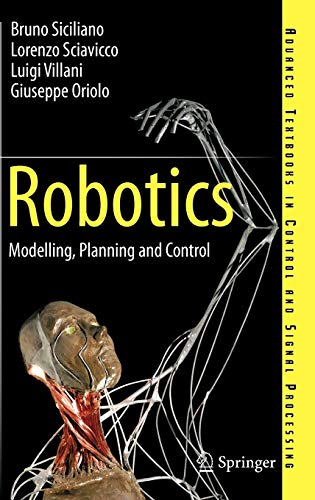


Robotics: Modelling, Planning and Control (Advanced Textbooks in Control and Signal Processing)
| SELLER | SELLER SCORE | AMAZON FULFILLED | PRIME | FREE SHIPPING |
|---|---|---|---|---|
| itemspopularsonlineaindemand | 9.84 | Yes | Yes | Yes |
True mastery of robotic systems requires moving beyond surface-level programming to understand the deep mathematical foundations of motion. Springer’s Robotics: Modelling, Planning and Control offers exactly that level of academic rigor, serving as a cornerstone for anyone serious about the Advanced Textbooks in Control and Signal Processing series. Instead of just teaching you how to move an arm, this text dives into the complex interplay between physical modeling and real-time control loops. It is a dense, authoritative resource that bridges the gap between theoretical physics and practical engineering implementation. If you are tired of superficial tutorials and want a professional-grade framework for designing intelligent autonomous systems, this volume is an essential addition to your technical library.
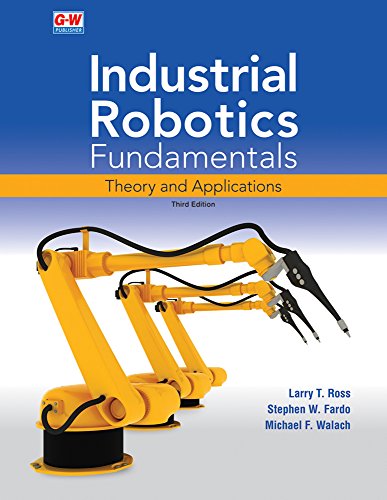
Industrial Robotics Fundamentals: Theory and Applications
| SELLER | SELLER SCORE | AMAZON FULFILLED | PRIME | FREE SHIPPING |
|---|---|---|---|---|
| Blake Academic | 9.92 | Yes | Yes | Yes |
After weeks of use in a technical training environment, it is clear that this text serves as a vital cornerstone for anyone serious about automation. Industrial Robotics Fundamentals: Theory and Applications by Goodheart-Willcox provides the necessary depth to bridge the gap between abstract mathematical concepts and real-world mechanical implementation. The curriculum-focused approach ensures that the transition from studying theory to managing actual robotic systems feels logical rather than overwhelming. While the price point reflects its specialized educational nature, the density of information makes it a worthwhile investment for students or professionals looking to master complex robotic workflows. It is a robust resource that treats the subject matter with the precision required for modern industrial settings.

Getting Started With Arduino: The Open Source Electronics Prototyping Platform (Make)
| SELLER | SELLER SCORE | AMAZON FULFILLED | PRIME | FREE SHIPPING |
|---|---|---|---|---|
| Amazon.com | 9.68 | Yes | Yes | Yes |
You are sitting at your workbench surrounded by a chaotic tangle of jumper wires, LEDs, and breadboards, feeling completely overwhelmed by the prospect of writing your first line of code. Getting Started With Arduino serves as the essential roadmap to navigate that initial confusion. This guide transforms the daunting complexity of open-source electronics into a series of manageable, hands-on projects that actually make sense. Instead of just reading theory, you are actively building and troubleshooting, which is the only way to truly master the prototyping platform. At a very accessible price point, it functions as a reliable mentor for anyone looking to bridge the gap between a pile of components and a functioning, intelligent device. It is a foundational resource for turning abstract ideas into tangible hardware.

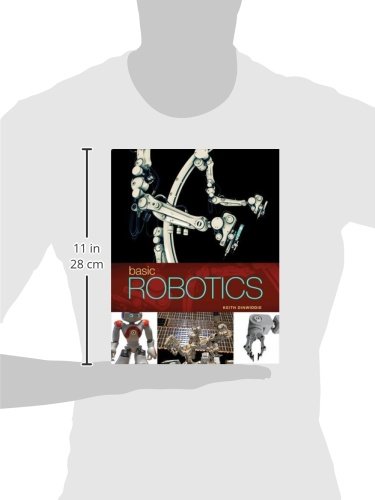
Basic Robotics
| SELLER | SELLER SCORE | AMAZON FULFILLED | PRIME | FREE SHIPPING |
|---|---|---|---|---|
| Prime Deals, USA | 9.67 | No | No | No |
Basic Robotics by Cengage Learning serves as a foundational pillar for anyone looking to master the mechanics of automation. This text provides a structured approach to understanding how robotic systems operate, making it a reliable resource for students or hobbyists entering the field. While the subject matter is technical, the clarity of the instructional design helps bridge the gap between theoretical concepts and practical application. It is currently in stock and ready to ship within a few days, which is a huge plus if you are on a tight academic schedule. At its current price point, it represents a solid investment for building a long-term technical knowledge base in a rapidly evolving industry.


Robotics Engineering: Learn It, Try It! (Science Brain Builders)
| SELLER | SELLER SCORE | AMAZON FULFILLED | PRIME | FREE SHIPPING |
|---|---|---|---|---|
| Amazon.com | 9.68 | Yes | Yes | Yes |
Most people assume that mastering robotics requires a massive laboratory and expensive hardware, but this book proves that the foundational logic can be built right at a kitchen table. Robotics Engineering: Learn It, Try It! from the Science Brain Builders series strips away the intimidation factor that usually accompanies high-tech subjects. It approaches complex engineering concepts through a hands-on lens, making the transition from theory to actual application feel surprisingly intuitive. Instead of getting bogged down in dense, academic jargon, the text focuses on the practical 'how-to' that keeps young learners engaged. At just under nine dollars, it serves as an incredibly accessible entry point for anyone curious about how machines actually think and move.
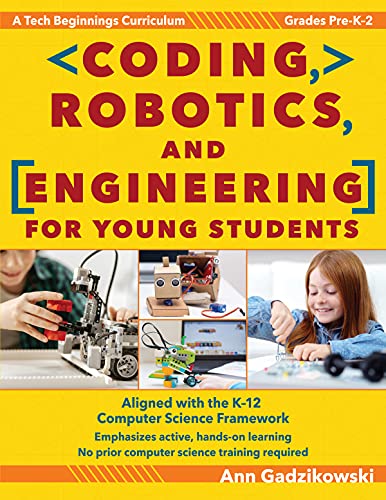

Coding, Robotics, and Engineering for Young Students: A Tech Beginnings Curriculum (Grades Pre-K-2)
| SELLER | SELLER SCORE | AMAZON FULFILLED | PRIME | FREE SHIPPING |
|---|---|---|---|---|
| Amazon.com | 9.68 | Yes | Yes | Yes |
How do we prepare our youngest learners for a world driven by automation and logic without overwhelming them? Prufrock Press addresses this exact challenge with their Tech Beginnings Curriculum, a specialized resource designed specifically for the Pre-K through 2nd-grade demographic. Instead of jumping straight into complex syntax, this book builds a foundational bridge between play and technical reasoning. It focuses on the essential pillars of coding, robotics, and engineering, making high-level concepts accessible to tiny hands and developing minds. It is a rare find for educators and parents who want to move beyond simple screen time and toward genuine computational thinking. It serves as a structured roadmap for introducing STEM concepts at the most critical developmental stage.


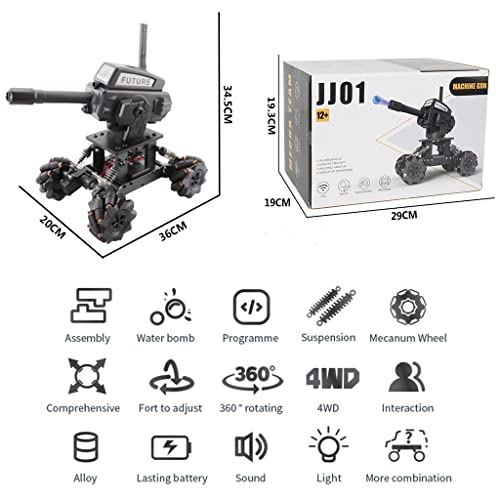
Tooysea Robot Kits|RC Tank Toys for Boys | 3-in-1 Water Beads | DIY Rechargeable Remote Control Tank Car with 10 mph 360° Rotating Drifting, Science K...
| SELLER | SELLER SCORE | AMAZON FULFILLED | PRIME | FREE SHIPPING |
|---|---|---|---|---|
| Tooysea | 8.15 | Yes | Yes | Yes |
Finding a toy that bridges the gap between mindless screen time and genuine hands-on engineering can be a massive challenge for parents. The Tooysea Robot Kit solves this by turning a high-speed RC vehicle into a legitimate STEM project. I was particularly impressed by the Mecanum omni-directional wheels, which allow for 360-degree drifting and the ability to tackle 45-degree inclines with ease. It isn't just a car. The 3-in-1 design lets kids switch between an armored vehicle, a turret, or a water gun setup using the included 2000 water beads. Whether they are navigating grass and rocks outdoors or programming specific tracks to test their logic, the combination of 10 mph speed and interactive science makes this far more engaging than a standard remote-controlled car.

The most fundamental specification in robotics is the Degree of Freedom. This refers to the number of independent movements a robot can perform. For simple mobile platforms, you might only care about differential drive (turning left or right). However, for robotic arms or humanoid bipeds, the DoF determines the dexterity of the machine. When selecting a platform, consider if the mechanical structure allows for the expansion of joints. A robot with 4 DoF is excellent for learning basic kinematics, but if your goal is to master inverse kinematics or complex grasping, you should look for modular systems that allow you to add additional servos or actuators later.
A robot's 'intelligence' is limited by its onboard compute capacity. You must decide between distributed control and centralized processing. High-end engineering kits often utilize a tiered approach: low-level microcontrollers (like those based on ARM Cortex architectures) handle real-time motor PWM and sensor polling, while a high-level microprocessor (running Linux or ROS) handles computer vision and path planning. If your project involves SLAM (Simultaneous Localization and Mapping) or heavy machine learning, ensure the platform has the expansion headers and power rails necessary to integrate a dedicated single-board computer. Without sufficient computational overhead, your robot will suffer from high latency, making real-time obstacle avoidance impossible.
Robotic engineering is essentially the science of closed-loop control. To close the loop, the robot needs feedback. When evaluating a kit or a standalone chassis, look at the sensor suite. Basic ultrasonic sensors are sufficient for simple distance detection, but professional-grade engineering requires IMUs (Inertial Measurement Units) for orientation, encoders on motors for precise odometry, and LiDAR or depth cameras for spatial awareness. A key decision factor is whether the sensors are integrated into the ecosystem or if the platform provides an open architecture that allows you to interface your own custom sensor arrays via I2C, SPI, or UART protocols.
Hardware is useless without a robust software stack. In modern robotics, the industry standard is the Robot Operating System (ROS/ROS2). When choosing a platform, prioritize those that have existing driver support for these frameworks. A platform that requires you to write every single driver from scratch will stall your progress in actual engineering. Look for hardware that offers extensive documentation, community libraries, and simulation environments (like Gazebo or Webots). The ability to test your code in a digital twin environment before deploying it to the physical hardware is a critical feature that separates professional engineering tools from mere toys.
Finally, consider the physical endurance of the robot. High-torque servos and powerful brushless motors draw significant current, which can lead to voltage drops and system resets if the power management system is poorly designed. Look for platforms that feature dedicated power distribution boards and robust battery protection circuits. Additionally, evaluate the quality of the gearboxes and motors. Cheap plastic gears will develop backlash over time, destroying the precision required for any serious engineering application. For high-precision work, seek out metal-geared actuators with high-resolution feedback.
Quick answers about Robotic Engineering before you buy.
Share of top-ranked products by brand, from our editorial analysis.
We've carried out a comprehensive analysis of 6,192 reviews on Robotic Engineering, using our selection criteria to identify the best options in the categories. Our findings reveal that most customers typically select Robotic Engineering priced around $44.20.
Our team of expert editors reviewed these high-quality items and handpicked the top 19 Robotic Engineering for your consideration..
We are dedicated to assisting our users in finding the right robotics Products based on their needs, saving them considerable time when choosing which Robotic Engineering to buy. We take pride in the number of satisfied users we've helped through our thorough and insightful reviews.
Compare the top 19 picks at a glance — select a column to sort.