Prioritize Visibility Standards and Certification
The most critical factor in any safety garment is its ability to actually perform its function. Before considering the fit or the fabric, verify that the pants meet specific high-visibility (Hi-Vis) standards. Look for garments that utilize retroreflective tape and fluorescent coloring designed to meet international safety benchmarks. A 'fashionable' pant that lacks the necessary surface area of reflective material or uses low-grade dyes that fade quickly is not a safety tool. It is a liability. Ensure the reflective strips are strategically placed to outline the human form, which helps observers recognize movement in low-light conditions.
Fabric Composition and Durability
Safety pants undergo significant physical stress. You need a fabric that balances breathability with ruggedness. Look for heavy-duty cotton blends or technical synthetics that offer high abrasion resistance. If you work in extreme heat, prioritize moisture-wicking properties and lightweight weaves. If you work in colder, damp environments, seek out water-resistant coatings or thermal linings. A key indicator of quality is the 'denier' or weight of the fabric. A higher density typically translates to better protection against snags, tears, and environmental elements, ensuring the pants maintain their shape and color through repeated industrial laundering.
The Intersection of Fit and Functionality
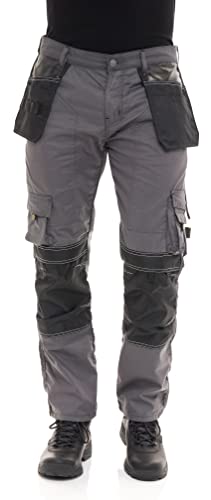
This is where 'fashion' meets 'utility.' Traditional safety gear often suffers from an excess of fabric that can become a tripping hazard. Modern, stylish safety pants solve this through articulated knees and tapered leg openings. An articulated knee design allows for a full range of motion—essential for squatting, climbing, or walking on uneven terrain—without the fabric pulling tight against your skin. For a professional look, opt for a slim or straight-leg cut that follows the natural line of your leg without being restrictive. Avoid overly tight 'skinny' fits, as these can impede circulation and reduce the protective buffer between your skin and external hazards.
Utility Features and Pocket Configuration
A pair of safety pants is only as good as its utility. Check for reinforced stitching at stress points like the crotch and pocket corners. Consider the placement of tool loops, cargo pockets, and cell phone slots. In a fashion-forward design, these elements should be integrated seamlessly into the garment's silhouette rather than looking like bulky afterthoughts. High-quality safety pants often feature zippered pockets to secure small tools and specialized compartments for measuring tapes or hardware, all while maintaining a streamlined profile that doesn't look cluttered.
Maintenance and Longevity
Because safety pants are often washed frequently to remove grime and oils, colorfastness is paramount. Cheap fluorescent dyes will wash out, turning your bright orange or yellow pants into a dull, non-compliant shade. Invest in garments specifically treated to retain their brightness. Furthermore, check the integrity of the reflective tape. It should be heat-pressed or sewn on with high-strength thread to prevent peeling or cracking after several wash cycles. A higher upfront cost for premium construction often results in a lower cost-per-wear over the life of the garment.