Evaluate the Breadth of Optical Components
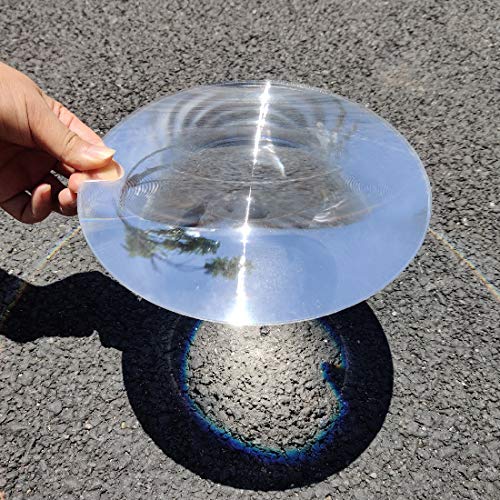
The most critical factor in selecting an optics kit is the diversity and quality of the components included. A comprehensive kit should go beyond simple magnifying glasses. Look for sets that include a variety of convex and concave lenses, prisms for spectral analysis, mirrors (both plane and curved), and light sources such as lasers or high-intensity LEDs. The value of a kit is determined by its ability to support multiple lesson plans. If a kit only allows for basic magnification, it will quickly become obsolete as the curriculum advances. Ensure the kit provides enough variety to allow students to explore reflection, refraction, diffraction, and dispersion within a single unit.
Prioritize Durability and Classroom Scalability
Classroom environments are inherently high-traffic and high-impact. Optics are notoriously fragile. A single scratched lens or a cracked prism can render an entire experiment useless. When comparing kits, look for components housed in protective casings or high-grade optical glass rather than low-quality plastic. Furthermore, consider the 'scalability' of the kit. Does the set come in a single large container for demonstration purposes, or is it partitioned into individual student station kits? For effective classroom management, kits that are pre-organized into manageable sets for small groups are far superior to large, unorganized bins that require extensive setup and cleanup time between periods.
Assess Alignment with Curriculum Standards
A kit should not just be a box of parts. It should be a pedagogical tool. The best optics kits come with structured instructional materials, such as lab manuals, guided inquiry worksheets, or digital resources that align with standard science curricula. When making your decision, ask whether the kit facilitates 'inquiry-based learning.' Does it provide the necessary scaffolding for students to form hypotheses, or does it simply provide a way to follow a recipe? High-quality kits will include clear instructions that encourage students to predict outcomes before adjusting lens distances or light angles, fostering deeper critical thinking skills.
Consider Precision and Measurement Integration
In advanced science education, observation must be paired with measurement. A kit that offers only qualitative observations (e.g., 'the image looks upside down') is less valuable than one that supports quantitative data collection. Look for kits that include or are compatible with measurement tools like protractors for measuring angles of incidence, meter sticks for focal length calculations, and optical benches that allow for precise positioning of components. The ability to move from 'seeing' to 'calculating' is what separates a toy-like science set from a professional-grade classroom optics system.