#TOP1
Science education reference materials serve as the bridge between raw data and conceptual understanding. Whether you are a student tackling advanced physics, a teacher looking for classroom supplements, or a lifelong learner attempting to demystify molecular biology, the quality of your reference material dictates the clarity of your learning. Unlike standard textbooks, which are designed for linear progression, true reference works must be organized for rapid retrieval, accuracy, and conceptual depth. Choosing the right resource requires moving beyond simple popularity and looking into the specific pedagogical approach and technical rigor required for your level of study.
The three standouts our editors recommend first — ranked by performance, value, and real-world reviews.


A Framework for K-12 Science Education: Practices, Crosscutting Concepts, and Core Ideas
| SELLER | SELLER SCORE | AMAZON FULFILLED | PRIME | FREE SHIPPING |
|---|---|---|---|---|
| Amazon.com | 9.68 | Yes | Yes | Yes |
Science educators and curriculum developers require this foundational text to bridge the gap between theory and classroom practice. This National Academies Press publication serves as a vital roadmap for anyone looking to master the intricacies of scientific practices, crosscutting concepts, and core ideas within a K-12 setting. It isn't just a textbook. It is a structural blueprint that helps instructors organize complex scientific principles into digestible, actionable lessons. While the subject matter is dense, the clarity provided by this framework is indispensable for building a rigorous science program. If you are serious about modernizing your teaching approach or designing high-level educational standards, this is the definitive resource to keep on your desk.

| SELLER | SELLER SCORE | AMAZON FULFILLED | PRIME | FREE SHIPPING |
|---|---|---|---|---|
| Amazon.com | 9.68 | Yes | Yes | Yes |



| SELLER | SELLER SCORE | AMAZON FULFILLED | PRIME | FREE SHIPPING |
|---|---|---|---|---|
| EVML Map Outlet | 9.76 | No | No | No |


| SELLER | SELLER SCORE | AMAZON FULFILLED | PRIME | FREE SHIPPING |
|---|---|---|---|---|
| EVML Map Outlet | 9.75 | No | No | No |



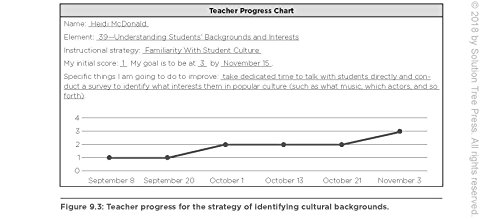
The New Art and Science of Teaching Writing (Research-Based Instructional Strategies for Teaching and Assessing Writing Skills) (The New Art and Scien...
| SELLER | SELLER SCORE | AMAZON FULFILLED | PRIME | FREE SHIPPING |
|---|---|---|---|---|
| Amazon.com | 9.68 | Yes | Yes | Yes |
Solution Tree has delivered a definitive cornerstone for educators seeking to bridge the gap between theory and classroom application. This volume stands as an essential resource for literacy specialists and classroom teachers who need more than just abstract concepts to improve student outcomes. Instead of offering vague advice, it focuses on research-based instructional strategies that target both the development and the assessment of writing skills. It fits perfectly into a professional development library, providing a structured framework that feels both academic and deeply practical. Whether you are refining your own pedagogy or leading a departmental workshop, this book offers the rigorous, evidence-based guidance necessary to elevate writing instruction to a professional standard.


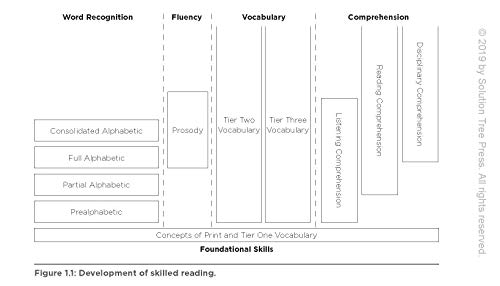
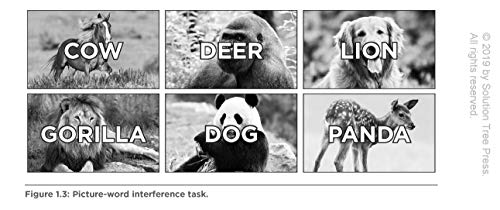
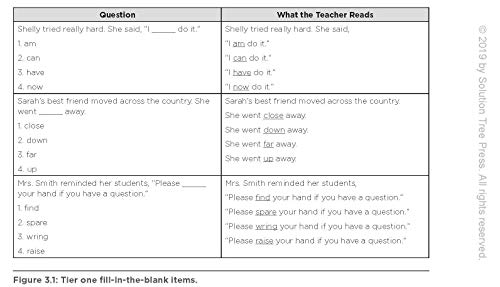
The New Art and Science of Teaching Reading (How to Teach Reading Comprehension Using a Literacy Development Model) (The New Art and Science of Teachi...
| SELLER | SELLER SCORE | AMAZON FULFILLED | PRIME | FREE SHIPPING |
|---|---|---|---|---|
| Amazon.com | 9.68 | Yes | Yes | Yes |
You might walk into this purchase wondering if another educational manual is just going to be more theoretical fluff that fails to work in a real classroom. However, Solution Tree has delivered something much more substantial with this installment of their teaching series. Instead of just offering vague pedagogical advice, this book bridges the gap between cognitive science and practical classroom application through a dedicated literacy development model. It focuses specifically on the mechanics of reading comprehension, providing a structured way to approach instruction. If you are looking for a resource that treats literacy as both a precise science and a nuanced art form, this guide offers the depth needed to actually move the needle for your students.



The New Art and Science of Classroom Assessment (Authentic Assessment Methods and Tools for the Classroom) (The New Art and Science of Teaching)
| SELLER | SELLER SCORE | AMAZON FULFILLED | PRIME | FREE SHIPPING |
|---|---|---|---|---|
| Amazon.com | 9.68 | Yes | Yes | Yes |
The New Art and Science of Classroom Assessment by Solution Tree stands as a vital resource for educators looking to bridge the gap between theory and practical application. This book moves beyond traditional testing to focus on authentic assessment methods that actually reflect student learning in real-world contexts. As part of the comprehensive New Art and Science of Teaching series, it provides a sophisticated framework for understanding how to measure progress effectively. I found that its emphasis on actionable tools makes it much more than just a theoretical text. It is a functional guide for the modern classroom. Whether you are refining your grading rubrics or rethinking how you check for understanding, this volume offers the pedagogical depth necessary to evolve your teaching practice.


Illustrated Guide to Home Chemistry Experiments: All Lab, No Lecture (DIY Science)
| SELLER | SELLER SCORE | AMAZON FULFILLED | PRIME | FREE SHIPPING |
|---|---|---|---|---|
| Amazon.com | 9.68 | Yes | Yes | Yes |
Most science enthusiasts end up stuck with dry, theoretical textbooks that feel more like chores than discoveries, but Robert Bruce Thompson’s guide flips the script by prioritizing hands-on action over endless lecturing. This paperback is a specialized roadmap for the DIY scientist who wants to move past simple kitchen experiments and into real laboratory territory. It cuts through the academic fluff to focus on the actual mechanics of performing experiments safely and effectively within a home setting. Instead of just reading about chemical reactions, you are being coached through the practical application of the science. It is a refreshing, tactile approach to learning that treats the reader like a practitioner rather than just a student, making it an essential resource for anyone building a home lab.

The most critical decision factor is the intended audience level. Science is a tiered discipline. A reference book on quantum mechanics written for a high school student will focus on metaphors and conceptual analogies, whereas a professional-grade handbook will prioritize mathematical proofs and empirical data. Before purchasing, identify your current proficiency. If you are looking for a foundational understanding, prioritize works that utilize visual aids and simplified terminology. If you are preparing for graduate-level research, look for resources that include extensive bibliographies, peer-reviewed citations, and complex data sets.
In science, a diagram is often more valuable than a page of text. High-quality science references must feature high-resolution illustrations, accurate anatomical drawings, or complex chemical structures that are clearly labeled. Pay close attention to how the text interacts with the visuals. Does the text explain the diagram, or is the diagram merely decorative? For fields like biology, geology, or astronomy, the quality of the visual representation—such as the accuracy of a cell's organelles or the scale of a star cluster—is a non-negotiable indicator of the book's educational value.
Science is a rapidly evolving field. A reference book on genetics or computer science from a decade ago may contain obsolete information that could lead to fundamental misunderstandings. When selecting a reference, always check the publication date and the edition number. In fast-moving disciplines like neuroscience or climate science, look for works that have been recently updated to include the latest breakthroughs and shifting paradigms. A newer edition is generally preferable, as it reflects the most current consensus within the scientific community.
The primary purpose of a reference book is to be consulted, not read cover-to-cover. Therefore, the architecture of the book is paramount. An excellent science reference will feature a robust index, a comprehensive glossary of terms, and a logical hierarchical structure. Look for books that utilize clear headings, subheadings, and perhaps a cross-referencing system that allows you to jump between related concepts (e.g., linking a chemical reaction to its thermodynamic principles). If the book lacks a detailed glossary, it may fail you when you encounter specialized nomenclature mid-study.
Decide whether you need a 'quick glance' resource or a 'deep dive' resource. Quick-reference guides, such as formula sheets or periodic tables, are ideal for rapid troubleshooting and memorization. In contrast, encyclopedic references provide the historical context and the 'why' behind the 'what.' If your goal is to master a subject, choose a resource that provides contextual explanations. If your goal is to pass a calculation-heavy exam, prioritize a resource that emphasizes mathematical application and worked examples.
Quick answers about Science Education Reference before you buy.
Share of top-ranked products by brand, from our editorial analysis.
We've carried out a comprehensive analysis of 402 reviews on Science Education Reference, using our selection criteria to identify the best options in the specialty boutique. Our findings reveal that most customers typically select Science Education Reference priced around $16.09, with top brands including solution tree, natl geographic society maps, national geographic maps and anchor and national academies press.
Our team of expert editors reviewed these high-quality items and handpicked the top 8 Science Education Reference for your consideration. We've also done extensive research on numerous sellers, identifying the best ones in the specialty boutique category — including amazon.com and amazon.com services llc and evml map outlet.
We are dedicated to assisting our users in finding the right asins Products based on their needs, saving them considerable time when choosing which Science Education Reference to buy. We take pride in the number of satisfied users we've helped through our thorough and insightful reviews.
Compare the top 8 picks at a glance — select a column to sort.