#TOP1

Precision is the bedrock of scientific inquiry. Whether you are conducting academic research, performing industrial quality control, or managing a sophisticated laboratory, the tools you select for measurement dictate the integrity of your entire dataset. In the realm of scientific measurement, a device is not merely a tool. It is a gatekeeper of accuracy. Choosing the wrong instrument can lead to cumulative errors, skewed results, and ultimately, invalid conclusions. This guide is designed to help you navigate the technical nuances of measurement hardware, moving beyond basic utility to focus on the critical metrics of stability, resolution, and repeatability.
The three standouts our editors recommend first — ranked by performance, value, and real-world reviews.


Measurement
| SELLER | SELLER SCORE | AMAZON FULFILLED | PRIME | FREE SHIPPING |
|---|---|---|---|---|
| Amazon.com | 9.68 | Yes | Yes | Yes |
Precision matters far more than the vague guesswork most people settle for when tackling technical tasks or creative projects. This Belknap Press volume, titled Measurement, serves as a focused resource for anyone looking to master the nuances of scale and dimension. While many general reference books try to cover too much ground, this piece feels intentionally curated for those who value accuracy. It is a solid addition to a professional library or a dedicated workspace, providing a reliable touchstone for understanding the fundamental principles of measurement. At its price point, it offers a specialized depth that you simply won't find in a standard, broad-stroke textbook.
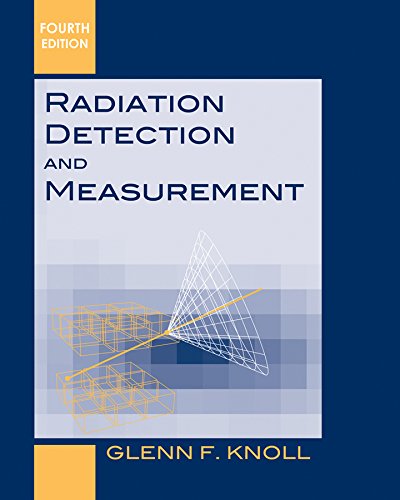
Radiation Detection and Measurement
| SELLER | SELLER SCORE | AMAZON FULFILLED | PRIME | FREE SHIPPING |
|---|---|---|---|---|
| SuperExpressDeals | 7.46 | No | No | No |
A researcher sits in a dimly lit laboratory, cross-referencing complex data sets against the rigorous standards found in this essential text. Wiley has delivered a foundational pillar for anyone serious about mastering the intricacies of nuclear physics and safety protocols. While the price point reflects its specialized academic nature, the depth of information provided makes it a necessary investment for professional development in the field. It isn't just a collection of theories. It is a practical roadmap for navigating the complexities of measuring ionizing radiation accurately. Whether you are preparing for advanced certification or managing a high-stakes technical environment, this book serves as a reliable, authoritative guide that bridges the gap between abstract physics and real-world application.



Inventing Temperature: Measurement and Scientific Progress (Oxford Studies in Philosophy of Science)
| SELLER | SELLER SCORE | AMAZON FULFILLED | PRIME | FREE SHIPPING |
|---|---|---|---|---|
| Amazon.com | 9.68 | Yes | Yes | Yes |
Philosophers of science and history enthusiasts will find this text indispensable for understanding how we quantify the invisible. Inventing Temperature dives deep into the conceptual evolution of thermal measurement, moving far beyond simple thermometer mechanics to explore the profound scientific progress driven by these tools. It is a dense, intellectually stimulating read that treats the history of temperature not just as a series of inventions, but as a fundamental shift in how humanity perceives reality. Rather than a dry textbook, this Oxford University Press publication offers a sophisticated narrative on how measurement shapes our scientific frameworks. If you are looking to bridge the gap between the history of technology and the philosophy of science, this volume is a necessary addition to your academic library.


Arduino for Projects in Scientific Measurement: Take your Arduino to the Frontiers of Science!
| SELLER | SELLER SCORE | AMAZON FULFILLED | PRIME | FREE SHIPPING |
|---|---|---|---|---|
| Amazon.com | 9.68 | Yes | Yes | Yes |
Can a simple microcontroller actually bridge the gap between hobbyist tinkering and legitimate laboratory research? Randy Normann’s latest guide argues that it can, and it provides the roadmap to do exactly that. Instead of focusing on basic LED blinking or simple motor controls, this book pushes you toward the frontiers of science by prioritizing precision and data accuracy. It is a refreshing departure from standard introductory manuals, targeting those who want to transform their Arduino setups into serious tools for scientific measurement. Whether you are looking to quantify environmental variables or build custom sensing arrays, the content is tailored to elevate your technical capabilities. It turns a versatile board into a sophisticated instrument for discovery.

Introduction to the Theories of Measurement and Meaningfulness and the Use of Symmetry in Science (Scientific Psychology Series)
| SELLER | SELLER SCORE | AMAZON FULFILLED | PRIME | FREE SHIPPING |
|---|---|---|---|---|
| Amazon.com | 9.68 | Yes | Yes | Yes |
Introduction to the Theories of Measurement and Meaningfulness and the Use of Symmetry in Science is a rigorous deep dive into the foundational logic of scientific inquiry. Published by Psychology Press as part of their Scientific Psychology Series, this text moves beyond surface-level observations to tackle the complex relationship between mathematical symmetry and how we assign meaning to data. It is a dense, scholarly work that demands focus, but it offers an unparalleled look at the structural frameworks used in psychological measurement. If you are looking for a textbook that bridges the gap between abstract theory and practical scientific application, this volume provides the necessary intellectual scaffolding. It is a specialized resource that treats the nuances of measurement with the gravity they deserve.

Scientific Imaging With Photoshop: Methods, Measurement, and Output
| SELLER | SELLER SCORE | AMAZON FULFILLED | PRIME | FREE SHIPPING |
|---|---|---|---|---|
| No | No | No |
Researchers working in high-stakes laboratory environments cannot afford to treat their image processing as mere artistic retouching. Scientific Imaging With Photoshop: Methods, Measurement, and Output serves as an essential bridge between creative software and rigorous academic standards. Instead of focusing on aesthetic filters, this text dives deep into the technical necessities of data integrity, ensuring that your visual results remain quantifiable and reproducible. It is a specialized resource designed to prevent the common pitfalls of data manipulation that can ruin a peer-reviewed publication. If your work requires precise measurement and professional output, this guide provides the methodical framework needed to turn standard imagery into credible scientific evidence.

The most common mistake in selecting measurement equipment is conflating accuracy with precision. Accuracy refers to how close a measurement is to the true value, while precision (or repeatability) refers to the consistency of results when measuring the same object multiple times. When evaluating instruments, you must first define your tolerance levels. If your experiment requires sub-milligram sensitivity, a standard commercial scale will fail you. You will need an analytical balance with internal calibration mechanisms. Always look for the 'uncertainty rating' in technical specifications, as this provides a realistic window of error that is essential for statistical validation.
Resolution is the smallest change in a quantity that an instrument can detect and display. In high-stakes scientific environments, you often need a resolution that is at least one order of magnitude finer than your target measurement. For instance, if you are measuring temperature fluctuations in a chemical reaction, a thermometer with a resolution of 0.1°C might be insufficient if the reaction's stability depends on 0.01°C increments. Sensitivity, on the other hand, describes how much the output changes in response to a change in the input. A highly sensitive sensor will react quickly to minute environmental shifts, which is vital for real-time monitoring but requires careful shielding against electrical noise.
A measurement tool is only as reliable as its last calibration. When shopping for professional-grade equipment, prioritize instruments that offer NIST-traceable calibration or support standardized calibration protocols. This ensures that your data can be compared across different laboratories and complies with international quality standards like ISO. Consider whether the device features 'auto-calibration' functions. While manual calibration offers more control for expert users, automated systems can reduce human error and ensure consistency across long-term longitudinal studies.
Scientific measurement rarely happens in a vacuum. You must account for the environmental variables of your workspace. For optical measurement tools, ambient light interference is a primary concern. For electronic sensors, electromagnetic interference (EMI) can degrade signal integrity. Furthermore, consider the durability and ingress protection (IP) ratings if you are working in field research or harsh industrial settings. A tool that is highly precise but cannot withstand the humidity of a field site is a liability. Finally, evaluate the data output capabilities: do you need a standalone digital readout, or does the device require integration with a computer via USB, RS-232, or wireless protocols for automated data logging?
Quick answers about Scientific Measurement before you buy.
Share of top-ranked products by brand, from our editorial analysis.
We've carried out a comprehensive analysis of 411 reviews on Scientific Measurement, using our selection criteria to identify the best options in the science & math. Our findings reveal that most customers typically select Scientific Measurement priced around $66.06, with top brands including oxford university press, usa, randy normann, psychology press and wiley and belknap press.
Our team of expert editors reviewed these high-quality items and handpicked the top 6 Scientific Measurement for your consideration. We've also done extensive research on numerous sellers, identifying the best ones in the science & math category — including and amazon.com and superexpressdeals.
We are dedicated to assisting our users in finding the right asins Products based on their needs, saving them considerable time when choosing which Scientific Measurement to buy. We take pride in the number of satisfied users we've helped through our thorough and insightful reviews.
Compare the top 6 picks at a glance — select a column to sort.


