Understanding Blade Geometry and Edge Profiles
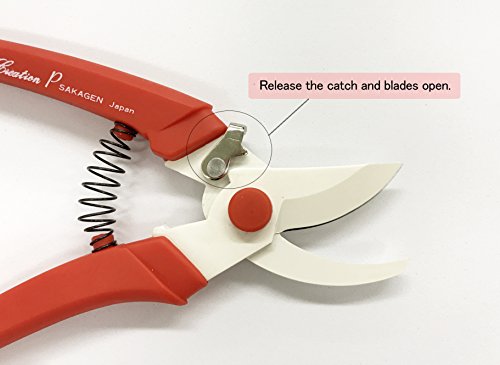
The most critical factor in selecting sakagen-style scissors is the blade profile. Because these are 'hand creation' tools, the shape of the blade dictates the type of movement you can achieve. If your work involves long, sweeping cuts through fabric or large sheets of paper, you should look for blades with a continuous, smooth curve that prevents 'stuttering' during the cut. Conversely, if you are performing micro-detailing or cutting tight radii, a shorter, more pointed blade is essential. Pay close attention to the tip; a needle-point tip allows for surgical precision in tight spaces, whereas a blunt or rounded tip provides better safety for repetitive tasks. The edge itself should be honed to a razor-sharp finish, as even the slightest dullness will cause the material to bunch up rather than slice cleanly.
Material Composition and Corrosion Resistance
High-end creation scissors are typically forged from specialized stainless steel alloys. When evaluating options, consider the balance between hardness and flexibility. A harder steel will hold a sharp edge for much longer, which is vital for professional use, but it can be more brittle. Look for high-carbon stainless steel, which offers the best of both worlds: the ability to maintain a microscopic edge and the resistance to rust and oxidation. Since hand-creation work often involves contact with skin oils or moisture, a high resistance to corrosion ensures that the pivot point and the blades remain smooth and functional for years without seizing.
Pivot Tension and Ergonomic Balance
A pair of scissors is only as good as its pivot mechanism. The tension—how much resistance you feel when opening and closing the blades—must be perfectly calibrated to your hand strength and the material you are cutting. If the tension is too loose, the blades will overlap and 'chew' the material; if it is too tight, you will experience hand fatigue during extended sessions. Look for scissors with adjustable tension screws, which allow you to fine-tune the feel as the blades wear over time. Furthermore, ergonomics should not be an afterthought. The finger loops should be contoured to prevent pressure points, and the overall weight distribution should feel balanced in the palm, allowing the tool to feel like a natural extension of your grip rather than a heavy weight pulling at your hand.
To make the final decision, categorize your primary use case. For textile artists, prioritize blade length and smoothness of the glide. For paper crafters and model makers, prioritize tip precision and the ability to make micro-adjustments. If you are a multi-disciplinary creator, you may find that one pair of scissors cannot do everything; in such cases, it is better to invest in two specialized pairs—one for heavy-duty shaping and one for delicate detailing—rather than one mediocre all-purpose pair. Always prioritize build quality and the ability to be professionally sharpened over low-cost, disposable alternatives.