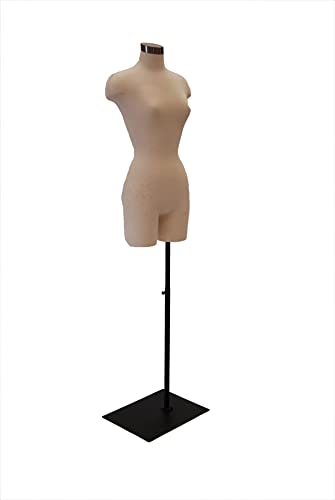
Understanding Core Construction and Padding
The primary function of a sewing dress form is to provide a stable, realistic representation of the human torso. When evaluating roxydisplay™ options, the first thing to consider is the internal padding. High-quality dress forms typically feature a dense foam or fiberfill core that can withstand the constant pressure of dressmaker pins. If you are primarily draping fabric, you need a surface that allows pins to be inserted easily without the form sliding or the padding compressing permanently. Avoid forms that feel hollow or lightweight, as they lack the structural integrity required to hold heavy wools or structured bodices in place. A professional-grade form should feel substantial and offer enough resistance to keep your garment's shape during long fitting sessions.
Size Accuracy and Measurement Precision
The most critical decision factor is the accuracy of the measurements. A dress form is only as useful as its adherence to standard sizing. For those working in bespoke tailoring, look for forms that provide detailed measurement specifications, including bust, waist, hip, and nape-to-waist lengths. It is vital to compare the form's dimensions against your own body or your target client's measurements before purchasing. Some forms are designed with 'standard' proportions that may lean more towards athletic or hourglass silhouettes. If you frequently work with diverse body types, you may eventually need a collection of forms, but your primary form should reflect the most common silhouette you intend to dress.
Stability and Base Design
A dress form is useless if it topples over the moment you attempt to drape a sleeve or adjust a hem. Pay close attention to the stand and base. For tabletop models, ensure the base is weighted and non-slip to prevent wobbling on your cutting table. For full-sized floor models, a heavy tripod or a wide circular base is essential for stability. If you plan on moving your workstation frequently, look for stands with locking casters (wheels) that allow for mobility without sacrificing the firmness required during sewing. A wobbly mannequin will result in uneven draping and can even be a safety hazard when working with heavy fabrics or sharp shears.
Surface Texture and Fabric Compatibility
The outer covering of the mannequin dictates how well it interacts with your materials. Most roxydisplay™ forms feature a professional fabric covering, such as linen or heavy cotton jersey. A linen covering is often preferred by professionals because it is durable, easy to pin, and provides a slight 'grip' that prevents silk or satin fabrics from sliding off the form too easily. If you are a beginner, a slightly more textured surface is more forgiving. Avoid forms with plastic or overly smooth synthetic skins, as these make pinning nearly impossible and cause fabrics to slip, making the draping process incredibly difficult.
Tailoring Versatility and Adjustability
Finally, consider how much versatility you require. Some advanced sewing forms offer adjustable features, such as expandable hips or bust measurements, which allow a single mannequin to accommodate various body shapes. While these are more expensive, they offer significant long-term value for designers working with a wide range of clients. If you are strictly focused on a specific niche, such as children's wear or high-fashion evening gowns, a fixed-size, highly specialized form may be a more cost-effective and accurate choice.