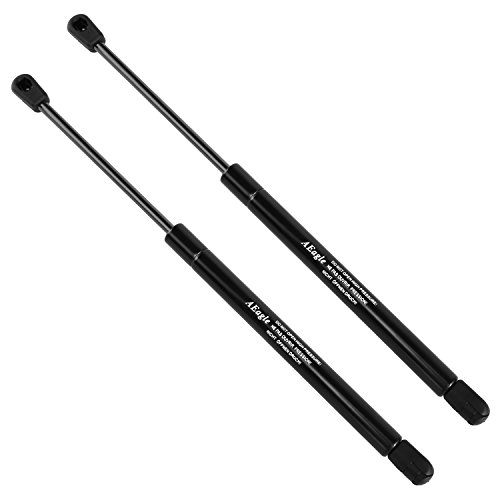
Understanding Gas Pressure and Load Capacity
The most critical technical aspect of a shock lift support is the internal gas pressure. These components operate on a compressed nitrogen principle, which provides the 'push' needed to counteract gravity. When evaluating supports, you must match the Newton (N) rating of the strut to the specific weight of the lid, hatch, or hood you are supporting. If the Newton rating is too low, the component will fail to hold the lid open, posing a significant safety risk. Conversely, if the rating is too high, the lift will be difficult to close and may put undue stress on the hinges. Always verify the weight specifications of your vehicle's component before committing to a specific pressure rating.
Build Quality and Material Durability
Because lift supports are exposed to extreme temperature fluctuations and road debris, material composition is a primary decision factor. Look for high-quality steel rods that feature a corrosion-resistant coating, such as chrome or specialized powder coating. This prevents pitting and rust, which can cause the internal seals to fail. Additionally, the housing should be robust enough to withstand the constant pressure cycles without leaking. High-end supports often feature reinforced end caps and superior seal technology to ensure that the nitrogen charge remains stable over years of use, rather than losing pressure after a single season.
Compatibility and Mounting Precision
A common mistake in purchasing lift supports is focusing solely on the length of the strut while ignoring the ball-and-socket or stud dimensions at the mounting points. Even a millimeter of difference in the mounting diameter can lead to a loose fit, causing the strut to pop out of its socket under load. When shopping, prioritize supports that offer exact dimensional matching for your specific vehicle make and model. Precision engineering ensures that the installation is a 'drop-in' process, requiring no modifications to your vehicle's existing hardware. This is especially important for maintaining the structural integrity of the mounting brackets.
Smoothness of Operation and Damping
The hallmark of a premium lift support is its damping characteristic. A high-quality strut should provide a smooth, controlled ascent and a gentle descent. If a support is poorly designed, you may experience 'bouncing' or a sudden snap when the strut reaches full extension. This is often a sign of inconsistent internal valving. Seek out products that emphasize controlled motion, as this reduces the impact force on the vehicle's hinges and provides a more premium, controlled feel every time you open your trunk or hood.
Recommendation Logic
When deciding which support to purchase, use the following hierarchy: First, prioritize Safety and Load Match (ensure the Newton rating is correct). Second, prioritize Seal Integrity (look for weather-resistant coatings). Third, prioritize Ease of Installation (verify mounting dimensions). If you are looking for a long-term solution, invest slightly more in a model with a higher-grade corrosion resistance, as this will significantly extend the service life in harsh climates.