#TOP1

In the realm of social science research, the bridge between a theoretical hypothesis and empirical truth is built with statistical rigor. Selecting the right statistical methodology is not merely a technical choice. It is a foundational decision that dictates the validity, reliability, and generalizability of your entire study. Whether you are navigating qualitative data through quantitative lenses or managing massive longitudinal datasets, the tools you choose must align with your epistemological framework and your specific research questions. This guide is designed to help researchers, students, and practitioners navigate the complex landscape of statistical methodologies to ensure their findings stand up to peer review and real-world scrutiny.
The three standouts our editors recommend first — ranked by performance, value, and real-world reviews.


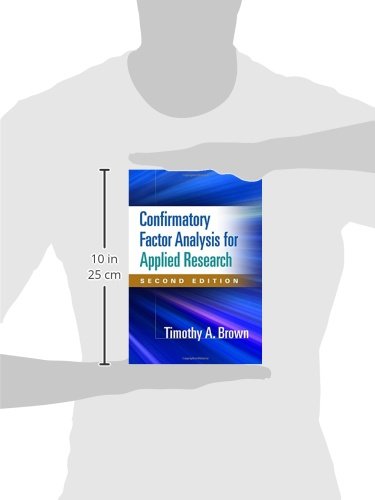
| SELLER | SELLER SCORE | AMAZON FULFILLED | PRIME | FREE SHIPPING |
|---|---|---|---|---|
| GF Books, Inc. | 9.48 | No | No | No |

| SELLER | SELLER SCORE | AMAZON FULFILLED | PRIME | FREE SHIPPING |
|---|---|---|---|---|
| Amazon.com Services LLC | 0.00 | No | No | No |


| SELLER | SELLER SCORE | AMAZON FULFILLED | PRIME | FREE SHIPPING |
|---|---|---|---|---|
| Amazon Global Store UK | 0.00 | No | No | No |

Longitudinal Structural Equation Modeling (Methodology in the Social Sciences)
| SELLER | SELLER SCORE | AMAZON FULFILLED | PRIME | FREE SHIPPING |
|---|---|---|---|---|
| Apex_media🍏 | 9.87 | Yes | Yes | Yes |
Most researchers treat longitudinal data as a simple progression of time, but this text argues that the true complexity lies in the underlying structural relationships. This specific volume from The Guilford Press serves as a rigorous deep dive into the methodology required to master social science modeling. Since this is a used copy in good condition, it offers a practical way to access high-level academic theory without the heavy price tag of a brand-new textbook. It is a dense, specialized resource that demands focus, yet it provides the essential framework needed to untangle complex developmental trajectories. For anyone serious about quantitative social science, having this methodology in your reference library is less of a luxury and more of a structural necessity.


| SELLER | SELLER SCORE | AMAZON FULFILLED | PRIME | FREE SHIPPING |
|---|---|---|---|---|
| Amazon.com | 9.68 | Yes | Yes | Yes |

Measurement Theory and Applications for the Social Sciences (Methodology in the Social Sciences)
| SELLER | SELLER SCORE | AMAZON FULFILLED | PRIME | FREE SHIPPING |
|---|---|---|---|---|
| Amazon.com | 9.68 | Yes | Yes | Yes |
Most researchers assume their data is objective, but this text from The Guilford Press reveals that every measurement is actually a complex theoretical construct. Diving into this volume feels less like reading a standard textbook and more like undergoing a fundamental shift in how you perceive social reality. It moves past the surface-level mechanics of data collection to tackle the rigorous mathematical and philosophical foundations required for truly valid research. While the subject matter is undeniably dense, the depth of insight provided is essential for anyone looking to move beyond basic statistical application into high-level methodological mastery. It is a foundational tool that challenges your assumptions about what it actually means to 'measure' a human behavior or social phenomenon.

| SELLER | SELLER SCORE | AMAZON FULFILLED | PRIME | FREE SHIPPING |
|---|---|---|---|---|
| Amazon.com | 9.68 | Yes | Yes | Yes |

| SELLER | SELLER SCORE | AMAZON FULFILLED | PRIME | FREE SHIPPING |
|---|---|---|---|---|
| Amazon.com Services LLC | 0.00 | No | No | No |

| SELLER | SELLER SCORE | AMAZON FULFILLED | PRIME | FREE SHIPPING |
|---|---|---|---|---|
| Amazon.com | 9.68 | Yes | Yes | Yes |

| SELLER | SELLER SCORE | AMAZON FULFILLED | PRIME | FREE SHIPPING |
|---|---|---|---|---|
| Amazon.com | 9.68 | Yes | Yes | Yes |

| SELLER | SELLER SCORE | AMAZON FULFILLED | PRIME | FREE SHIPPING |
|---|---|---|---|---|
| Amazon.com | 9.68 | Yes | Yes | Yes |

| SELLER | SELLER SCORE | AMAZON FULFILLED | PRIME | FREE SHIPPING |
|---|---|---|---|---|
| Amazon.com | 9.68 | Yes | Yes | Yes |


| SELLER | SELLER SCORE | AMAZON FULFILLED | PRIME | FREE SHIPPING |
|---|---|---|---|---|
| Amazon.com | 9.68 | Yes | Yes | Yes |


| SELLER | SELLER SCORE | AMAZON FULFILLED | PRIME | FREE SHIPPING |
|---|---|---|---|---|
| Amazon.com | 9.68 | Yes | Yes | Yes |


| SELLER | SELLER SCORE | AMAZON FULFILLED | PRIME | FREE SHIPPING |
|---|---|---|---|---|
| Amazon.com | 9.68 | Yes | Yes | Yes |

| SELLER | SELLER SCORE | AMAZON FULFILLED | PRIME | FREE SHIPPING |
|---|---|---|---|---|
| Amazon.com Services LLC | 0.00 | No | No | No |

The first and most critical decision factor is the alignment between your statistical approach and your research design. In social sciences, you must distinguish between descriptive, inferential, and predictive modeling. If your goal is to characterize a specific population, you require robust descriptive statistics and measures of central tendency. However, if you are testing hypotheses to draw conclusions about a larger population from a sample, you must prioritize inferential statistics such as t-tests, ANOVA, or non-parametric alternatives. Choosing a method that is 'overpowered' for a simple descriptive study can lead to false positives, while choosing a method that is too simple for complex causal modeling will result in omitted variable bias.
A common pitfall in social science research is applying parametric tests to non-parametric data. Before selecting a methodology, you must audit your variables based on their level of measurement: nominal, ordinal, interval, or ratio. For example, if you are analyzing Likert scales (often treated as ordinal), applying standard linear regression without considering the underlying distribution can skew your results. You must decide whether your methodology should favor parametric approaches—which assume a normal distribution and are more powerful—or non-parametric approaches, which are more resilient when dealing with the skewed, non-normal distributions common in sociological and psychological data.
Modern social science rarely deals with isolated variables. Most phenomena are nested. For instance, students are nested within classrooms, which are nested within schools. When selecting a methodology, you must determine if your data requires Multilevel Modeling (MLM) or Hierarchical Linear Modeling (HLM). Standard regression techniques often fail to account for the correlation within these nested clusters, leading to underestimated standard errors. If your research involves longitudinal data—tracking the same subjects over multiple time points—you should look for methodologies that support Growth Curve Modeling or Latent Transition Analysis to capture the nuances of change over time.
While the mathematical theory remains constant, the practical application depends heavily on the computational framework. When evaluating a statistical methodology, consider the ease of implementation and the transparency of the process. In contemporary academia, there is a significant shift toward reproducible research. This means favoring methodologies that can be implemented through script-based environments rather than 'black-box' point-and-click interfaces. This ensures that your data cleaning, transformation, and analysis steps are documented, auditable, and capable of being replicated by other researchers, which is the gold standard for scientific integrity.
Quick answers about Social Science Methodology before you buy.
Share of top-ranked products by brand, from our editorial analysis.
We've carried out a comprehensive analysis of 21 reviews on Social Science Methodology, using our selection criteria to identify the best options in the categories. Our findings reveal that most customers typically select Social Science Methodology priced around $77.73.
Our team of expert editors reviewed these high-quality items and handpicked the top 16 Social Science Methodology for your consideration..
We are dedicated to assisting our users in finding the right statistics Products based on their needs, saving them considerable time when choosing which Social Science Methodology to buy. We take pride in the number of satisfied users we've helped through our thorough and insightful reviews.
Compare the top 16 picks at a glance — select a column to sort.


