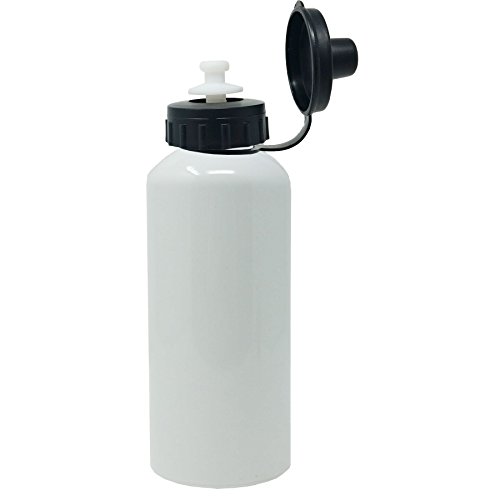
Prioritize Material and Insulation Technology
The most critical decision factor is the material construction. In the realm of sports hydration, you will typically choose between single-wall plastic and double-wall vacuum-insulated stainless steel. If the primary use case is lightweight convenience—such as a quick jog or a child's school bag—high-quality BPA-free plastic is often the preferred choice. However, for serious athletes or long outdoor excursions, stainless steel is the gold standard. Vacuum insulation is a non-negotiable feature if you want your water to remain ice-cold during a midday practice or a summer tournament. When reviewing options, check the insulation rating to ensure it can withstand temperature fluctuations without causing condensation (sweating) on the exterior, which can make the bottle slippery and difficult to grip during intense movement.
Evaluate Lid Functionality and Seal Integrity
A sports water bottle is only as good as its lid. Because these bottles are frequently tossed into equipment bags or left on gym floors, the lid mechanism must be robust. Look for secure, leak-proof designs such as screw-caps with silicone gaskets or high-flow sports nozzles that allow for easy drinking without unscrewing a cap mid-stride. For team environments, consider the ease of cleaning. Lids with complex straw mechanisms or deep crevices can become breeding grounds for bacteria if not meticulously maintained. A simple, wide-mouth design is often easier to sanitize and allows for the addition of ice cubes, which is a major plus for temperature retention.
Assess Customization Durability
Since these are custom gifts, the longevity of the design is paramount. You aren't just buying a bottle. You are buying a canvas. There is a significant difference between a surface-level sticker and a high-quality print or engraving. For stainless steel bottles, laser engraving is often the superior choice because the design is etched into the metal itself, meaning it will never peel, fade, or crack regardless of how many times the bottle is washed or dropped. If you are opting for full-color printed designs, ensure the coating is scratch-resistant. A custom gift loses its emotional value the moment the name or logo begins to flake off after a few uses.
Consider Capacity and Ergonomics
The 'right' size depends entirely on the activity. A 12-ounce bottle might be perfect for a toddler's hydration, but a competitive athlete will likely require at least 24 to 32 ounces to maintain fluid levels during a heavy training session. Beyond volume, consider the ergonomics. Does the bottle feature a tapered waist for easier gripping? Does it have a carry loop or a handle for easy transport? Furthermore, if the bottle is intended to be used in a car or a bike cage, ensure the diameter is compatible with standard cup holders. A bottle that is too wide to carry easily will ultimately be left behind, defeating the purpose of the gift.