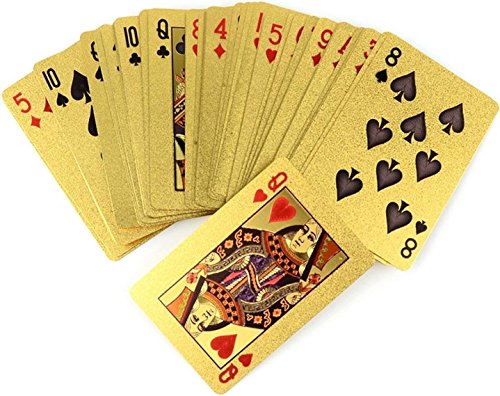
Understanding Card Stock and Material
The most critical decision when selecting a deck is the material used for the cards. Most standard decks fall into two categories: paper-based and plastic-based. Paper cards are the traditional choice for most board games and casual home use. They are generally more affordable and offer a classic feel, but they are susceptible to moisture, oils from your hands, and physical bending. If you choose paper, look for 'cardstock' that is high in density to prevent transparency.
Plastic cards, often made from PVC, are the gold standard for durability. They are virtually waterproof, nearly impossible to crease, and can be wiped clean after use. While they are more expensive upfront, their longevity makes them a better value for frequent players. If you are playing in environments where drinks are served, plastic is the only logical choice.
Finish and Texture: The Role of Coating
Even within the same material category, the surface finish of a card changes how it performs. Professional-grade decks often feature an 'Air-Cushion' or 'Linen' finish. This isn't just an aesthetic choice. These finishes create tiny, microscopic air pockets between the cards. This allows the cards to glide over one another effortlessly during a shuffle or a deal, preventing them from sticking together—a common frustration with cheap, smooth-coated decks. If you plan on performing card flourishes or complex shuffling techniques, a textured finish is non-negotiable. For casual games where cards stay mostly flat on a table, a standard smooth coating may suffice.
Suitability for Specific Activities
Not all decks are created equal when it comes to their intended use. You should categorize your needs into one of three buckets:
- Casual/Family Play: Look for standard paper decks with a basic coating. These are perfect for low-stakes games like Go Fish or Uno where the cards aren't being handled aggressively.
- Gaming and Gambling: If you are hosting poker nights, prioritize durability and 'opacity.' You want a deck that is thick enough that players cannot see through the cards when held up to a light, and a finish that allows for quick, consistent shuffling.
- Magic and Cardistry: For performers, the deck is a tool. You need high-flexibility cardstock that can withstand being bent, twisted, and manipulated repeatedly without losing its structural integrity or 'snap.'
Edge Quality and Print Precision
Finally, pay attention to the edges and the printing. High-quality decks undergo rigorous cutting processes to ensure that the edges are smooth and uniform. Rough edges can catch on one another, causing 'clumping' during a shuffle. Additionally, look for high-contrast printing. A deck with crisp, clear suit symbols and numbers is much easier to read in low-light settings, such as a dimly lit game room or a casino environment. When evaluating a deck, consider the balance between tactile feel, visual clarity, and the expected lifespan of the product.