#TOP1

Navigating the complex intersection of orbital mechanics, RF engineering, and digital signal processing requires more than just a passing familiarity with physics. It demands a deep, structured understanding of how data travels through the vacuum of space. For engineers, students, and aerospace professionals, selecting the right telecommunication satellite engineering books is a critical investment in technical literacy. The field is moving rapidly from traditional bent-pipe architectures to complex software-defined satellites and massive LEO constellations, making the selection of up-to-date, authoritative literature essential for staying relevant in a high-stakes industry.
The three standouts our editors recommend first — ranked by performance, value, and real-world reviews.


FM Satellite Communications for Beginners: Shoot for the Sky... On A Budget (Amateur Radio for Beginners)
| SELLER | SELLER SCORE | AMAZON FULFILLED | PRIME | FREE SHIPPING |
|---|---|---|---|---|
| Amazon.com | 9.68 | Yes | Yes | Yes |
You might wonder if a budget-friendly guide can actually demystify the complex world of orbital radio, but this book cuts through the technical noise effectively. FM Satellite Communications for Beginners is a focused resource designed specifically for those entering the amateur radio hobby without wanting to break the bank. Instead of drowning you in high-level physics right away, it approaches satellite communication from a practical, entry-level perspective. It serves as a roadmap for hobbyists who want to reach beyond terrestrial limits and start communicating via satellite on a modest budget. For anyone feeling intimidated by the sheer scale of amateur radio, this text provides a manageable starting point for your next technical adventure.

Satellite Basics for Everyone: An Illustrated Guide to Satellites for Non-Technical and Technical People
| SELLER | SELLER SCORE | AMAZON FULFILLED | PRIME | FREE SHIPPING |
|---|---|---|---|---|
| Amazon.com | 9.68 | Yes | Yes | Yes |
After weeks of diving into the complexities of orbital mechanics, I finally found a resource that doesn't require a PhD to understand. Satellite Basics for Everyone acts as a perfect bridge between dense academic papers and surface-level trivia. The iUniverse guide uses an illustrated approach that makes the daunting physics of space technology feel approachable for a casual reader while still offering enough substance to satisfy someone with a technical background. It manages to strip away the intimidating jargon without losing the essential scientific accuracy required to actually learn the subject. Whether you are a student or just a curious stargazer, this book serves as a highly accessible roadmap to the world orbiting above us.


Satellite Communications, Fourth Edition (Professional Engineering)
| SELLER | SELLER SCORE | AMAZON FULFILLED | PRIME | FREE SHIPPING |
|---|---|---|---|---|
| Amazon.com | 9.68 | Yes | Yes | Yes |
Satellite Communications, Fourth Edition is an absolute cornerstone for any electrical engineer or telecommunications student looking to master orbital mechanics and signal processing. This McGraw-Hill Education text moves beyond mere theory, providing the rigorous mathematical framework required for professional-grade engineering work. While some academic volumes feel unnecessarily dense, this edition strikes a balance that makes complex satellite link budgets and modulation schemes digestible without sacrificing technical depth. It is a heavy-duty resource that justifies its place on a professional's reference shelf, serving as both a classroom staple and a long-term technical manual for those working in the aerospace and communications sectors.

Satellite Communications
| SELLER | SELLER SCORE | AMAZON FULFILLED | PRIME | FREE SHIPPING |
|---|---|---|---|---|
| Amazon.com | 9.68 | Yes | Yes | Yes |
How can we truly grasp the invisible architecture connecting our modern world? Wiley’s Satellite Communications serves as a foundational deep dive into the complex orbital technologies that define our global connectivity. While the price point reflects its status as a serious technical resource, the depth of information makes it an essential addition to any engineering or telecommunications library. It isn't just a casual read. It is a structured exploration of how signals travel through space to keep our data flowing. If you are looking to master the intricacies of satellite systems, this text provides the professional clarity required for high-level study. It is a heavy-duty tool for anyone serious about the future of aerospace and communication engineering.


Engineering Satellite-Based Navigation and Timing: Global Navigation Satellite Systems, Signals, and Receivers
| SELLER | SELLER SCORE | AMAZON FULFILLED | PRIME | FREE SHIPPING |
|---|---|---|---|---|
| SuperBookDeals-- | 9.74 | No | No | No |
Most people take the pinpoint accuracy of their smartphone's GPS for granted, but this text pulls back the curtain on the complex physics and engineering that actually makes it possible. Engineering Satellite-Based Navigation and Timing serves as a deep dive into the intricate relationship between global satellite systems, signal processing, and receiver design. Instead of just scratching the surface of consumer-grade tech, this Wiley-Interscience publication provides the rigorous technical foundation required to understand how these signals are broadcast and interpreted. It is a dense, authoritative resource that bridges the gap between theoretical orbital mechanics and the practical reality of modern timing and positioning. For anyone serious about the architecture of GNSS, this is a foundational piece of professional literature.

Satellite Communications Network Design and Analysis
| SELLER | SELLER SCORE | AMAZON FULFILLED | PRIME | FREE SHIPPING |
|---|---|---|---|---|
| nagpurkar | 5.23 | No | No | No |
Satellite Communications Network Design and Analysis stands as a cornerstone technical resource for engineers seeking a rigorous deep dive into orbital connectivity. This Artech House publication moves past surface-level concepts to tackle the complex mathematics and architectural requirements essential for modern space-based systems. While the price point reflects its status as a specialized professional text, the depth of analysis provided makes it a worthwhile investment for anyone serious about telecommunications infrastructure. You won't find fluff here. Instead, you get a streamlined, academic approach to designing robust networks that can withstand the rigors of satellite deployment. It is an essential addition to a technical library for those navigating the intricacies of signal propagation and network topology.

Phased Arrays for Radio Astronomy, Remote Sensing, and Satellite Communications (EuMA High Frequency Technologies Series)
| SELLER | SELLER SCORE | AMAZON FULFILLED | PRIME | FREE SHIPPING |
|---|---|---|---|---|
| GF Books, Inc. | 9.48 | No | No | No |
Technical textbooks often feel like dry collections of equations, but this Cambridge University Press volume manages to bridge the gap between theoretical physics and real-world application. It isn't just a math exercise. It is a deep dive into how phased arrays actually function across radio astronomy, remote sensing, and satellite communication sectors. I found that the way it categorizes high-frequency technologies makes complex electromagnetic concepts feel much more approachable for a serious student or professional. While the subject matter is undeniably dense, the structured approach of the EuMA High Frequency Technologies Series ensures you aren't just memorizing formulas, but actually understanding the mechanics of modern signal processing. It is a substantial resource for anyone working in high-stakes telecommunications or deep-space observation.

Ground Station Design and Analysis for LEO Satellites: Analytical, Experimental and Simulation Approach
| SELLER | SELLER SCORE | AMAZON FULFILLED | PRIME | FREE SHIPPING |
|---|---|---|---|---|
| Amazon.com | 9.68 | Yes | Yes | Yes |
Designing a reliable ground station for Low Earth Orbit satellites requires a grueling balance of theoretical math and real-world hardware constraints. This text bridges that gap by providing a comprehensive roadmap through analytical, experimental, and simulation-based methodologies. Instead of just handing you formulas, the book walks you through the actual workflow of building and testing communication systems. It is a dense, technical resource that feels less like a dry textbook and more like a professional field guide for aerospace engineers. Whether you are simulating orbital passes or analyzing signal integrity, the structured approach ensures you aren't just guessing at your design parameters. It is an essential asset for anyone serious about mastering the complexities of satellite ground segment architecture.
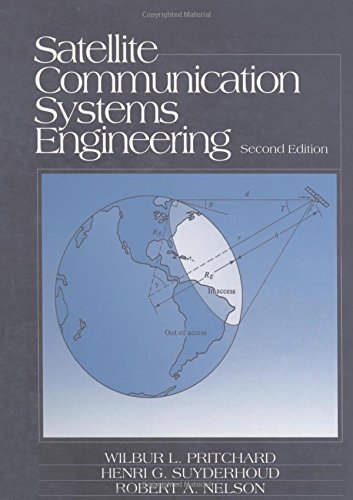


Satellite Communication Systems Engineering
| SELLER | SELLER SCORE | AMAZON FULFILLED | PRIME | FREE SHIPPING |
|---|---|---|---|---|
| ThriftBooks-Dallas | 9.87 | No | No | No |
Satellite Communication Systems Engineering stands as a cornerstone technical resource for anyone diving into the complexities of orbital mechanics and signal processing. This Prentice Hall publication delivers the rigorous mathematical foundation required to master modern telecommunications architecture. While many textbooks gloss over the practical nuances of link budgets and interference, this volume approaches the subject with the depth a professional engineer expects. It is a dense, authoritative guide that bridges the gap between theoretical physics and real-world satellite deployment. At its current price point, it serves as an incredibly accessible entry point into high-level aerospace communications engineering, making complex concepts much more approachable for serious students and industry veterans alike.

Satellite Communications Systems Engineering: Atmospheric Effects, Satellite Link Design and System Performance
| SELLER | SELLER SCORE | AMAZON FULFILLED | PRIME | FREE SHIPPING |
|---|---|---|---|---|
| Prime Deals, USA | 9.66 | No | No | No |
Dense technical diagrams and complex mathematical proofs define the experience of working through this Wiley publication. This isn't a casual read for hobbyists, but rather a rigorous deep dive into the physics of orbital connectivity. You will find yourself tracing the intricate relationship between atmospheric interference and link design as you navigate the core engineering principles. It tackles the heavy lifting of system performance modeling with a level of precision required for professional aerospace applications. If you are looking to master how environmental factors degrade signal integrity, this text provides the necessary theoretical framework to build more resilient satellite networks.


Technical Handbook for Satellite Monitoring: Edition 2019
| SELLER | SELLER SCORE | AMAZON FULFILLED | PRIME | FREE SHIPPING |
|---|---|---|---|---|
| Amazon.com | 9.68 | Yes | Yes | Yes |
Aerospace engineers and satellite communications specialists require this specific technical handbook to navigate the complexities of modern orbital tracking. This 2019 edition from Books on Demand serves as a vital reference point for anyone working within the high-stakes environment of satellite monitoring. While many resources in this field become obsolete almost immediately, this volume provides a structured deep dive into the essential protocols and technical frameworks necessary for professional accuracy. It is a serious tool for a serious discipline, offering the kind of specialized knowledge that you simply cannot find in general physics textbooks. If you are building a professional library or preparing for a role in orbital mechanics, this handbook is a foundational investment that arrives quickly to support your research.


Telecommunication Systems Engineering (Dover Books on Electrical Engineering)
| SELLER | SELLER SCORE | AMAZON FULFILLED | PRIME | FREE SHIPPING |
|---|---|---|---|---|
| Basi6 International | 9.60 | No | No | No |
An electrical engineering student sits hunched over a desk late at night, trying to make sense of complex signal modulation theories that their modern textbook glosses over. This Dover Books edition serves as that essential, deep-dive resource for anyone needing to master the foundational principles of telecommunication systems. It strips away the superficiality often found in contemporary manuals, offering a rigorous look at the engineering mechanics that make modern communication possible. While the price point reflects its status as a specialized academic text, the depth of information provided makes it a cornerstone for a serious technical library. It is less of a casual read and more of a professional tool for decoding the complexities of system design.

Introduction to Satellite Ground Segment Systems Engineering: Principles and Operational Aspects (Space Technology Library, 41)
| SELLER | SELLER SCORE | AMAZON FULFILLED | PRIME | FREE SHIPPING |
|---|---|---|---|---|
| Amazon.com | 9.68 | Yes | Yes | Yes |
You might hesitate to drop over a hundred dollars on a technical textbook without knowing if it actually bridges the gap between theory and practice. This volume in the Space Technology Library serves as that essential bridge, moving beyond simple orbital mechanics to focus on the often-overlooked ground segment. It tackles the complex engineering principles and operational realities required to keep satellite communications running smoothly. Instead of getting lost in abstract math, the text emphasizes the systemic approach needed for real-world ground station management. For anyone working in aerospace or telecommunications, this isn't just another academic read. It is a functional roadmap for understanding how the terrestrial side of space technology actually functions in a professional environment.

Before purchasing a technical manual, you must assess your current mathematical proficiency. Satellite engineering is heavily reliant on advanced calculus, linear algebra, and probability theory. If you are a student or a junior engineer, look for books that provide 'first principles' derivations. These texts will walk you through the underlying physics of wave propagation and orbital perturbations rather than simply providing formulas. Conversely, if you are a seasoned professional looking for a reference, prioritize texts that focus on high-level system architecture and integrated link budget analysis, which assume a pre-existing mastery of the fundamentals.
The term 'satellite engineering' is an umbrella that covers several distinct, highly specialized fields. To find the most useful resource, you must narrow your focus to one of the following domains:
The most significant decision factor in this category is the 'era' of the technology described. A book written in the 1990s might offer impeccable foundational physics, but it will likely be silent on modern advancements such as High Throughput Satellites (HTS), beamforming, and the massive scaling seen in Low Earth Orbit (LEO) mega-constellations. When reviewing a book, check the index or preface for mentions of modern digital signal processing (DSP), software-defined radio (SDR), and contemporary cybersecurity protocols for space assets. A hybrid approach—using a classic text for fundamental physics and a modern text for system implementation—is often the most effective strategy.
Theoretical knowledge is only half the battle. The best engineering books often bridge the gap between equations and real-world implementation. Look for texts that include worked examples, case studies of actual satellite missions, or guidance on using industry-standard simulation tools. Books that explain how to translate a theoretical link budget into a practical hardware specification offer significantly more value for professional application than purely academic treatises.
Quick answers about Telecommunication Satellite Engineering Books before you buy.
Share of top-ranked products by brand, from our editorial analysis.
We've carried out a comprehensive analysis of 307 reviews on Telecommunication Satellite Engineering Books, using our selection criteria to identify the best options in the engineering & transportation. Our findings reveal that most customers typically select Telecommunication Satellite Engineering Books priced around $86.89, with top brands including moxic, wiley, mcgraw-hill education, artech house publishers, iuniverse, independently published, books on demand, prentice hall and mcgraw-hill education tab and wiley-interscience.
Our team of expert editors reviewed these high-quality items and handpicked the top 13 Telecommunication Satellite Engineering Books for your consideration. We've also done extensive research on numerous sellers, identifying the best ones in the engineering & transportation category — including amazon.com, basi6 international, collegebook4u, nagpurkar, prime deals, usa, thriftbooks-dallas and superbookdeals-- and gf books, inc..
We are dedicated to assisting our users in finding the right telecommunications Products based on their needs, saving them considerable time when choosing which Telecommunication Satellite Engineering Books to buy. We take pride in the number of satisfied users we've helped through our thorough and insightful reviews.
Compare the top 13 picks at a glance — select a column to sort.


