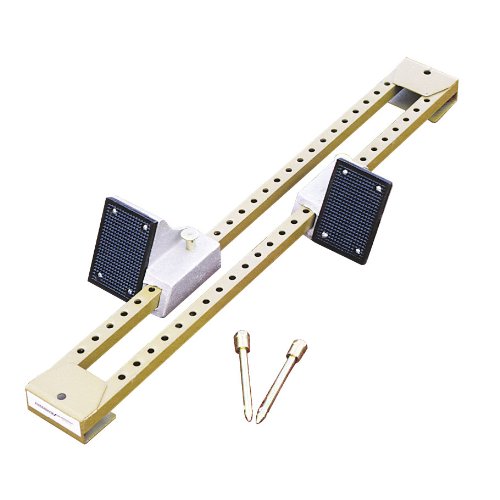
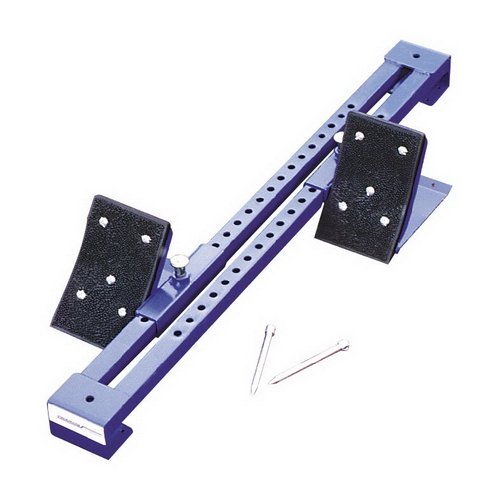
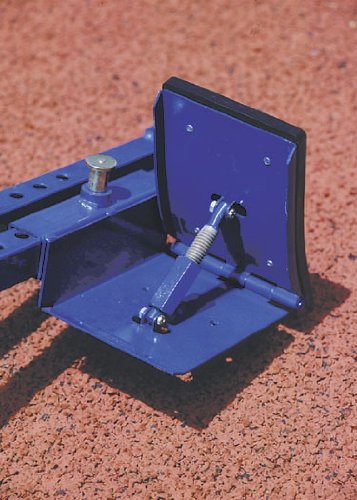
The most critical factor in selecting starting blocks is the degree of adjustability offered by the footplates. Every sprinter has a unique anatomy, varying hip heights, and different preferred angles for their drive phase. Look for blocks that offer multiple positions for both the front and rear footplates. Ideally, the plates should allow for both angle adjustments (to accommodate different shin angles) and distance adjustments (to accommodate different stride lengths). High-end blocks often feature graduated scales or notched systems that allow athletes to find their 'sweet spot' and replicate it exactly every time they step into the blocks. If the footplates are too rigid or offer limited movement, athletes will struggle to find a position that optimizes their center of gravity during the initial push.
A block is only as good as its ability to stay anchored to the track. During the 'set' position and the subsequent explosion, several hundred pounds of force are exerted against the equipment. You must prioritize blocks with heavy-duty, non-slip footings. For synthetic tracks, look for rubberized bases or spiked shoes that can be securely attached to prevent the blocks from sliding backward. If your facility uses a mix of surfaces, versatility in the base design is key. Furthermore, the frame itself must be constructed from high-grade aluminum or steel to prevent flexing. Any 'give' or vibration in the frame during the start will dissipate the athlete's power and can lead to inconsistent race starts.
Portability and Setup Efficiency
For coaches and athletic directors, the logistical side of equipment management is just as important as the performance side. Track meets often require rapid transitions between heats, meaning blocks need to be easy to carry, unfold, and lock into place. Evaluate the weight-to-durability ratio. While heavier blocks often feel more stable, they can become a burden during transport. Look for integrated handles and folding mechanisms that are intuitive and robust. A design that allows for quick adjustment of the tension or the distance between plates without requiring complex tools will save significant time during warm-ups and competition windows.
Durability and Weather Resistance
Track equipment is frequently subjected to the elements, from intense UV exposure to heavy rain. When choosing blocks, consider the quality of the powder coating and the resistance of the adjustment mechanisms to corrosion. Moving parts, such as pins, knobs, and sliding rails, should be treated with weather-resistant finishes to ensure they do not seize up over time. Investing in professional-grade materials ensures that the blocks remain a reliable part of your program for years, rather than becoming a maintenance liability after a single season of outdoor use.