Compatibility and Camera Integration
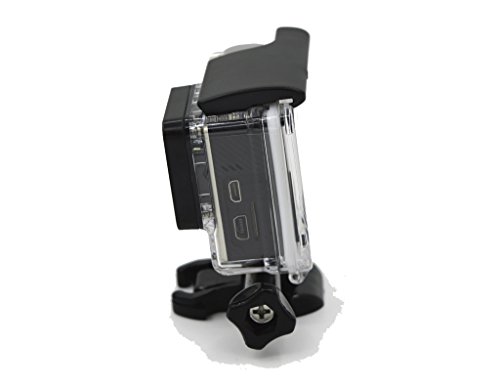
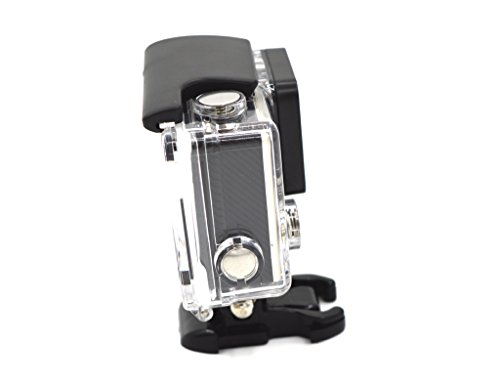
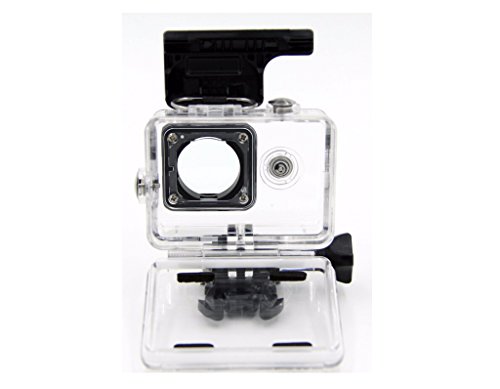
The most critical factor when selecting an enegg housing is absolute compatibility. Unlike generic waterproof cases, these housings are precision-molded to fit specific camera bodies. You cannot simply choose a housing based on size. It must be designed for your exact camera model to ensure that every button, dial, and sensor remains accessible. When evaluating a housing, check how the internal mounting system handles the camera's ergonomics. A good housing should allow you to manipulate the aperture, shutter speed, and ISO without having to remove the camera from the unit. If the housing feels cramped or prevents you from reaching essential controls, your ability to react to fast-moving marine life will be severely compromised.
Material Integrity and Depth Rating
Underwater environments are punishing. The materials used in the construction of the housing dictate its longevity and its maximum operating depth. Most high-quality enegg housings utilize reinforced polycarbonate or specialized aluminum alloys. Polycarbonate is excellent for its impact resistance and lighter weight, making it ideal for long dives where buoyancy control is a priority. However, if you are planning deep technical dives, you must pay close attention to the depth rating. Always choose a housing that offers a safety margin. If your planned dive is 40 meters, do not settle for a housing rated exactly at 40 meters. Look for housings that utilize high-grade O-ring seals, as these are the primary defense against water ingress. The quality of the seal interface is often more important than the thickness of the outer shell.
Control Ergonomics and Port Access
A housing is only as good as its interface. Once you are submerged, you are working through a barrier of thick acrylic or glass. Look for housings that feature tactile, responsive buttons that mimic the feel of the camera's actual controls. A common pitfall is choosing a housing that provides depth protection but lacks 'control parity.' You want to ensure that the housing's external levers and buttons provide enough leverage to operate the camera's internal functions smoothly. Furthermore, consider the lens port options. Some housings come with fixed ports, while others allow for interchangeable ports to accommodate wide-angle lenses for landscapes or macro ports for tiny sea creatures. If you plan to switch between photography styles, modularity is a key decision factor.
Light Management and Optical Clarity
The quality of your underwater images depends heavily on how light travels from the ocean through the housing's port and into your lens. Cheap plastics can cause chromatic aberration or soft edges in your photos. enegg housings prioritize optical clarity, often using high-transparency optical glass or specialized anti-reflective coatings on the ports. When making your decision, consider whether the housing is optimized for strobe lighting. Effective housings will have mounting points for external flashes (strobes) that allow for precise positioning to minimize backscatter. If you are a videographer, ensure the housing provides clear access to the microphone ports or has integrated housings for external lighting arrays to ensure your video remains vibrant even in low-light depths.