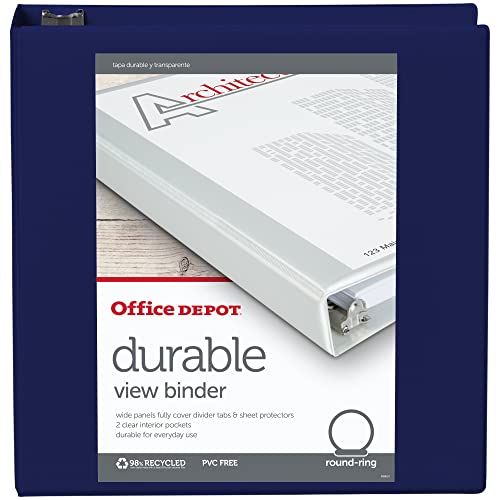
Understanding Ring Mechanisms and Capacity
The most critical component of any binder is the ring mechanism. When selecting a view binder, you must decide between Round Rings and D-Rings. Round rings are the traditional standard, providing a circular path for punched paper. They are excellent for lighter use and standard filing, but they can cause pages to bunch or tear if the binder is overstuffed. D-Rings, conversely, feature a flat side that mimics the shape of the letter 'D.' This allows the pages to lie flatter, prevents the 'telescoping' effect where papers slide toward the center, and generally provides a more professional look for thick documents. When choosing capacity—typically measured in inches—always aim for a size that allows for roughly 20% more volume than your current paper stack to prevent excessive tension on the rings.
Cover Material and Durability
Since the primary purpose of a view binder is to display a cover, the quality of the clear overlay is paramount. Look for binders with high-clarity, non-yellowing PVC or polypropylene overlays. A low-quality overlay will cloud over time or develop scratches that obscure your cover art. Furthermore, consider the substrate of the binder itself. Polypropylene binders are lightweight and flexible, making them ideal for student use or temporary projects. However, for long-term archival use or high-traffic office environments, heavy-duty vinyl or reinforced cardboard binders offer superior structural integrity and resist bending under the weight of heavy paper loads.
The Importance of the Spine and Edge Construction
A professional view binder should have a clean, crisp spine. If you are using these for presentations, the spine view is just as important as the front cover. Ensure the spine overlay is wide enough to accommodate a legible title. Additionally, pay close attention to the 'edge wrap.' High-quality binders feature reinforced edges that prevent the cover from fraying or peeling at the corners. If you are frequently sliding binders in and out of tight shelving, look for models with a 'spine protector' or a reinforced hinge, which prevents the binder from cracking when opened fully.
Selection Logic: Which Binder for Which Task?
To make the right decision, categorize your intended use case:
- For Professional Presentations: Prioritize D-ring mechanisms and heavy-duty vinyl covers. The goal is a flat, stable document that stays open on a conference table without flipping shut.
- For Student Portfolios: Opt for lightweight polypropylene view binders. They are cost-effective and easy to carry in a backpack, and the clear cover allows for creative expression.
- For Long-Term Archiving: Select binders with reinforced rings and a rigid construction. These will withstand the pressure of being stacked on a shelf for years without the rings warping or the covers bowing.