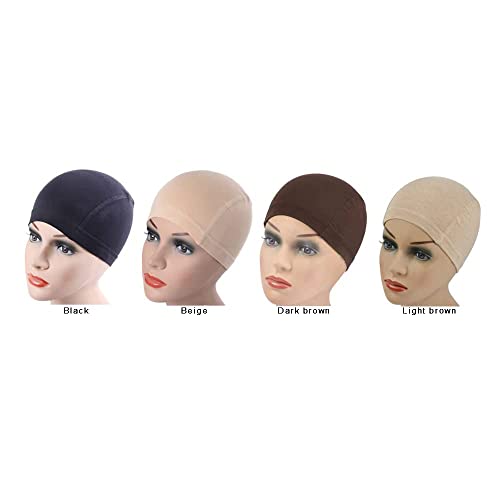
Material Composition and Breathability
The most critical factor in selecting a Yantaisiyu cap is the fabric blend. Because wigs are worn for extended periods, heat retention can become a significant issue. Look for caps that utilize high-stretch nylon or specialized mesh blends. A high-quality cap should offer enough elasticity to flatten your natural hair without being so restrictive that it causes tension headaches. If you are prone to scalp perspiration, prioritize lightweight, breathable meshes. These allow airflow to reach the scalp, preventing the buildup of moisture that can damage both your natural hair and the wig's lace base over time.
Compression Level and Hair Type
Not all hair types require the same level of compression. If you have thick, coarse, or curly hair, you need a cap with significant 'memory'—the ability to stretch wide and then snap back to hold hair firmly against the head. For those with fine or thin hair, a cap that is too tight may cause visible indentations or skin irritation. When evaluating your options, consider the 'flattening power' of the cap. A successful cap should create a smooth, uniform surface that eliminates any lumps from braids, clips, or buns, providing a clean canvas for the wig to sit upon.
Edge Construction and Seam Placement
One of the most common mistakes in wig wearing is choosing a cap with bulky seams. If the seams of your cap are thick or positioned awkwardly, they will telegraph through the wig, creating unnatural ridges along the hairline. Look for Yantaisiyu options that feature flat-lock stitching or seamless edges. The perimeter of the cap should be tapered so that it sits flush against your forehead and temples. This is especially important if you are wearing a lace front wig. A low-profile cap ensures that the lace sits naturally against your skin rather than being pushed away by a bulky edge.
Durability and Elasticity Retention
A wig cap is a consumable item, but it shouldn't lose its shape after a single wear. Cheaply made caps often suffer from 'elastic fatigue,' where the fabric stretches out and becomes loose, causing the wig to slide. When selecting a cap, look for descriptions that emphasize high-density weaving. A high-density weave ensures that the cap maintains its tension throughout the day. Furthermore, consider how the cap handles repeated washing. Since these items sit against the skin, they require frequent cleaning. A durable material will withstand hand-washing without losing its ability to compress hair effectively.
Summary of Selection Logic
To make the best decision, follow this hierarchy: First, identify your hair density to determine the necessary stretch capacity. Second, assess your comfort needs based on your local climate (mesh for heat, solid nylon for extra security). Third, inspect the seam profiles to ensure they won't interfere with the wig's hairline. By matching the cap's technical specifications to your specific hair texture and wig style, you ensure a professional finish that looks as natural as possible.