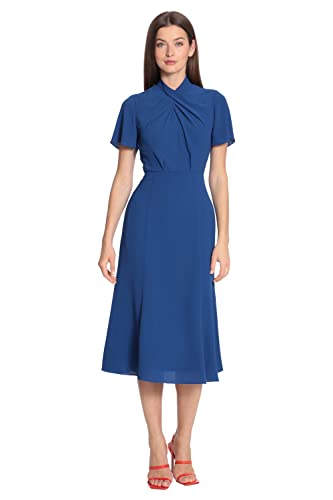
Define Your Professional Environment
Before browsing, you must categorize your workplace culture. A legal firm or financial institution typically demands 'Business Formal' attire, which prioritizes structured silhouettes, modest necklines, and neutral palettes. Think sheath dresses in heavy crepe or wool blends that maintain their shape throughout a long day. Conversely, a 'Business Casual' environment—common in tech, marketing, or education—allows for more fluidity. In these settings, midi-length wrap dresses, shirt dresses with subtle prints, or knit midi dresses are ideal. Understanding this distinction prevents the mistake of being over-dressed for a casual office or under-dressed for a formal one.
Prioritize Fabric Integrity and Longevity
The longevity of your professional wardrobe depends heavily on textile choice. Avoid thin, jersey-knit fabrics that cling excessively or wrinkle easily after sitting for an hour. These can quickly look unpolished. Instead, look for high-quality blends such as ponte knit, which offers the comfort of a stretch fabric with the structured look of a woven material. For more formal settings, wool blends, heavy silks, and high-density crepes are superior because they drape elegantly and resist creasing. Always check the fabric composition to ensure the piece can withstand regular dry cleaning or gentle laundering without losing its structural integrity.
The Importance of Silhouette and Fit
A well-fitted dress is the hallmark of professional attire. The most versatile silhouettes for work include the sheath, the A-line, and the wrap dress. A sheath dress provides a streamlined, authoritative look, while an A-line silhouette offers more movement and is generally more forgiving for all-day comfort. When evaluating fit, pay close attention to the shoulder seams and the hemline. Shoulders should sit exactly where your natural frame ends, and the hemline should ideally fall near the knee or mid-calf. Avoid dresses that are overly tight or excessively voluminous. The goal is a tailored appearance that allows for ease of movement during commutes and presentations.
Color Theory and Pattern Management
While personal style is important, color plays a psychological role in professional settings. Neutral tones—navy, charcoal, black, beige, and forest green—are the foundation of a functional work wardrobe because they are easy to mix and match with existing blazers and accessories. If you prefer color, opt for jewel tones like burgundy or teal, which convey sophistication. When it comes to patterns, keep them subtle. Small geometric prints, classic houndstooth, or muted florals are professional, whereas large, high-contrast, or neon patterns can become a distraction in a professional meeting. A balanced approach ensures your personality shines through without overshadowing your professional contributions.
Versatility and Layering Potential
The most cost-effective dresses are those that can transition from the office to an evening event or a weekend brunch. Look for pieces that pair seamlessly with a structured blazer, a lightweight cardigan, or a trench coat. A sleeveless sheath dress is a brilliant investment because it functions as a standalone piece in summer or a layering base in winter. When shopping, ask yourself: 'Can I wear this with three different jackets or sweaters?' If the answer is yes, you have found a high-value staple for your professional rotation.