Understanding Drive Mechanisms: Dual vs. Single Drive
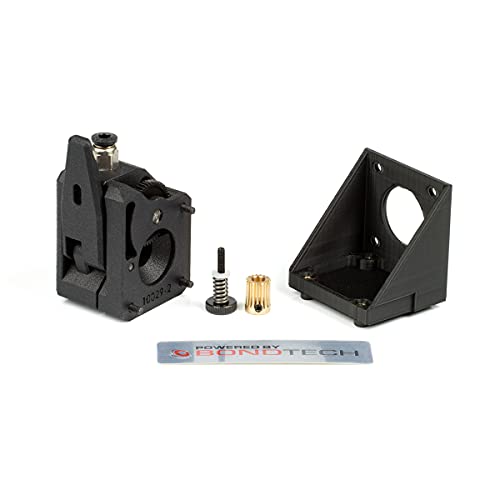
The most critical decision when selecting a high-end extruder is the drive configuration. Most premium options favor a dual-drive system. In a dual-drive setup, the filament is gripped from both sides by geared rollers. This significantly reduces the chance of filament slipping, which is the primary cause of under-extrusion and 'clicking' sounds during long prints. If you intend to print with flexible materials like TPU or TPE, a dual-drive mechanism is non-negotienerable, as it provides the necessary stability to prevent the soft filament from buckling inside the drive gears.
Grip and Gear Material: Durability vs. Precision
The interface between the motor and the filament is defined by the drive gears. You will often see a choice between hardened steel gears and brass or aluminum components. Hardened steel is the gold standard for long-term reliability, especially if you frequently print abrasive, composite-filled filaments (such as those containing carbon fiber or glow-in-the-dark particles). Abrasive filaments will quickly strip the teeth off softer metal gears, leading to inconsistent extrusion. When selecting your hardware, prioritize high-torque, precision-cut steel gears to ensure consistent volumetric flow rates.
Weight and Integration: Direct Drive vs. Bowden
Where you mount the extruder dictates the weight on your print head. Direct drive extruders are mounted immediately above the hotend. This offers the best control for flexible filaments but adds mass to the X-axis, which can introduce ghosting or ringing at high speeds due to inertia. Conversely, if you prefer a Bowden setup where the extruder sits on the frame and pushes filament through a tube, you gain speed and agility but lose some fine-tuned control over retraction and soft materials. For users seeking the pinnacle of precision, a lightweight direct-drive assembly is the modern preference, provided your printer's motion system can handle the additional weight.
Tension Control and Modular Design
A high-quality extruder should offer adjustable tension. Not every filament requires the same amount of squeeze. Too much pressure can deform soft filaments, while too little causes slipping. Look for extruders that feature a dedicated tensioning screw or spring-loaded mechanism that allows you to fine-tune the grip. Furthermore, consider the modularity of the unit. The best extruders allow for easy swapping of drive gears or even the integration of different hotend geometries, ensuring that your investment can evolve as your printing needs become more specialized.