#TOP1

Architecture criticism is not merely a collection of reviews about buildings. It is a rigorous intellectual discipline that examines the intersection of spatial design, social politics, and cultural history. Whether you are a professional architect looking to sharpen your theoretical framework, a student navigating the complexities of urbanism, or a design enthusiast seeking to understand the 'why' behind the skyline, selecting the right critical texts is essential. A good piece of criticism does more than describe a facade. It interrogates the intent, the impact, and the lasting legacy of the built environment.
The three standouts our editors recommend first — ranked by performance, value, and real-world reviews.


Fantasy Mapping: Drawing Worlds
| SELLER | SELLER SCORE | AMAZON FULFILLED | PRIME | FREE SHIPPING |
|---|---|---|---|---|
| Amazon.com | 9.68 | Yes | Yes | Yes |
A truly immersive tabletop campaign relies more on a well-drawn coastline than it does on a thousand pages of lore. Fantasy Mapping: Drawing Worlds serves as a dedicated toolkit for creators who realize that a blank sheet of parchment is the most intimidating obstacle in world-building. Instead of just providing abstract concepts, this book focuses on the actual craft of translating imagination into cartographic reality. It bridges the gap between a vague idea of a kingdom and a tangible, visual landscape that players can actually navigate. Whether you are a novelist needing to ground your setting or a dungeon master designing a new realm, this guide treats map-making as a fundamental storytelling pillar rather than a mere afterthought.
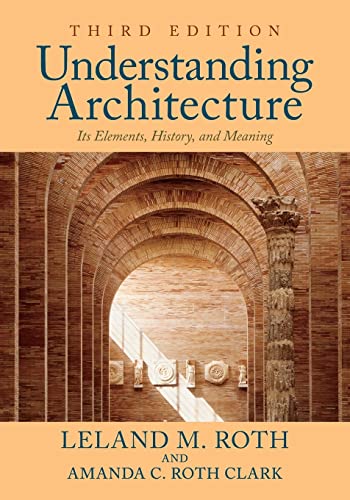


Understanding Architecture: Its Elements, History, and Meaning
| SELLER | SELLER SCORE | AMAZON FULFILLED | PRIME | FREE SHIPPING |
|---|---|---|---|---|
| Apex_media🍏 | 9.87 | Yes | Yes | Yes |
Most people walk past breathtaking skylines every day without ever truly seeing the structural logic that holds them up. This Routledge publication changes that perspective by stripping away the intimidation factor of architectural theory. Instead of just looking at pretty buildings, you dive into the actual elements, historical shifts, and deeper meanings that define how we inhabit space. Since this is a used copy in good condition, it feels like a well-loved academic resource that has already stood the test of time. It is a dense, rewarding read for anyone tired of surface-level design discussions and ready to understand the 'why' behind the world's most iconic structures.

| SELLER | SELLER SCORE | AMAZON FULFILLED | PRIME | FREE SHIPPING |
|---|---|---|---|---|
| Amazon.com Services LLC | 0.00 | No | No | No |

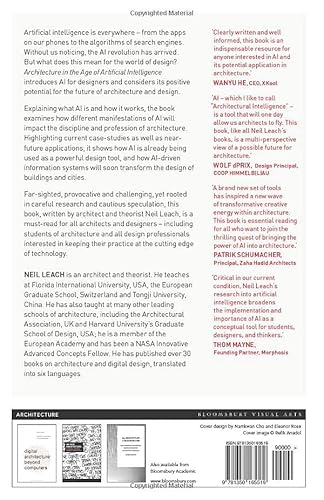
| SELLER | SELLER SCORE | AMAZON FULFILLED | PRIME | FREE SHIPPING |
|---|---|---|---|---|
| Amazon.com | 9.68 | Yes | Yes | Yes |


Not Interesting: On the Limits of Criticism in Architecture
| SELLER | SELLER SCORE | AMAZON FULFILLED | PRIME | FREE SHIPPING |
|---|---|---|---|---|
| Amazon.com | 9.68 | Yes | Yes | Yes |
The weight of a heavy, provocative thesis settles in your hands the moment you pick up Not Interesting: On the Limits of Criticism in Architecture. This isn't your typical coffee table book designed for mindless flipping. It is a sharp, intellectual interrogation of how we evaluate the built environment. Applied Research & Design takes a deep dive into the boundaries of architectural critique, challenging the very way we perceive design success and failure. At a price point, it offers a surprisingly accessible entry into high-level discourse. If you are tired of the same recycled architectural tropes and want something that actually forces you to rethink your perspective on the structures around you, this volume is an essential addition to your library.


| SELLER | SELLER SCORE | AMAZON FULFILLED | PRIME | FREE SHIPPING |
|---|---|---|---|---|
| Amazon.com | 9.68 | Yes | Yes | Yes |


Architecture and the Text: The (S)crypts of Joyce and Piranesi (Theoretical Perspectives in Architectural History and Criticism Series)
| SELLER | SELLER SCORE | AMAZON FULFILLED | PRIME | FREE SHIPPING |
|---|---|---|---|---|
| Amazon.com | 9.68 | Yes | Yes | Yes |
Architecture and the Text offers a profound intellectual bridge between literary theory and spatial design. This volume from the Theoretical Perspectives in Architectural History and Criticism Series dives deep into the complex intersections of James Joyce’s narratives and the haunting etchings of Piranesi. Instead of a dry textbook, it functions as a rigorous exploration of how text and structure influence one another. Whether you are an architectural historian or a literature scholar, the way this book deconstructs the concept of the 'crypt' provides a fresh lens for viewing built environments. It is a dense, rewarding read that manages to make high-level theory feel remarkably tangible and essential for anyone interested in the philosophy of space.

| SELLER | SELLER SCORE | AMAZON FULFILLED | PRIME | FREE SHIPPING |
|---|---|---|---|---|
| Amazon.com Services LLC | 0.00 | No | No | No |

The Story of Architecture
| SELLER | SELLER SCORE | AMAZON FULFILLED | PRIME | FREE SHIPPING |
|---|---|---|---|---|
| Amazon.com | 9.68 | Yes | Yes | Yes |
Aspiring designers and history buffs alike require this volume to truly grasp the structural evolution of our built world. The Story of Architecture serves as a foundational pillar for anyone looking to move beyond surface-level aesthetics and understand the deeper narrative behind iconic landmarks. While many books on the subject can feel overly academic or dry, this work attempts to weave a cohesive timeline that connects ancient ingenuity to modern marvels. It positions itself as an accessible entry point for a serious home library. It is the kind of essential reference you find yourself reaching for whenever you want to understand why certain spaces feel the way they do.

On the Duty and Power of Architectural Criticism: Proceeds of the International Conference on Architectural Criticism 2021
| SELLER | SELLER SCORE | AMAZON FULFILLED | PRIME | FREE SHIPPING |
|---|---|---|---|---|
| Amazon.com | 9.68 | Yes | Yes | Yes |
This academic collection serves as a profound deep dive into the evolving landscape of architectural theory, making it an essential addition to any professional library. As a compilation of proceedings from the 2021 International Conference on Architectural Criticism, the text moves beyond mere observation to explore the actual agency and responsibility inherent in critical discourse. It is a dense, intellectually stimulating volume that challenges how we perceive the built environment. While it is clearly aimed at a specialized audience rather than casual readers, the depth of inquiry provided by the various contributors makes it a vital resource for students and practitioners alike. At a price point, it offers significant scholarly value for those looking to engage with the contemporary debates shaping our cities.

Architecture Criticism Ideology:: Revisions, Volume 1
| SELLER | SELLER SCORE | AMAZON FULFILLED | PRIME | FREE SHIPPING |
|---|---|---|---|---|
| TAP Books Online | 8.74 | No | No | No |
Serious architectural scholars and theory enthusiasts require this specific volume to ground their understanding of critical discourse. Published by Princeton Architectural Press, this text serves as a vital resource for anyone looking to dissect the complex relationship between design and ideology. While this particular copy is a used book, it remains in good condition, making it an incredibly accessible entry point into high-level academic study without the typical heavy price tag of new monographs. It is rare to find such specialized, foundational material available at this price point, making it a smart acquisition for a university library or a personal collection of design theory.


| SELLER | SELLER SCORE | AMAZON FULFILLED | PRIME | FREE SHIPPING |
|---|---|---|---|---|
| Amazon.com | 9.68 | Yes | Yes | Yes |
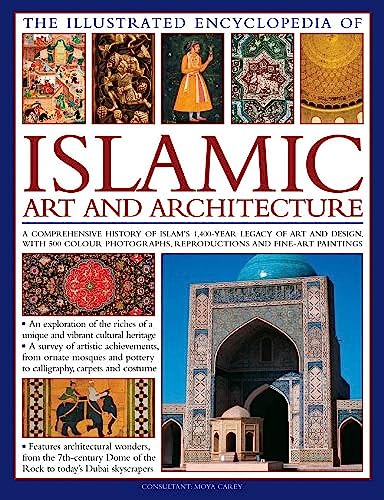
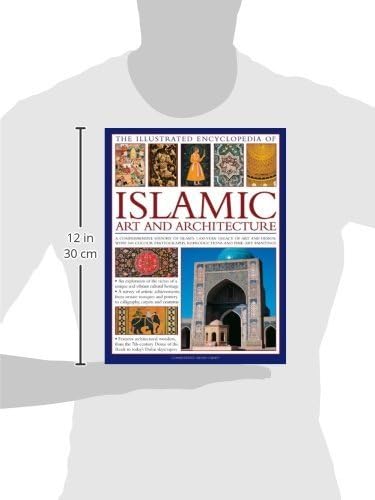

The Illustrated Encyclopedia of Islamic Art and Architecture: A Comprehensive History of Islam's 1,400-Year Legacy of Art and Design, With 500 Color P...
| SELLER | SELLER SCORE | AMAZON FULFILLED | PRIME | FREE SHIPPING |
|---|---|---|---|---|
| Amazon.com | 9.68 | Yes | Yes | Yes |
How can fourteen centuries of intricate design be distilled into a single, breathtaking volume? The Illustrated Encyclopedia of Islamic Art and Architecture from Lorenz Books attempts exactly that, offering a deep dive into a massive cultural legacy. This isn't just a dry textbook. It is a visual feast packed with 500 color photographs, fine-art paintings, and detailed reproductions that bring historical motifs to life. While this specific copy is a used book, it remains in good condition, making it an accessible way to own a heavy-hitting reference guide. Whether you are an art history student or a design enthusiast, the sheer breadth of this collection makes it a vital addition to any coffee table or study.

Architecture criticism is rarely monolithic. Before investing in a collection of essays or a monograph, you must determine which philosophical lens aligns with your interests. Some critics focus on Phenomenology, exploring how light, texture, and space affect human sensory experience. Others lean toward Structuralism or Post-Structuralism, analyzing how buildings function as signs and symbols within a cultural language. If you are interested in the socio-economic drivers of design, look for criticism rooted in Marxist theory or Urban Sociology. Choosing a book based on its theoretical foundation ensures that the arguments presented will resonate with your existing knowledge or provide the specific intellectual challenge you seek.
One of the most common pitfalls in purchasing architectural literature is confusing descriptive journalism with true criticism. Descriptive texts often act as high-end catalogs, detailing materials, dimensions, and architect biographies without offering a central thesis. While these are useful for reference, they lack the transformative power of analytical criticism. When evaluating a title, look for works that propose a provocation or a critique of current trends. High-quality criticism should engage in a dialogue with history, questioning whether a new structure upholds or subverts established architectural canons.
Decision-making should also be guided by the geographic and temporal scope of the work. Some volumes offer a macro-view, examining global phenomena such as the rise of parametricism or the impact of climate change on international building standards. These are excellent for understanding the 'big picture.' Conversely, localized criticism—focusing on a specific city’s zoning laws, heritage conservation, or neighborhood gentrification—provides a granular understanding of how architecture affects lived reality. Determine if you need a bird's-eye view of the discipline or a deep dive into the specific mechanics of a particular urban context.
The medium often dictates the depth. Academic presses and specialized architectural journals typically offer peer-reviewed, highly dense, and rigorously researched criticism suitable for deep study. In contrast, essays published in design magazines may be more accessible and timely, focusing on contemporary trends and immediate aesthetic shifts. When selecting a text, consider whether you require the authoritative weight of an academic treatise or the agile, provocative commentary of a contemporary periodical. Understanding the intent of the publisher will help you manage your expectations regarding the complexity and the intended audience of the critique.
Quick answers about Architecture Criticism before you buy.
Share of top-ranked products by brand, from our editorial analysis.
We've carried out a comprehensive analysis of 48 reviews on Architecture Criticism, using our selection criteria to identify the best options in the categories. Our findings reveal that most customers typically select Architecture Criticism priced around $28.65.
Our team of expert editors reviewed these high-quality items and handpicked the top 13 Architecture Criticism for your consideration..
We are dedicated to assisting our users in finding the right criticism Products based on their needs, saving them considerable time when choosing which Architecture Criticism to buy. We take pride in the number of satisfied users we've helped through our thorough and insightful reviews.
Compare the top 13 picks at a glance — select a column to sort.


