#TOP1
Understanding Architecture: Elements, History, and Meaning
9.3
Score
PM Score
Architectural criticism is not merely a collection of reviews regarding the aesthetics of buildings. It is a rigorous intellectual discipline that interrogates the relationship between built form, social agency, and cultural identity. Whether you are a student of design, a professional practitioner, or an enthusiast seeking to deepen your understanding of the urban fabric, selecting the right critical texts is essential. The field spans from the polemical manifestos of the early 20th century to contemporary sociopolitical analyses of urbanism, requiring a discerning eye to navigate the nuances of theory versus practice.
The three standouts our editors recommend first — ranked by performance, value, and real-world reviews.
Understanding Architecture: Its Elements, History, and Meaning
| SELLER | SELLER SCORE | AMAZON FULFILLED | PRIME | FREE SHIPPING |
|---|---|---|---|---|
| Amazon.com Services LLC | 0.00 | No | No | No |
You might hesitate to drop over seventy dollars on a digital file, but Understanding Architecture: Its Elements, History, and Meaning proves that deep expertise carries a premium. I went into this ebook expecting a superficial overview, but it functions more like a comprehensive masterclass on the built environment. It bridges the gap between technical structural elements and the profound cultural meanings behind historical design movements. Instead of just looking at buildings, you start to see the intentionality behind every arch and column. Since it is available for immediate download, you can dive into these complex historical narratives without waiting for a physical shipment. It is a serious investment for anyone looking to move beyond basic aesthetics into true architectural literacy.

Architectural Principles in the Age of Humanism
| SELLER | SELLER SCORE | AMAZON FULFILLED | PRIME | FREE SHIPPING |
|---|---|---|---|---|
| Amazon.com | 9.68 | Yes | Yes | Yes |
You are sitting in a quiet university library, surrounded by towering stone arches, trying to decipher how classical design logic actually dictates the way we inhabit modern spaces. This W. W. Norton & Company publication serves as a deep dive into that exact intersection of structural theory and human-centric philosophy. It moves beyond mere aesthetics to explore the foundational rules that have shaped our built environment for centuries. While it is a specialized text, the depth of insight makes it an essential companion for anyone looking to understand the soul behind the stone. At its current price point, it offers a surprisingly accessible entry into high-level architectural discourse without sacrificing the intellectual rigor expected from a premier publisher.


Not Interesting: On the Limits of Criticism in Architecture
| SELLER | SELLER SCORE | AMAZON FULFILLED | PRIME | FREE SHIPPING |
|---|---|---|---|---|
| Amazon.com | 9.68 | Yes | Yes | Yes |
The weight of a heavy, provocative thesis settles in your hands the moment you pick up Not Interesting: On the Limits of Criticism in Architecture. This isn't your typical coffee table book designed for mindless flipping. It is a sharp, intellectual interrogation of how we evaluate the built environment. Applied Research & Design takes a deep dive into the boundaries of architectural critique, challenging the very way we perceive design success and failure. At a price point, it offers a surprisingly accessible entry into high-level discourse. If you are tired of the same recycled architectural tropes and want something that actually forces you to rethink your perspective on the structures around you, this volume is an essential addition to your library.

Origins of Architectural Pleasure
| SELLER | SELLER SCORE | AMAZON FULFILLED | PRIME | FREE SHIPPING |
|---|---|---|---|---|
| Amazon.com | 9.68 | Yes | Yes | Yes |
Most people assume that architecture is purely a matter of structural integrity and physics, but this volume suggests that our built environment is actually driven by deep-seated psychological cravings. Origins of Architectural Pleasure moves beyond the cold math of blueprints to explore the visceral ways humans respond to space and form. Published by the University of California Press, this work serves as a sophisticated deep dive for anyone interested in why certain buildings feel inherently right while others feel alienating. It is a dense, intellectual journey that challenges the idea that beauty is subjective, arguing instead that there are fundamental roots to our aesthetic satisfaction. If you want to understand the soul behind the stone, this is an essential addition to your library.
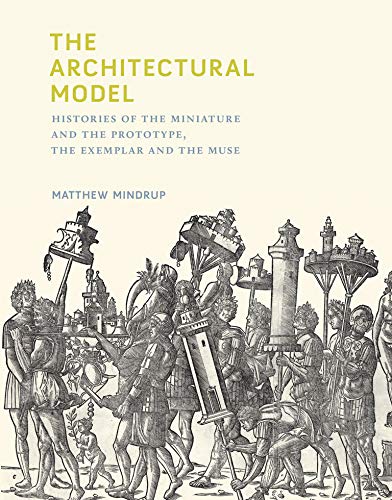
The Architectural Model: Histories of the Miniature and the Prototype, the Exemplar and the Muse (The MIT Press)
| SELLER | SELLER SCORE | AMAZON FULFILLED | PRIME | FREE SHIPPING |
|---|---|---|---|---|
| allnewbooks | 9.66 | No | No | No |
Architectural historians and design students require this deep dive to truly grasp how scale shapes our understanding of built environments. The Architectural Model moves far beyond simple scale representations to explore the complex relationship between the miniature and the prototype. It examines how these tiny structures serve as both functional exemplars and creative muses throughout history. Instead of a dry textbook, this volume offers a nuanced investigation into how the small-scale version influences the grand-scale reality. It is an essential addition to any academic library or serious design studio, providing the intellectual framework necessary to understand the profound influence of modeling in the architectural process.

The Ecologies of the Building Envelope: A Material History and Theory of Architectural Surfaces
| SELLER | SELLER SCORE | AMAZON FULFILLED | PRIME | FREE SHIPPING |
|---|---|---|---|---|
| Amazon.com | 9.68 | Yes | Yes | Yes |
Can we truly understand modern architecture without deconstructing the very skin that holds our structures together? The Ecologies of the Building Envelope moves far beyond simple construction manuals to offer a profound investigation into the material history and theoretical framework of architectural surfaces. Actar has curated a work that treats the building envelope not just as a physical barrier, but as a complex, living system. It bridges the gap between historical material usage and contemporary ecological theory, making it an essential addition to any professional library or academic study. Instead of dry technical data, you get a deep dive into how surfaces interact with their environments, providing a much-needed perspective for designers looking to balance aesthetics with environmental responsibility.


Architecture and the Text: The (S)crypts of Joyce and Piranesi (Theoretical Perspectives in Architectural History and Criticism Series)
| SELLER | SELLER SCORE | AMAZON FULFILLED | PRIME | FREE SHIPPING |
|---|---|---|---|---|
| Amazon.com | 9.68 | Yes | Yes | Yes |
Architecture and the Text offers a profound intellectual bridge between literary theory and spatial design. This volume from the Theoretical Perspectives in Architectural History and Criticism Series dives deep into the complex intersections of James Joyce’s narratives and the haunting etchings of Piranesi. Instead of a dry textbook, it functions as a rigorous exploration of how text and structure influence one another. Whether you are an architectural historian or a literature scholar, the way this book deconstructs the concept of the 'crypt' provides a fresh lens for viewing built environments. It is a dense, rewarding read that manages to make high-level theory feel remarkably tangible and essential for anyone interested in the philosophy of space.

Architectural Principles in the Age of Fraud
| SELLER | SELLER SCORE | AMAZON FULFILLED | PRIME | FREE SHIPPING |
|---|---|---|---|---|
| Amazon.com | 9.68 | Yes | Yes | Yes |
Deceptive practices in modern design and construction demand a rigorous intellectual defense. Architectural Principles in the Age of Fraud tackles this systemic vulnerability head-on, offering a deep dive into how foundational design standards can be protected against contemporary malpractice. While many industry texts focus solely on aesthetics or structural engineering, this work shifts the lens toward the ethical and structural integrity required to combat fraud in the built environment. It serves as a critical resource for professionals who need to navigate the increasingly complex intersection of architectural theory and real-world accountability. If you are looking to understand how to safeguard professional standards in a landscape where shortcuts are becoming common, this book provides the necessary theoretical framework to stand your ground.
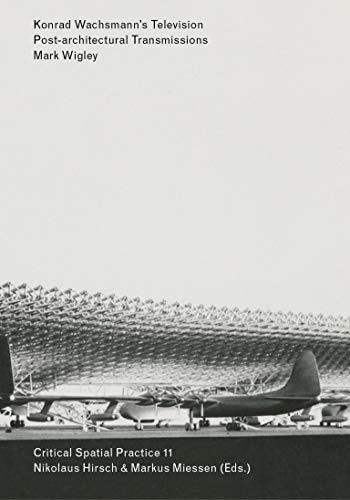
Konrad Wachsmann's Television: Post-architectural Transmissions (Sternberg Press / Critical Spatial Practice)
| SELLER | SELLER SCORE | AMAZON FULFILLED | PRIME | FREE SHIPPING |
|---|---|---|---|---|
| Amazon.com | 9.68 | Yes | Yes | Yes |
Konrad Wachsmann's Television stands as a definitive pillar for scholars exploring the intersection of media and spatial theory. This volume from the Critical Spatial Practice series offers a deep dive into post-architectural transmissions, making it an essential addition to any serious academic library or design studio. Rather than a standard textbook, it functions as a rigorous investigation into how visual media reshapes our understanding of built environments. The publication maintains the high intellectual standard expected from Sternberg Press, providing a dense, thoughtful exploration of complex theoretical frameworks. Whether you are a researcher or a practitioner interested in the evolving relationship between architecture and broadcast technology, this book delivers the profound insight necessary to challenge traditional spatial perspectives.

Design Technics: Archaeologies of Architectural Practice
| SELLER | SELLER SCORE | AMAZON FULFILLED | PRIME | FREE SHIPPING |
|---|---|---|---|---|
| Amazon.com | 9.68 | Yes | Yes | Yes |
Design Technics: Archaeologies of Architectural Practice offers a profound intellectual deep dive that most architectural surveys simply gloss over with surface-level history. Instead of just looking at finished buildings, this University of Minnesota Press publication forces you to dig into the actual mechanics and messy processes of how design happens. It treats architectural practice as a layered, evolving field that requires an almost archaeological level of scrutiny to truly understand. While it isn't a light beach read, it is an essential resource for anyone tired of the standard, polished narratives found in mainstream design textbooks. It provides the gritty, technical context that makes the evolution of our built environment actually make sense.

On the Duty and Power of Architectural Criticism: Proceeds of the International Conference on Architectural Criticism 2021
| SELLER | SELLER SCORE | AMAZON FULFILLED | PRIME | FREE SHIPPING |
|---|---|---|---|---|
| Amazon.com | 9.68 | Yes | Yes | Yes |
This academic collection serves as a profound deep dive into the evolving landscape of architectural theory, making it an essential addition to any professional library. As a compilation of proceedings from the 2021 International Conference on Architectural Criticism, the text moves beyond mere observation to explore the actual agency and responsibility inherent in critical discourse. It is a dense, intellectually stimulating volume that challenges how we perceive the built environment. While it is clearly aimed at a specialized audience rather than casual readers, the depth of inquiry provided by the various contributors makes it a vital resource for students and practitioners alike. At a price point, it offers significant scholarly value for those looking to engage with the contemporary debates shaping our cities.
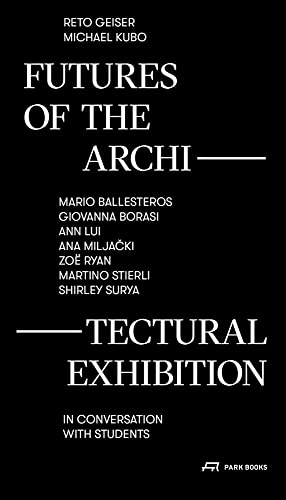
Futures of the Architectural Exhibition: Mario Ballesteros, Giovanna Borasi, Ann Lui, Ana Miljacki, Zoë Ryan, Martino Stierli, Shirley Surya in Conver...
| SELLER | SELLER SCORE | AMAZON FULFILLED | PRIME | FREE SHIPPING |
|---|---|---|---|---|
| Amazon.com | 9.68 | Yes | Yes | Yes |
After weeks of digging through contemporary design theory, I finally sat down with this profound dialogue on the evolution of architectural exhibitions. This isn't just another dry academic text. It is a vibrant, multi-perspective exchange featuring heavyweights like Mario Ballesteros and Giovanna Borasi engaging directly with the next generation of thinkers. The book captures a unique tension between established expertise and student inquiry, making it an essential resource for anyone interested in how physical spaces communicate complex ideas. At a price point, it offers an incredibly accessible entry into high-level architectural discourse that feels both urgent and intellectually stimulating for students and professionals alike.

The first step in selecting architectural criticism is determining which lens you wish to view the world through. Criticism is rarely neutral. It is driven by specific ideological frameworks. If you are interested in the formalist approach, look for texts that prioritize geometry, materiality, and the structural logic of a building. If your interest lies in phenomenology, seek out critics who focus on the sensory experience of space—light, shadow, and human movement. For those interested in the political dimension, prioritize works that address gentrification, post-colonialism, and the impact of capitalism on the built environment. Choosing a book based on its theoretical foundation ensures that the content aligns with your existing knowledge or your specific learning goals.
A common mistake is conflating architectural theory with architectural criticism. Theory provides the conceptual tools and philosophical underpinnings (the 'why' and 'how' of design), whereas criticism applies those tools to specific works or eras (the 'is' and 'is not'). If you are looking to build a foundational vocabulary, start with theoretical treatises. However, if you want to understand how design functions in the real world, look for critical essays that engage with specific case studies. High-quality criticism will bridge this gap, using theoretical rigor to dissect the successes and failures of actual architectural interventions.
The medium of criticism significantly impacts its depth and accessibility. Academic monographs offer exhaustive, peer-reviewed deep dives that are indispensable for scholarly research but can be dense and jargon-heavy. In contrast, criticism published in architectural journals or high-end design periodicals often provides more timely, reactionary, and punchy perspectives on contemporary trends. When selecting a text, consider the era in which it was written. A critique of Modernism written in 1960 will offer a fundamentally different perspective than a critique of Modernism written in 2024. Understanding the historical context of the critic is just as important as understanding the buildings they are discussing.
Avoid texts that function primarily as coffee-table books. While beautiful photography is a welcome companion to criticism, a book that merely describes what a building looks like is not providing criticism. True architectural criticism must offer an argument. Look for authors who challenge the status quo, question the intentions of the architect, or reveal the hidden social consequences of a design. A strong critical text should leave you questioning your own perceptions of the spaces you inhabit, moving beyond 'I like this' to 'This functions in this specific way because...'
Quick answers about Architectural Criticism before you buy.
Share of top-ranked products by brand, from our editorial analysis.
We've carried out a comprehensive analysis of 276 reviews on Architectural Criticism, using our selection criteria to identify the best options in the categories. Our findings reveal that most customers typically select Architectural Criticism priced around $34.21, with top brands including the mit press, w. w. norton & company, applied research & design, yale university press, university of california press, actar, angel city press and univ of minnesota press and sternberg press.
Our team of expert editors reviewed these high-quality items and handpicked the top 12 Architectural Criticism for your consideration. We've also done extensive research on numerous sellers, identifying the best ones in the categories category — including amazon.com, nw book rescue and allnewbooks and amazon.com services llc.
We are dedicated to assisting our users in finding the right criticism Products based on their needs, saving them considerable time when choosing which Architectural Criticism to buy. We take pride in the number of satisfied users we've helped through our thorough and insightful reviews.
Compare the top 12 picks at a glance — select a column to sort.