Understanding Material Composition
The most critical decision in selecting performance fittings is the material. While standard automotive components often use plastic or low-grade aluminum, performance-grade fittings should be constructed from high-quality, billet aluminum or stainless steel. Billet aluminum is preferred for its excellent strength-to-weight ratio and its ability to resist corrosion from moisture and road salts. Stainless steel is even more durable and is often chosen for extreme environments where chemical resistance is paramount. Avoid any fittings that feel lightweight or 'soft,' as these are prone to stripping threads or cracking under the high pressures generated by modern R134a or R1234yf refrigerants.
Thread Types and Connection Standards
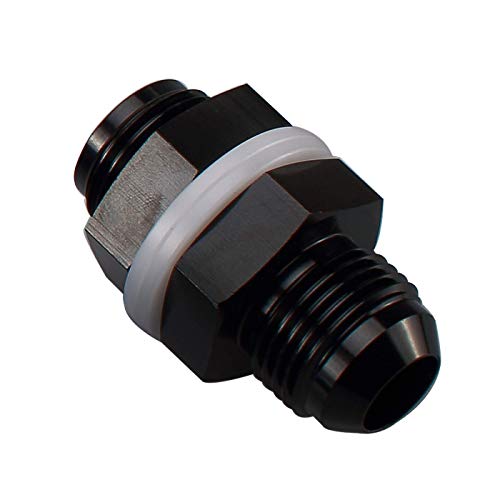
AC systems utilize specific threading standards that are not interchangeable with general plumbing or hydraulic fittings. You must be certain whether your system requires SAE (Society of Automotive Engineers) flare fittings, ORB (O-Ring Boss) connections, or metric threads. A common mistake is attempting to force a standard NPT (National Pipe Thread) fitting into an AC line. Because NPT relies on thread interference for sealing, it is prone to leaking in high-vibration AC environments. Performance fittings typically utilize O-ring seals to ensure a liquid-tight connection that can expand and contract with temperature changes without losing its grip.
Seal Integrity and O-Ring Compatibility
A fitting is only as good as its seal. When shopping for performance fittings, look for those that come with high-grade, pre-installed seals. In the AC world, the material of the O-ring is vital. Nitrile or HNBR (Hydrogenated Nitrile Butadiene Rubber) seals are the industry standard because they are highly resistant to the oils and refrigerants used in modern automotive cooling systems. If you are purchasing fittings without included seals, ensure you have a kit of high-quality automotive-specific O-rings on hand. A cheap, generic rubber seal will eventually swell or degrade when exposed to PAG oil, leading to a catastrophic loss of refrigerant.
Flow Dynamics and Internal Geometry
In high-performance builds, maintaining optimal refrigerant flow is essential for efficient heat exchange. Cheap fittings often have restrictive internal bores or sharp angles that create turbulence. This turbulence can lead to pressure drops and reduced cooling efficiency. Look for 'smooth-bore' or 'high-flow' designs that minimize internal obstructions. This is particularly important for fittings located near the expansion valve or the compressor discharge line, where maintaining consistent pressure is key to system longevity.
Ease of Installation and Maintenance
Finally, consider how the fitting will be serviced. Performance vehicles often require more frequent maintenance or component swaps. Fittings with hex-head designs or integrated wrenches make it much easier to tighten or loosen connections without stripping the hardware. Additionally, ensure the fittings are compatible with the hose types you are using—whether you are working with braided stainless lines or reinforced rubber hoses. The interface between the hose barb and the fitting must be secure to prevent the hose from blowing off under high-pressure surges.