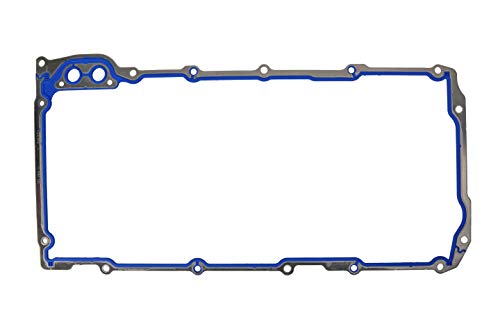
Understanding Gasket Material and Construction
The most critical decision factor when selecting a Fel-Pro set is the material composition. Fel-Pro utilizes different technologies based on the specific engine design and the sealing surface of the pan. Some engines require traditional composite gaskets, which are excellent for standard passenger vehicles with predictable thermal patterns. However, for high-performance builds or engines subject to extreme temperature fluctuations, you should look for PermaDry or specialized rubber-coated materials. These are designed to stay pliable over time, preventing the gasket from becoming brittle—a common cause of leaks in older high-mileage engines. If your oil pan has a machined surface, a composite gasket works well. If the surface is slightly irregular, a gasket with a thicker, more resilient core may be necessary to fill those microscopic voids.
Evaluating Set Completeness
When purchasing an oil pan gasket 'set,' you must verify exactly what is included. A basic gasket provides only the perimeter seal for the pan itself. However, many Fel-Pro sets are categorized as 'Full Sets' or 'Engine Rebuild Sets.' If you are performing a deep engine teardown, a comprehensive set is highly recommended. These sets often include not just the oil pan gasket, but also the rear main seal, valve cover gaskets, and intake manifold gaskets. Choosing a complete set ensures that all mating surfaces are renewed simultaneously, preventing a situation where you replace the oil pan gasket only to discover a leak from a secondary component two weeks later. Always match the set's contents to the scope of your mechanical project.
Compatibility with Engine Modifications
If you are working on a modified engine—such as one with an aftermarket high-volume oil pump or a custom-fabricated oil pan—standard replacement sets may not suffice. Fel-Pro designs their gaskets to meet or exceed original equipment manufacturer (OEM) specifications. If your engine architecture has changed, you may need to look for specific sealing solutions that accommodate different bolt patterns or flange thicknesses. For example, some modern engines utilize a liquid sealant (RTV) in conjunction with a gasket, while others rely on a purely mechanical compression seal. Ensure your chosen set aligns with the sealing method specified by your engine's current configuration to avoid catastrophic oil loss.
The Importance of Surface Preparation and Fitment
No matter how high the quality of the Fel-Pro gasket, the success of the installation depends on the interface. When selecting a set, consider whether the gasket is designed for a 'dry' installation or if it requires a specific type of sealant. Most Fel-Pro gaskets are engineered to provide a precise fit that minimizes the need for excessive RTV, which can actually cause leaks if it squeezes out into the oil passages. A high-quality set will have clean, precise cuts that mirror the engine's mating surfaces perfectly. Before finalizing your purchase, ensure the set is specifically designated for your engine's displacement and year, as even minor variations in casting can render a gasket ineffective.