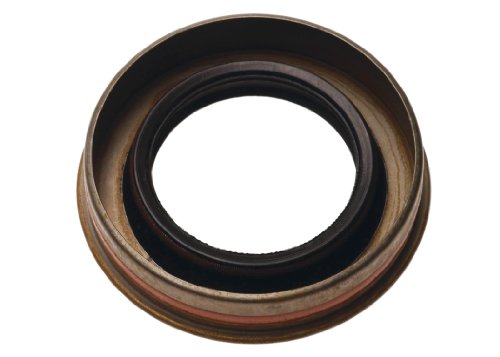
Verify Dimensional Accuracy and Fitment
In the world of manual transaxles, there is zero margin for error. An output shaft seal is defined by its internal diameter (ID), outer diameter (OD), and width. Even a fraction of a millimeter of deviation can result in a seal that is either too loose, causing immediate leakage, or too tight, which can score the output shaft or cause the seal to overheat and fail prematurely. When shopping, prioritize seals that are specified for your exact transmission housing. Do not rely on 'universal' fitment claims. Manual transaxles operate under specific rotational speeds that require a precision-engineered match to the shaft's surface profile.
Material Composition: Nitrile vs. Viton
The most significant decision factor for longevity is the elastomer material used in the seal lip. Most standard replacement seals are made from Nitrile (NBR), which is excellent for general oil resistance and cost-effectiveness. However, for high-performance applications or vehicles that experience significant thermal cycling, look for Fluorocarbon (Viton) seals. Viton offers superior resistance to high temperatures and a wider range of chemical additives found in modern synthetic gear oils. If your vehicle is a performance build or driven in extreme climates, the higher upfront cost of a Viton seal is a wise investment to prevent frequent teardowns.
Seal Design and Lip Construction
Not all seals are constructed the same way. Examine the design of the sealing lip. High-quality output shaft seals often feature a secondary 'dust lip' or 'wiping lip' designed to keep contaminants like road grit and moisture away from the primary sealing surface. Furthermore, look for seals with an integrated garter spring. This small metal tensioner ensures the lip maintains constant, even pressure against the rotating shaft, compensating for minor shaft oscillations and preventing 'weeping' during low-speed operation. A seal without a robust spring tensioner is much more likely to fail as the rubber ages and hardens.
Consideration for Shaft Condition
Before installing your new seal, inspect the output shaft itself. If the shaft has developed a groove or 'scoring' from the previous seal's failure, a new seal—no matter how high-quality—will likely leak immediately. In such cases, you may need to look for a seal with a slightly thicker lip or consider a shaft repair sleeve. Always pair your new seal installation with a high-quality, compatible gear lubricant to ensure the new elastomer is not degraded by incompatible chemical additives.