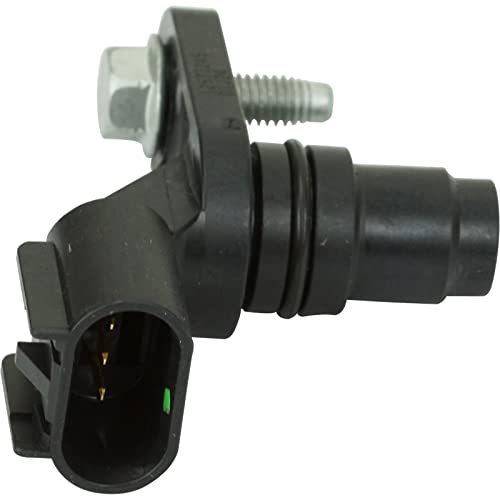
Understanding Sensor Functionality and Precision
The most critical factor in selecting an automotive sensor is matching the specific functional requirement of your vehicle's subsystem. Sensors are generally categorized by the system they govern: engine management (such as Mass Air Flow or Oxygen sensors), transmission control, ABS/braking systems, and emissions control. Because modern vehicles rely on closed-loop feedback systems, a sensor that is 'close enough' but lacks the correct sensitivity will cause the ECU to miscalculate fuel trim or timing, leading to poor idling, decreased MPG, or even engine damage. Always prioritize sensors that are engineered to meet or exceed original equipment specifications (OES) to ensure the signal voltage remains stable under extreme heat and vibration.
Key Decision Factors: Compatibility and Build Quality
When evaluating replacement options, look beyond the basic application list. High-quality automotive sensors must possess three key characteristics: thermal stability, vibration resistance, and electrical integrity. Automotive environments are punishing. A sensor located near the exhaust manifold must withstand intense heat cycles without the housing warping or the internal circuitry degrading. Similarly, sensors located in the wheel wells or undercarriage must be sealed against moisture and road salt to prevent corrosion. When comparing brands, check for mentions of high-grade semiconductor materials and robust connector housings, as a loose or corroded connection is a frequent cause of 'ghost' error codes.
The Importance of Calibration and Plug-and-Play Readiness
One of the biggest frustrations in DIY automotive repair is installing a sensor only to find it requires complex software recalibration. For many critical components, such as Crankshaft Position Sensors or Throttle Position Sensors, the electrical resistance must be exact. Seek out sensors that are marketed as 'plug-and-play,' meaning they are pre-calibrated to the specific voltage ranges expected by your vehicle's computer. This reduces the likelihood of needing a professional scan tool to 'teach' the car the new part, saving you significant time and labor costs at the mechanic.
Avoiding Common Pitfalls: Cheap vs. Reliable
It is tempting to opt for the lowest-priced sensor available, but in the world of automotive electronics, this is often a false economy. Low-cost, generic sensors frequently suffer from 'signal drift,' where the sensor provides accurate readings when cold but becomes inaccurate as the engine reaches operating temperature. This leads to intermittent issues that are notoriously difficult to diagnose. Instead, invest in sensors from manufacturers that specialize in electronic components. A slightly higher upfront cost for a sensor with a proven track record of longevity is far more economical than replacing a substandard part multiple times over the same year.
Final Recommendation Logic
To make the best decision, follow this hierarchy: First, identify the exact subsystem failure via a diagnostic code. Second, verify that the replacement part is specifically rated for your vehicle's make, model, and engine type. Third, prioritize sensors that offer high thermal resistance and pre-calibrated electronics. If you are replacing an emissions-related sensor, prioritize quality above all else to ensure you pass inspection and maintain environmental compliance.