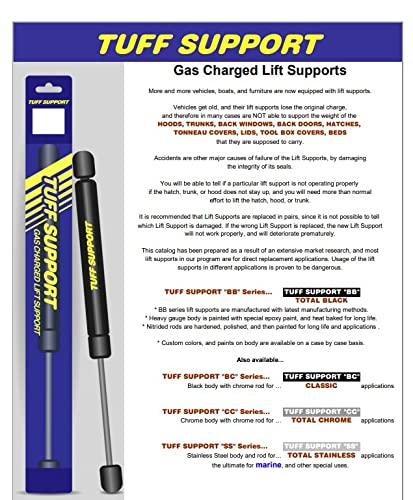
Verify Precise Fitment and Force Ratings
The most critical factor in selecting a replacement support is ensuring the exact specifications match your vehicle's original equipment. Lift supports are not just about length. They are defined by their stroke length, mounting diameter, and most importantly, their Newton (N) force rating. The Newton rating determines how much pressure the gas strut exerts to lift the weight of the door or hood. If you select a support with a force rating that is too low, the hatch will feel heavy and may not stay open. Conversely, a support with excessive force can strain the hinges and mounting brackets, potentially causing structural damage over time. Always cross-reference your vehicle's year, make, and model, paying close attention to whether the support is intended for a specific trim level or engine configuration.
Material Quality and Corrosion Resistance
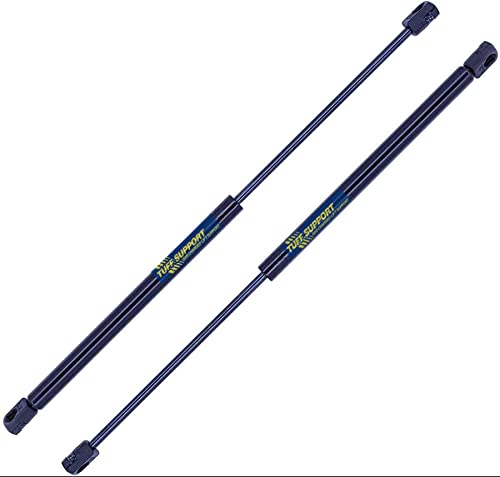
Automotive lift supports are frequently exposed to harsh environmental elements, including road salt, moisture, and extreme temperature fluctuations. When evaluating options, look for high-quality construction materials. A premium support typically features a heavy-duty steel cylinder and a high-grade stainless steel piston rod. The piston rod is the most vulnerable part of the assembly. If it pits or rusts, it will tear the internal seals, leading to rapid gas leakage. Seek out supports that utilize advanced coatings, such as chrome plating or specialized powder coatings, to prevent oxidation and ensure the rod slides smoothly through the seals for years to come.
Seal Integrity and Gas Pressure Stability
The longevity of a lift support is dictated by the quality of its internal seals and the stability of its pressurized nitrogen gas. High-end replacements utilize multi-lip seals designed to maintain a consistent pressure even in freezing temperatures or intense summer heat. Cheap alternatives often suffer from 'pressure drift,' where the support loses its lifting capability after only a few months of use. When reading reviews or technical specs, prioritize manufacturers that emphasize leak-proof seal technology and consistent pressure performance across a wide thermal range.
Installation Ease and Hardware Compatibility
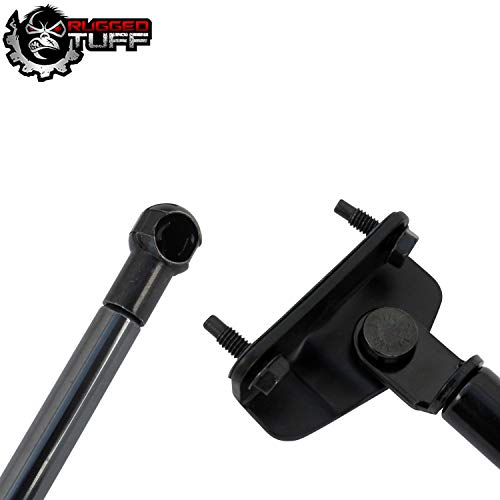
While most lift supports are designed as direct replacements, some aftermarket versions may require minor adjustments to the ball-and-socket joints or mounting clips. Check whether the replacement comes with new mounting hardware or clips. Using old, fatigued clips can lead to the support popping out of the socket unexpectedly. Ideally, you want a product that offers a 'plug-and-play' experience, requiring no modifications to your vehicle's existing mounting points. A smooth installation process not only saves time but also ensures that the support is seated perfectly, which is essential for even weight distribution during the lifting cycle.
Recommendation Logic
If you are looking for a budget-friendly fix for an older vehicle that you don't plan to keep for long, a standard-duty replacement will suffice. However, if you drive a modern SUV, a heavy truck bed cover, or a vehicle frequently exposed to coastal or snowy climates, we strongly recommend investing in premium, heavy-duty supports. Look for products that specifically mention reinforced seals and corrosion-resistant piston rods. The slight increase in initial cost is almost always offset by the extended service life and the prevention of costly hinge repairs.