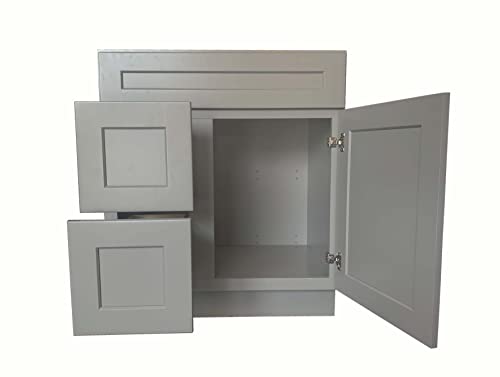
Prioritize Material Integrity and Moisture Resistance
The bathroom is a high-humidity environment, which makes material selection the most critical decision in your journey. Avoid low-grade particle board if possible. While it is cost-effective, it is prone to swelling and structural failure when exposed to steam or minor leaks. Instead, look for vanities constructed from solid wood, plywood, or high-density fiberboard (HDF) with moisture-resistant coatings. If you are opting for a more modern, sleek look, high-quality MDF can work well, provided it has a thick, protective lacquer or laminate finish to seal out moisture. Always check the finish of the cabinetry—a high-quality polyurethane or specialized bathroom paint will provide a much more durable barrier against water splashes than standard household paint.
Determine Your Ideal Configuration: Freestanding vs. Floating
The silhouette of your vanity will fundamentally change the perception of your bathroom's size. Freestanding vanities are the traditional choice. They offer a sense of stability and are generally easier to install because they sit directly on the floor. These are excellent for families needing maximum storage capacity. On the other hand, wall-mounted or 'floating' vanities are the gold standard for modern, minimalist designs. By exposing more of the floor underneath the unit, floating vanities create an optical illusion of more space, making them ideal for small guest bathrooms or tight powder rooms. However, keep in mind that floating units require reinforced wall mounting to handle the weight of the countertop and sink.
Evaluate Countertop and Sink Integration
When browsing, you will encounter vanities sold as complete sets (including the top and sink) and those sold as 'base only.' Choosing a complete set simplifies the installation process and ensures a perfect fit, but buying the base separately allows for much higher customization. If you want a premium feel, look for stone surfaces like quartz, marble, or granite. Quartz is particularly recommended for its non-porous nature, making it incredibly easy to clean and resistant to staining from toothpaste or soaps. Ensure the sink style—whether it is an undermount for a seamless look or a vessel sink for a dramatic statement—complements both the vanity height and your overall bathroom layout.
Storage Logic and Functional Ergonomics
A vanity is only as good as its ability to hide clutter. Before purchasing, map out your daily essentials. Do you have a collection of tall skincare bottles that require deep drawers? Or do you need shallow, organized trays for makeup and grooming tools? Look for vanities that offer a mix of wide drawers and open shelving. High-quality units will feature soft-close hinges and drawer slides, which prevent slamming and extend the life of the cabinetry. Additionally, consider the plumbing clearance. Ensure the internal drawer configuration accounts for the location of your sink's P-trap so you don't lose valuable storage space to the pipes.
Hardware and Aesthetic Cohesion
Finally, consider the 'jewelry' of the vanity: the hardware. Knobs and pulls are easy to swap, which gives you the flexibility to update the look later. However, if you are buying a complete set, ensure the hardware finish—such as brushed nickel, matte black, or champagne bronze—matches your intended faucet and towel rack finishes. A mismatch in metal tones can make a high-end vanity look disjointed and uncoordinated.