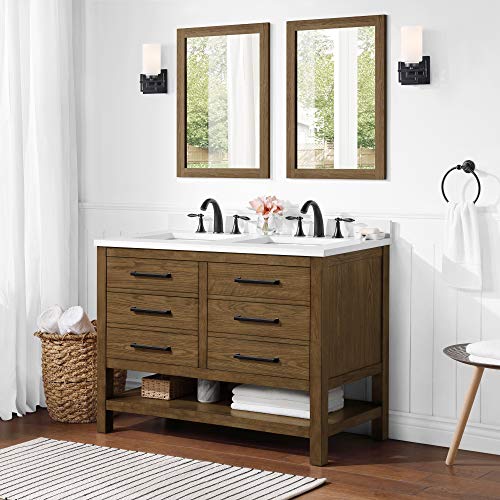
Determining the Ideal Configuration and Size
The first step in your selection process is a rigorous measurement of your available footprint. Bathroom vanities come in various configurations, including single sinks, double sinks, and pedestal styles. For primary bathrooms, a double vanity is often the gold standard for shared spaces, allowing two people to prepare simultaneously without conflict. However, if you are working with a powder room or a guest bath, a smaller single-sink unit or a floating vanity can prevent the room from feeling cramped.
Pay close attention to the depth and width. A vanity that is too deep can obstruct the walkway, while one that is too shallow may lack the necessary countertop real estate for your essentials. Always account for the 'swing space' required for cabinet doors and drawer extensions to ensure they don't hit the toilet or the door.
Material Integrity and Moisture Resistance
Because bathrooms are subject to constant humidity and occasional splashes, the materials used in construction are paramount. Look for vanities built with solid wood frames or high-grade plywood rather than particle board, which can swell and degrade when exposed to water. For the countertop, natural stone like marble or quartz offers unparalleled luxury and durability, though it requires specific sealing protocols. Engineered stone is an excellent alternative that provides a similar aesthetic with higher resistance to staining and scratching.
The finish of the vanity is equally important. High-quality lacquers or specialized waterproof paints are necessary to prevent peeling or warping over time. When evaluating a model, consider how the finish will interact with your lighting. Matte finishes tend to hide water spots better, while high-gloss finishes can make a small bathroom feel brighter and more expansive.
Storage Optimization and Functional Hardware
A vanity is only as good as its ability to hide clutter. When browsing, categorize the storage types: drawers are ideal for small items like skincare and makeup, while larger cabinets are better suited for bulky items like towels or hair dryers. High-end vanities often feature specialized organizational inserts or deep drawers with soft-close mechanisms. Soft-close hardware is a non-negotiable feature in modern luxury. It prevents the slamming of doors and drawers, preserving the structural integrity of the unit over years of use.
Consider the height of the vanity as well. 'Comfort height' vanities are becoming the standard in many modern renovations, providing a more ergonomic experience that reduces back strain during grooming tasks.
Aesthetic Cohesion and Style Matching
Your vanity should act as the anchor for your bathroom's design language. If you are aiming for a contemporary look, seek out clean lines, minimalist hardware, and floating designs that create an illusion of more floor space. For a more traditional or transitional aesthetic, look for shaker-style cabinetry, ornate molding, and classic metal finishes like brushed gold or polished nickel. Ensure that the hardware finish of the vanity complements your faucet, towel racks, and lighting fixtures to create a cohesive, professionally designed environment.