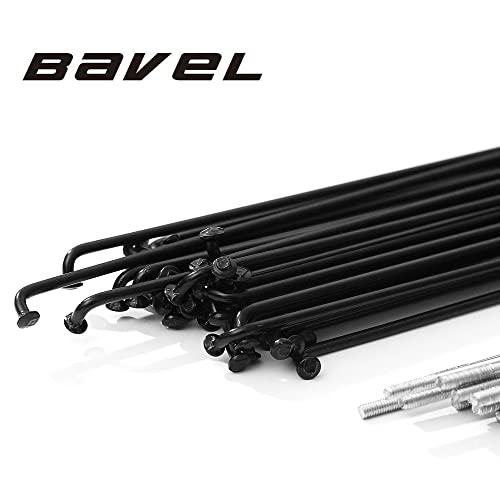
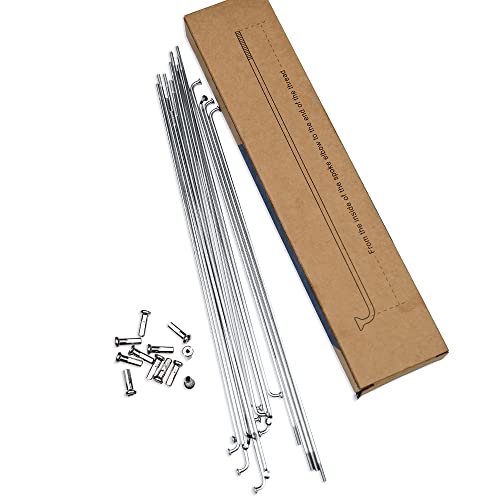
Understanding Spoke Gauge and Material
The first decision you must make involves the thickness of the spoke, known as the gauge. Most standard road and commuter wheels utilize a double-butted design. Double-butted spokes are thicker in the center and thinner at the ends. This design is highly sought after because the thinner ends allow for easier tensioning and less stress on the nipple, while the thicker middle section provides strength and helps absorb road vibrations. If you are building a heavy-duty mountain bike or a cargo bike, you may want to look for single-butted, thicker-gauge spokes that prioritize sheer strength over weight savings.
Material choice is equally critical. Stainless steel is the industry standard due to its excellent corrosion resistance and fatigue life. However, if you are building a high-end racing wheel where every gram counts, you might consider titanium spokes. While significantly more expensive and more difficult to tension correctly, titanium offers an incredible strength-to-weight ratio and a unique damping quality that can make a ride feel smoother.
Calculating the Perfect Length
The most common mistake in spoke selection is incorrect length. A spoke that is even a few millimeters too long will bottom out in the nipple, preventing proper tensioning and potentially damaging the rim. Conversely, a spoke that is too short will not engage the nipple fully, leading to immediate failure under load. To get this right, you cannot rely on guesswork. You must use a precise spoke calculator based on your specific rim's ERD (Effective Rim Diameter), your hub's flange diameter, and the number of cross-patterns (lacing pattern) you intend to use. Always double-check your measurements. A single error in your math will render a full set of spokes useless.
Lacing Patterns and Tension Consistency
How you lace your wheel dictates the type of tension your spokes will experience. A two-cross pattern is common for standard road wheels, providing a balance of stiffness and weight. A three-cross pattern is more common in mountain biking and touring, as it provides greater lateral stability and better distributes loads across the hub flange. When selecting spokes, ensure they are compatible with your chosen lacing pattern. Furthermore, look for spokes with high-quality threading. Smooth, consistent threads ensure that when you use a spoke wrench, the spoke turns without slipping or stripping, which is vital for achieving the uniform tension required for a true, straight wheel.
Nipple Compatibility and Finishing
While many people view spokes and nipples as separate entities, they are a matched set. When purchasing spokes, consider whether you are buying them with nipples pre-installed or if you need to source them separately. If sourcing separately, ensure the thread pitch of the nipple matches the spoke exactly. Additionally, consider the material of the nipple. Brass nipples are the gold standard for durability and corrosion resistance, especially in wet or salty environments, whereas aluminum nipples are lighter but more prone to seizing or stripping if not maintained properly.