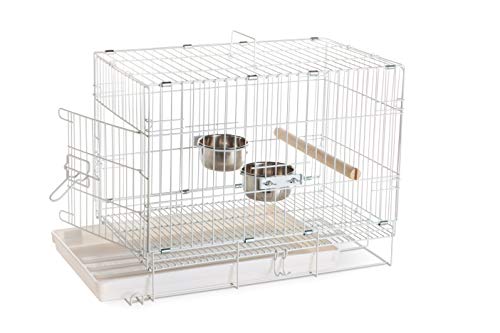
Prioritize Species-Specific Dimensions
The most common mistake in bird ownership is choosing a cage based on the bird's weight rather than its wingspan and activity level. For small passerines like budgies or finches, horizontal flight space is more critical than vertical height. These birds prefer to move laterally, so a wider cage allows for natural flight patterns. Conversely, for larger parrots or cockatiels, verticality becomes more important for climbing and perching variety. Always ensure that the interior dimensions allow your bird to fully extend its wings without hitting the bars, as cramped quarters can lead to feather plucking and muscle atrophy.
Bar Spacing and Safety Standards
Bar spacing is a non-negotiable safety metric. If the gaps are too wide, small birds can become stuck or even perish attempting to squeeze through. For finches and small parakeets, you should look for spacing typically under 1/2 inch. For larger species, the spacing can be wider, but it must still be tight enough to prevent escape or injury. Additionally, pay close attention to the material of the bars. High-quality cages utilize powder-coated finishes that are non-toxic. Avoid cages with cheap paints that might flake off, as birds are notorious for chewing on their environment, which can lead to heavy metal poisoning.
Accessibility and Maintenance Features
A birdcage is a living ecosystem that requires frequent cleaning. When evaluating options, look for features that simplify your life as a caregiver. Removable seed trays are essential for preventing the buildup of waste and dander at the bottom of the cage. Ideally, the cage should feature large, easy-to-access doors—not just for you to reach in for cleaning, but to allow your bird to interact with its environment safely. Some models offer side-access doors or large top-entry doors, which are excellent for preventing escapes during cage cleaning or when introducing new toys.
Perch Variety and Enrichment Integration
A cage is only as good as the enrichment it can hold. Look for cages with sturdy, integrated perching points that can accommodate different textures. Using various diameters of natural wood perches within the cage is better for foot health than uniform, smooth plastic perches, which can cause bumblefoot. When selecting a cage, consider the 'real estate' available for hanging swings, foraging toys, and bells. A cage that is too cluttered becomes a stressor, while one that is too empty fails to provide the cognitive stimulation necessary to prevent boredom-induced behavioral issues.
Material Durability and Longevity
Finally, consider the long-term investment. High-quality metal construction ensures that the cage can withstand the powerful beak of a larger parrot. Look for heavy-duty latches that are secure against 'escape artists' who learn how to manipulate simple sliding bolts. A robust cage design ensures that the structure remains stable even when the bird is jumping between perches or swinging vigorously on a toy.