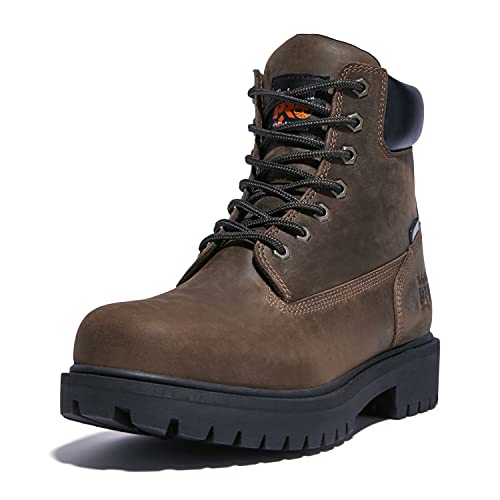
Prioritize Safety Compliance and Toe Protection
The most critical decision factor in selecting professional-grade boots is the level of impact protection required by your specific job site. Most Timberland Pro models offer a choice between steel toe, composite toe, and soft toe constructions. Steel toe boots provide the highest level of puncture and crush resistance but can become heavy and conduct cold in winter environments. Composite toes, often made of carbon fiber or advanced plastics, offer similar protection without the weight or thermal conductivity, making them ideal for those working in extreme temperatures. Always check if your specific industry requires a specific safety rating, such as an electrical hazard (EH) rating, which ensures the boot can protect you against accidental contact with live electrical circuits.
Evaluate Outsole Traction and Slip Resistance
In industrial settings, a slip is more than an inconvenience. It is a significant safety risk. When browsing the category, look closely at the outsole pattern and material. High-quality work boots in this line typically feature specialized rubber compounds designed to maintain grip on oily, wet, or loose surfaces. A deep, multidirectional lug pattern is essential for traversing mud and gravel, while a flat, high-friction outsole is better suited for smooth warehouse floors. If your work involves frequent contact with liquids or chemicals, ensure the outsole is specifically rated for slip resistance to prevent lateral sliding.
Focus on Long-Term Ergonomics and Support
A common mistake is buying boots based solely on external toughness while ignoring internal support. Because professional boots are often worn for 8 to 12 hours a day, the internal cushioning system is paramount. Look for boots that incorporate advanced anti-fatigue technology. This often involves specialized midsole materials that absorb shock during heel strikes and return energy during the toe-off phase of your stride. Additionally, pay attention to the ankle support. High-top models provide better lateral stability on uneven ground, which is crucial for preventing sprains, whereas mid-cut models offer a balance of mobility and protection.
Material Durability and Weatherproofing
The upper material of the boot dictates how long it will last under duress. Full-grain leather is the gold standard for durability and water resistance, as it naturally resists abrasions and can be treated to repel moisture. For those working in wet environments, look for boots that feature waterproof membranes integrated into the construction. This allows sweat to escape while preventing external water from seeping in. Furthermore, consider the hardware. Reinforced eyelets and heavy-duty lacing systems ensure that the boot stays secure even when subjected to constant pulling and tension.
Recommendation Logic: Matching Boot to Task
To make your final selection, categorize your primary work environment. If you are a heavy laborer on a construction site, prioritize a steel or composite toe boot with maximum ankle support and deep lugs. If your role is more stationary or involves walking on finished floors, such as in a logistics center, prioritize lightweight composite toes and enhanced anti-fatigue cushioning. For outdoor trades exposed to the elements, prioritize waterproof leather and high-traction outsoles. By matching the technical specifications of the boot to the specific stressors of your environment, you ensure both safety and longevity.