Understanding Bearing Applications
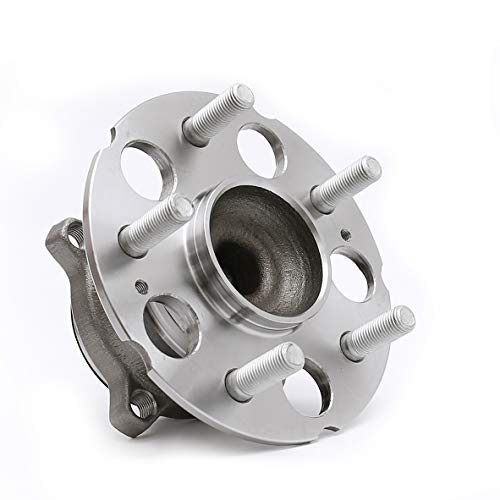
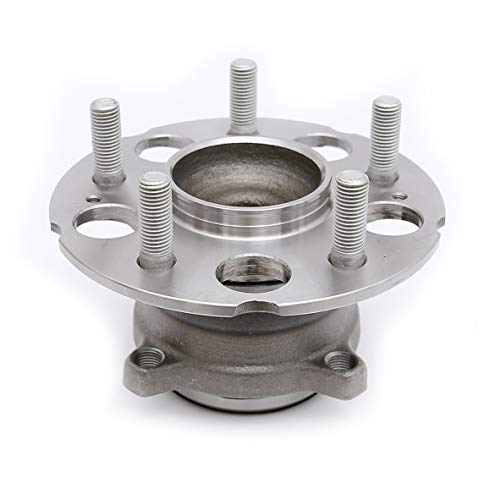
Not all car bearings serve the same purpose. Before making a purchase, you must identify exactly where the component will be installed. Wheel bearings are critical for safety, as they support the vehicle's weight and allow the wheels to rotate freely. They are subject to constant lateral and vertical loads. In contrast, transmission or gearbox bearings are designed for high-speed rotation with much tighter tolerances, focusing on minimizing friction and heat buildup. Selecting a bearing designed for a suspension arm when you actually need one for a drivetrain will lead to immediate failure.
Key Decision Factors: Sealing and Protection
The longevity of an automotive bearing is largely determined by its ability to keep contaminants out and lubricant in. Look for bearings equipped with advanced sealing technologies, such as high-grade contact seals or non-contact shields. In environments prone to mud, salt, or heavy water exposure—such as wheel hubs—a robust seal is non-negotiable. A superior seal prevents grit from entering the raceway, which is the primary cause of premature pitting and noise. If you are driving in harsh climates, prioritize bearings that offer high-performance grease retention to ensure the internal rolling elements remain lubricated throughout their service life.
Load Ratings and Material Quality
Automotive bearings must withstand significant radial and axial loads. Radial loads push inward toward the center of the shaft, while axial loads push along the length of the shaft. High-quality bearings use premium-grade steel that has been heat-treated to achieve the perfect balance of hardness and toughness. This prevents the rolling elements from deforming under heavy loads. When evaluating options, consider the specific stress profile of your vehicle. Heavy-duty trucks and SUVs require much higher load ratings than compact economy cars.
Precision and Tolerance Levels
For components that rotate at high RPMs, such as those within the engine or transmission, precision is everything. Even a microscopic deviation in the diameter of the inner ring or the smoothness of the raceway can cause vibration, heat, and noise. When shopping for high-performance applications, look for bearings that specify high-precision tolerances. This ensures that the bearing fits perfectly onto the axle or shaft without excessive play, which is vital for maintaining the vehicle's handling characteristics and preventing uneven tire wear.
Recommendation Logic
To make the best choice, follow this hierarchy: First, match the specific application (wheel, transmission, or suspension). Second, prioritize the sealing type based on your driving environment (off-road vs. highway). Third, verify that the load capacity meets or exceeds the original equipment manufacturer (OEM) specifications. For standard maintenance, a high-quality sealed bearing is usually sufficient. However, for performance tuning or heavy-duty hauling, investing in premium-grade steel and enhanced axial load resistance will provide the best long-term value.