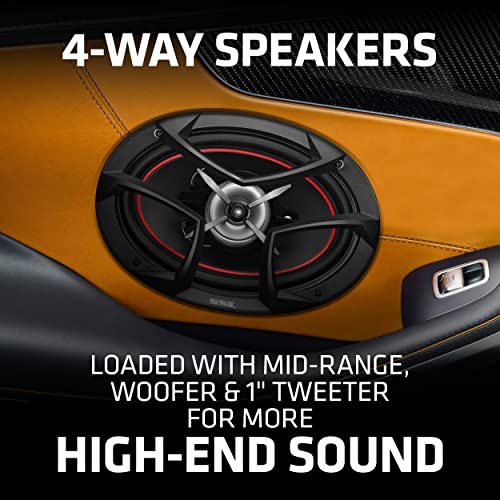
Understanding the Coaxial Advantage
The primary reason to choose a coaxial speaker over a component system is simplicity. In a coaxial setup, the high-frequency driver (the tweeter) is mounted directly in the center of the low-frequency driver (the woofer). This design creates a single point of sound origin, which is ideal for many vehicle door locations where mounting a separate tweeter might be physically impossible without custom fabrication. When shopping within the Boss Audio lineup, look for coaxial models if you want an easy installation process that improves your current soundstage without needing to run extra wiring through your door panels.
Key Technical Specifications to Evaluate
To ensure you aren't just buying 'loud' speakers but actually 'good' speakers, you must look beyond the decibel rating. Focus on these three critical metrics:
- RMS Power vs. Peak Power: Marketing materials often highlight 'Peak Power,' which is a theoretical maximum that can actually damage a speaker if pushed too hard. Instead, look for the RMS (Root Mean Square) rating. This tells you the continuous power the speaker can handle. Match this rating to your head unit or amplifier to avoid clipping or blowing the drivers.
- Sensitivity: This is measured in decibels (dB). High-sensitivity speakers require less power to reach high volumes. If you are planning to run your speakers directly off your factory radio without an external amplifier, prioritize speakers with higher sensitivity ratings to ensure they sound full even with limited wattage.
- Impedance: Most modern car audio systems operate at 4 ohms. Ensure the speakers you select match the impedance requirements of your vehicle's existing wiring and amplifier to prevent overheating or signal loss.
Material Composition and Sound Profile
The materials used in the cone and tweeter will dictate the 'flavor' of the music you hear. Boss Audio often utilizes specialized cone materials like polypropylene or treated paper to provide a balance between rigidity and weight. A stiffer cone generally results in tighter, more accurate bass, while a lighter cone allows for better mid-range responsiveness. Pay attention to the tweeter type as well. Silk dome tweeters tend to offer a smoother, more natural high-end, whereas metal-dome tweeters can provide a sharper, more aggressive sound that cuts through road noise more effectively.
Size and Fitment Considerations
Before making a final decision, you must verify the physical dimensions. Car speakers are standardized in inches (e.g., 6.5-inch, 6x9-inch, or 5.25-inch), but the depth of the speaker is just as important. A speaker with a deep magnet may hit the window regulator or the interior door panel as it moves. Always check the mounting depth specifications to ensure your new coaxial drivers won't interfere with the mechanical components inside your car door.
Final Recommendation Logic
If you are looking for a simple upgrade to a factory system, prioritize high-sensitivity 6.5-inch coaxial speakers. If you are looking to add more 'thump' to your soundstage, look for the larger 6x9-inch models, which provide more surface area for low-frequency reproduction. Always prioritize RMS power ratings over Peak power to ensure long-term reliability and musicality.