Understanding Driver Size and Displacement
The first decision in selecting a component subwoofer is the physical diameter. In the world of high-performance bass, size often correlates with air displacement. A 12-inch subwoofer is the industry standard for a reason. It provides a balance of deep extension and manageable physical footprint. If you are limited by trunk space or a shallow mounting depth, an 8-inch or 10-inch driver can still deliver impressive punch, but you will likely need more power to compensate for the smaller surface area. When browsing SKAR's offerings, consider whether you want a single large driver for massive displacement or multiple smaller drivers to spread the load and create a more even soundstage.
Power Handling: RMS vs. Peak Power
One of the most common pitfalls in car audio is focusing on 'Peak Power' or 'Max Power' ratings. These numbers are often inflated marketing figures. For a reliable setup, you must focus on the RMS (Root Mean Square) rating. This represents the continuous power the subwoofer can handle without overheating or mechanical failure. When choosing your driver, ensure your amplifier's RMS output closely matches or slightly exceeds the subwoofer's RMS rating. If you choose a high-excursion driver designed for heavy competition, you will need an amplifier capable of sustained high-current output to keep the cone controlled during heavy transients.
Enclosure Type: Sealed vs. Ported
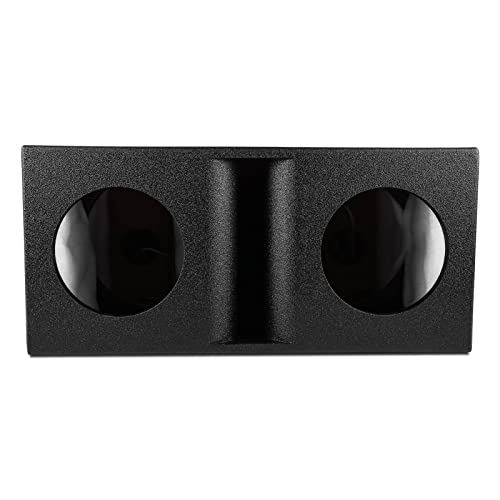
A subwoofer is only as good as the box it lives in. SKAR subwoofers are engineered to perform in specific environments. If you prefer tight, accurate, and musical bass—ideal for jazz, rock, or acoustic tracks—a sealed enclosure is your best bet. Sealed boxes are smaller and easier to tune but offer less raw volume. If your goal is maximum loudness and deep, booming bass for hip-hop or EDM, a ported (vented) enclosure is essential. Ported boxes use a tuned opening to boost output at specific frequencies, though they require more physical space and careful tuning to avoid 'unloading' the driver.
Voice Coil Configuration and Impedance
Pay close attention to the voice coil setup, specifically whether the driver features a Single Voice Coil (SVC) or Dual Voice Coil (DVC). This choice dictates how you wire the subwoofer to your amplifier. A DVC subwoofer allows you to wire the coils in series or parallel, giving you the flexibility to hit specific impedance targets like 1-ohm or 2-ohm loads. Matching the final impedance of your subwoofer to the stable minimum impedance of your amplifier is critical. If the impedance is too low, you risk overheating the amp, and if it is too high, you will leave significant power on the table.
Material Quality and Excursion Capability
High-performance bass relies on the ability of the cone to move quickly and deeply. Look for drivers that utilize reinforced cones (such as treated paper or polypropylenes) and heavy-duty surrounds (like high-roll rubber). These materials ensure the cone maintains its shape under extreme movement. SKAR's reputation is built on high-excursion designs, meaning the driver is built to travel a long distance in and out of the magnet structure. This physical movement is what creates the 'feel' of the bass that you experience in your seat.