Understanding Speaker Types: Coaxial vs. Component
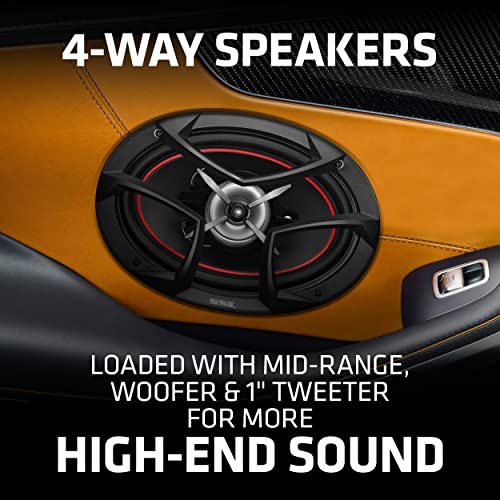
The first decision you will face is choosing between coaxial and component speaker systems. Coaxial speakers are 'all-in-one' units where the tweeter (the part responsible for high frequencies) is mounted directly in the center of the woofer. These are incredibly easy to install and are perfect for replacing factory speakers in rear doors or rear decks where space is limited. They provide a streamlined, plug-and-play experience.
Component systems, on the other hand, separate the woofer and the tweeter into two distinct pieces. This allows you to mount the tweeter higher up on your dashboard or A-pillar, which significantly improves the 'soundstage.' A soundstage refers to the perception of where the music is coming from. With components, the sound feels like it is coming from the windshield rather than from beneath your feet. While more complex to wire, component sets offer a level of clarity and separation that coaxial speakers simply cannot match.
Decoding the Technical Specs: RMS vs. Peak Power
One of the most common mistakes car audio enthusiasts make is looking at 'Peak Power' or 'Max Power' ratings. In the world of Boss Audio Systems, peak power is a marketing number that describes the absolute maximum a speaker can handle for a fraction of a second before failing. It does not tell you how loud or how good the speaker will sound.
Instead, you must look at the RMS (Root Mean Square) power rating. RMS represents the continuous power the speaker can handle reliably over long periods. When choosing your speakers, ensure your head unit or external amplifier can provide a power output that closely matches the speaker's RMS rating. If your RMS is too high for your amp, the music will sound thin and distorted. If your amp is too powerful for the speaker, you risk blowing the voice coil.
Sensitivity and Impedance
Sensitivity is a measurement of how efficiently a speaker converts power into sound. This is measured in decibels (dB). If you are planning to keep your factory radio without adding an external amplifier, you should prioritize speakers with high sensitivity ratings. High-sensitivity speakers can produce louder volume with less electrical current, making them ideal for 'power-limited' setups.
Impedance, measured in Ohms, is the electrical resistance of the speaker. Most car audio systems operate at 4 Ohms. While some specialized setups use 2 Ohm or 8 Ohm configurations, sticking to the standard 4 Ohm rating ensures compatibility with almost every aftermarket head unit and amplifier on the market, preventing damage to your electronics.
Material Composition and Sound Profile
The materials used in the speaker cone will dictate the 'flavor' of your music. Polypropylene cones are common in many Boss models because they are durable and provide a balanced, smooth sound that is forgiving of imperfections in digital files. If you are looking for more aggressive, punchy mid-bass, look for speakers with reinforced cone structures. For those who find modern music too 'harsh' or 'tinny,' look for tweeters with silk domes, which tend to provide a warmer, more natural high-frequency response compared to metal-domed tweeters.