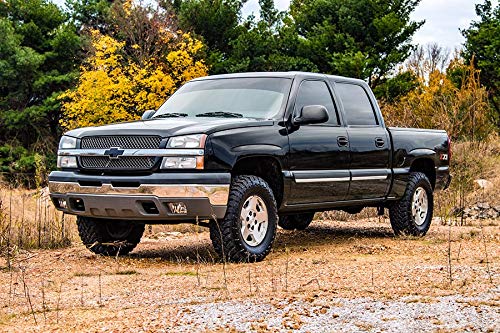
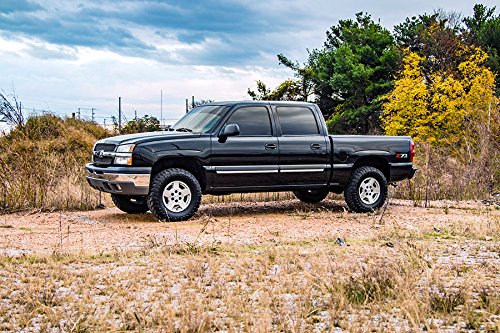
Determine Your Primary Objective: Clearance vs. Aesthetics
The first step in choosing a Rough Country body lift kit is defining what you actually want to achieve. If your goal is purely aesthetic—giving your truck a more imposing, 'lifted' look—a smaller lift kit will suffice. However, if your goal is functional, such as clearing larger all-terrain or mud-terrain tires to improve off-road capability, you need to look at the specific lift height offered in the kit. Body lifts are excellent for providing the 'room' needed for wider tires to turn without rubbing against the wheel wells, but they do not technically increase the distance between your differential and the ground as much as a suspension lift does. Therefore, pair your decision with your intended tire size to ensure the lift provides the necessary clearance for articulation.
Compatibility and Frame Integrity
Rough Country designs their kits for specific vehicle platforms, and compatibility is non-negotiable. When browsing kits, ensure the kit is explicitly rated for your truck's make, model, and year. A critical factor to consider is how the kit interacts with your existing chassis. Because body lifts involve mounting spacers between the frame and the body, you must ensure the kit includes high-quality, heavy-duty mounting hardware. Look for kits that utilize reinforced spacers designed to handle the torsional stress of off-road driving. A high-quality kit should maintain the structural integrity of your truck's body mounts while providing a stable, wobble-free platform.
The Importance of Component Integration
A common mistake is viewing a body lift as a standalone component. In reality, lifting the body changes the geometry of several vital systems. When selecting a kit, check if it includes necessary modifications for steering linkage, brake lines, and electrical harnesses. As the body moves further away from the frame, your factory brake lines may become too short, and your wiring harnesses may require more slack to prevent tension. The best Rough Country kits are those that account for these gaps, either by providing extended components or by offering clear guidance on the necessary auxiliary parts required to complete a safe installation.
Before purchasing, evaluate your own mechanical proficiency or the cost of professional installation. While body lifts are often considered more straightforward than complex suspension lifts (which involve changing leaf springs, shocks, and control arms), they still require significant labor. You will be disconnecting the body from the frame, which involves managing heavy components and precise alignment. If you plan to perform the installation yourself, ensure you have access to heavy-duty jack stands and the specific torque wrenches required to secure the new body mounts. If you are hiring a shop, ask if they have experience specifically with body-on-frame separation to ensure your truck's alignment and body fitment remain factory-perfect.
Final Recommendation Logic
When making your final selection, follow this hierarchy: First, confirm the kit matches your vehicle's specific year and trim. Second, select a lift height that corresponds to the tire diameter you intend to run. Third, prioritize kits that include upgraded mounting hardware and address the extension of brake or electrical lines. If you want the best of both worlds—maximum clearance and a massive stance—consider pairing a Rough Country body lift with a modest suspension leveling kit for a comprehensive off-road transformation.