Defining Your Aesthetic Profile
The first step in selecting a Neonetics clock is determining the visual energy you want to bring to your room. Because these clocks rely on light projection and layered materials, they carry a much stronger 'presence' than a standard wall clock. If you are looking for something sophisticated for a professional study, opt for models with minimalist geometric patterns and cooler color temperatures (blues and whites). However, if the goal is to enhance a high-energy gaming den or a media room, look for designs that offer vibrant, multi-colored gradients and more complex, fractal-like patterns. The 'vibe' of the clock is dictated by its silhouette and the complexity of its light diffusion.
Light Intensity and Ambient Environment
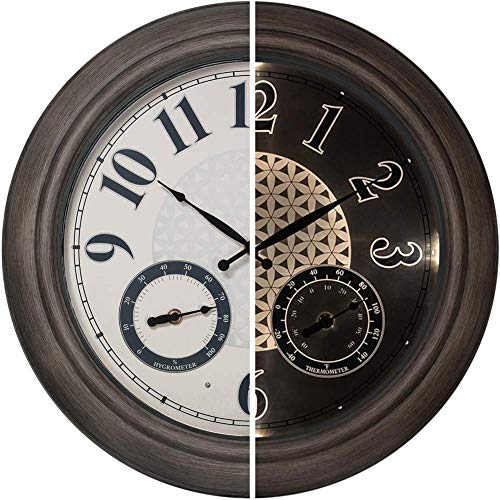
One of the most critical factors to consider is how the clock will function in different lighting conditions. Neonetics clocks are designed to glow, which means they perform best in dim or controlled lighting environments. If you plan to hang the clock in a sun-drenched living room with large windows, the luminosity of the LEDs may be washed out during the day, making it look like a standard acrylic plaque. Conversely, in a dark room, the light can be quite intense. Consider whether you need a piece that acts as a subtle accent light or a primary light source. Some enthusiasts prefer models that provide a soft, ambient glow that can double as a nightlight, while others want a high-output display that commands attention even in semi-lit rooms.
Complexity of Design and Layering
The magic of these timepieces lies in their depth. When browsing, pay close attention to the layering of the materials. Higher-end models often feature multiple layers of precision-cut acrylic that allow light to travel through different planes, creating a holographic or 3D effect. A single-layer design will appear more like a traditional backlit sign, whereas multi-layered designs create a sense of architectural space. If you are a collector of modern art, investing in a more complex, multi-layered piece will provide a much more rewarding visual experience as you move around the room and see the light refract at different angles.
Installation and Spatial Integration
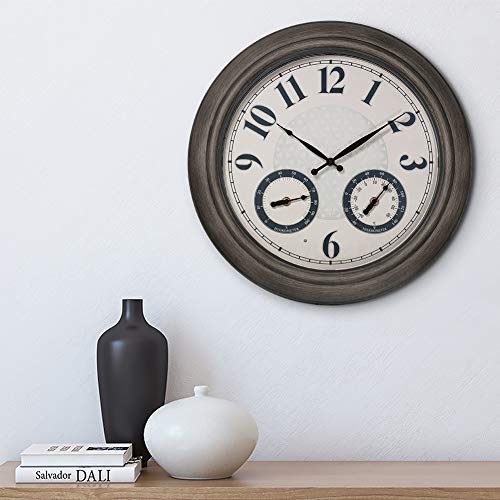
Because these clocks are often heavier or more structurally complex than cheap plastic alternatives, you must consider how they will be mounted. Most premium neon-style clocks require stable wall mounting. Think about the surface area available. A large, intricate clock needs 'breathing room' on the wall to avoid looking cluttered. Furthermore, consider the power source. While some may offer battery options, the most consistent and brightest performance typically comes from models that plug into a standard outlet. Ensure your chosen location has a nearby power source or plan for discrete cable management to maintain the clean, futuristic look that these clocks are known for.
Summary Recommendation Logic
To make your final decision, use this logic: If you want a centerpiece for a dark room, prioritize brightness and color complexity. If you want a sophisticated accent for a workspace, prioritize geometric simplicity and cool tones. If you want a piece that looks like a work of art even when the lights are on, prioritize multi-layered acrylic construction over simple LED strips.