#TOP1
In the era of big data and large language models, the ability to process information is no longer just about moving bits from point A to point B. It is about understanding the underlying meaning. Semantics in data processing refers to the logic, context, and relationship-driven structures that allow machines to interpret data rather than just store it. Whether you are a data engineer trying to build more robust knowledge graphs or a machine learning researcher diving into formal logic and ontological modeling, choosing the right literature is critical. A book that is too abstract will leave you unable to implement real-world pipelines, while one that is too focused on specific coding syntax may fail to teach you the fundamental principles of information theory and meaning-based architecture.
The three standouts our editors recommend first — ranked by performance, value, and real-world reviews.


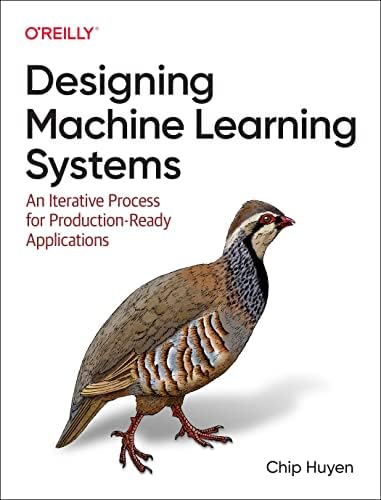
Designing Machine Learning Systems: An Iterative Process for Production-Ready Applications
| SELLER | SELLER SCORE | AMAZON FULFILLED | PRIME | FREE SHIPPING |
|---|---|---|---|---|
| Amazon.com | 9.68 | Yes | Yes | Yes |
Most engineers settle for building isolated models that crumble the moment they hit a real-world server, but Designing Machine Learning Systems offers a much more robust path forward. This book shifts the focus from mere algorithmic accuracy to the messy, iterative reality of production-ready applications. Instead of treating machine learning as a static math problem, it treats it as a living lifecycle that requires constant refinement and architectural foresight. It is a vital resource for anyone tired of the 'it worked on my laptop' excuse and ready to tackle the complexities of deploying scalable, reliable AI. If you want to move beyond theoretical notebooks and start building actual software, this text provides the necessary roadmap for navigating the transition from research to deployment.

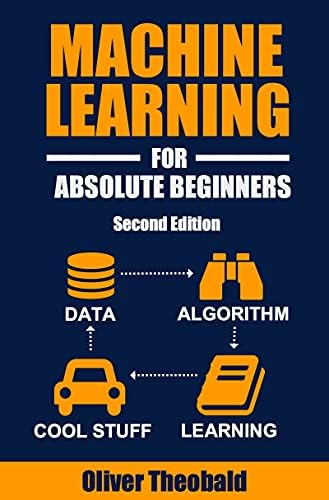
Machine Learning For Absolute Beginners: A Plain English Introduction (Second Edition) (AI, Data Science, Python & Statistics for Beginners Book 3)
| SELLER | SELLER SCORE | AMAZON FULFILLED | PRIME | FREE SHIPPING |
|---|---|---|---|---|
| Amazon.com Services LLC | 0.00 | No | No | No |
This digital ebook serves as a foundational gateway for anyone intimidated by the complexities of artificial intelligence. Instead of burying you in dense mathematical proofs, this second edition focuses on a plain English approach that demystifies the core pillars of data science, Python, and statistics. It is an incredibly accessible starting point for those who want to understand how machine learning actually works without feeling overwhelmed by technical jargon. It offers an impressively low barrier to entry for anyone looking to build a conceptual framework before diving into heavy coding. You can download it immediately to start your journey into the world of AI through a lens that is designed specifically for the uninitiated.

Data Pipelines Pocket Reference: Moving and Processing Data for Analytics
| SELLER | SELLER SCORE | AMAZON FULFILLED | PRIME | FREE SHIPPING |
|---|---|---|---|---|
| Amazon.com | 9.68 | Yes | Yes | Yes |
You are staring at a broken ETL process at 2:00 AM, trying to remember the exact sequence for moving data into an analytics engine without corrupting the source. This O'Reilly Media pocket reference acts as that essential mental bridge when your focus starts to slip. It focuses specifically on the mechanics of moving and processing data, making it a practical companion for engineers who need quick answers rather than a thousand-page theoretical textbook. Instead of digging through endless documentation, you can flip to the core concepts of data movement and processing to get your pipeline back on track. It is a compact, highly targeted resource designed for the actual moment of technical execution.


Introduction to Machine Learning with Python: A Guide for Data Scientists
| SELLER | SELLER SCORE | AMAZON FULFILLED | PRIME | FREE SHIPPING |
|---|---|---|---|---|
| Amazon.com | 9.68 | Yes | Yes | Yes |
Most aspiring data scientists settle for fragmented online tutorials that lack a cohesive structure, but this O'Reilly Media guide offers the rigorous foundation necessary for true professional mastery. Instead of chasing disconnected code snippets, you get a comprehensive roadmap specifically designed to bridge the gap between basic programming and complex algorithmic implementation. I found that the depth provided by this text is exactly what you need when you want to move past the surface level of data science. It treats the subject with the seriousness required for high-level career development, making it a vital asset for anyone serious about the field. At its current price point, it represents a significant investment in your technical literacy that pays dividends in practical application.

Spark: The Definitive Guide: Big Data Processing Made Simple
| SELLER | SELLER SCORE | AMAZON FULFILLED | PRIME | FREE SHIPPING |
|---|---|---|---|---|
| Amazon.com | 9.68 | Yes | Yes | Yes |
You are staring at a massive, unmanageable dataset that threatens to crash your entire pipeline, and suddenly, the logic for a clean, efficient solution clicks into place. This O'Reilly Media guide serves as that moment of clarity for anyone struggling to navigate the complexities of large-scale data architecture. Instead of getting lost in academic theory, you get a practical roadmap for making big data processing feel intuitive rather than overwhelming. It is the kind of resource you keep on your desk when you need to transition from simply running queries to truly mastering the underlying mechanics of Spark. While the technical depth requires focused attention, the payoff is a much smoother workflow when you are dealing with high-velocity information.

Natural Language Processing with Transformers, Revised Edition
| SELLER | SELLER SCORE | AMAZON FULFILLED | PRIME | FREE SHIPPING |
|---|---|---|---|---|
| Amazon.com | 9.68 | Yes | Yes | Yes |
Natural Language Processing with Transformers, Revised Edition is the definitive roadmap for anyone looking to master modern AI architectures. This book cuts through the dense academic fog to provide a practical, hands-on approach to understanding how transformer models actually function in real-world scenarios. While many technical texts feel like dry encyclopedias, this revised version maintains a conversational flow that makes complex concepts like attention mechanisms feel approachable. It is an essential addition to any developer's library, especially if you are transitioning from basic machine learning into the deep learning era. At a reasonable price point, it serves as a foundational pillar for building sophisticated language applications.

Gaussian Processes for Machine Learning (Adaptive Computation and Machine Learning series)
| SELLER | SELLER SCORE | AMAZON FULFILLED | PRIME | FREE SHIPPING |
|---|---|---|---|---|
| Amazon.com | 9.68 | Yes | Yes | Yes |
Serious machine learning researchers and graduate students will find this text indispensable for mastering probabilistic modeling. This volume from The MIT Press serves as a rigorous deep dive into the mathematical foundations required to handle uncertainty in complex datasets. While the subject matter is dense, the clarity of the Adaptive Computation and Machine Learning series makes it a cornerstone for anyone building advanced predictive models. It isn't just a casual read. It is a foundational resource that bridges the gap between theoretical statistics and practical algorithmic implementation. If you are looking to move beyond simple regression and into the nuanced world of non-parametric Bayesian methods, this is the definitive guide to keep on your desk.

Data Governance: The Definitive Guide: People, Processes, and Tools to Operationalize Data Trustworthiness
| SELLER | SELLER SCORE | AMAZON FULFILLED | PRIME | FREE SHIPPING |
|---|---|---|---|---|
| Amazon.com | 9.68 | Yes | Yes | Yes |
Most people assume data governance is just a dry checklist of compliance rules, but this O'Reilly Media guide proves it is actually a high-stakes balancing act between human behavior and technical architecture. Instead of focusing solely on rigid regulations, the text dives deep into how to actually operationalize trustworthiness within a living organization. It tackles the messy intersection of people, processes, and the specific tools required to make data reliable rather than just abundant. If you are tired of seeing massive data lakes turn into unusable swamps, this book offers a practical roadmap for building a framework that sticks. It moves beyond theory to show how governance functions as a foundational pillar of modern business intelligence.

Data-Driven Science and Engineering: Machine Learning, Dynamical Systems, and Control
| SELLER | SELLER SCORE | AMAZON FULFILLED | PRIME | FREE SHIPPING |
|---|---|---|---|---|
| Amazon.com | 9.68 | Yes | Yes | Yes |
Data-Driven Science and Engineering bridges the gap between theoretical mathematics and practical application, whereas most academic texts leave you stranded in pure abstraction. This volume serves as a vital roadmap for anyone trying to navigate the complex intersection of machine learning, dynamical systems, and control theory. Instead of treating these disciplines as isolated silos, the text weaves them into a cohesive framework that feels essential for modern technical work. It is a substantial resource that moves beyond simple formulas to provide a deeper understanding of how data actually informs physical systems. For a professional or a student looking to master the mechanics of intelligent systems, this is a foundational addition to your technical library.


Data Analytics, Data Visualization & Communicating Data: 3 books in 1: Learn the Processes of Data Analytics and Data Science, Create Engaging Data Vi...
| SELLER | SELLER SCORE | AMAZON FULFILLED | PRIME | FREE SHIPPING |
|---|---|---|---|---|
| Amazon.com | 9.68 | Yes | Yes | Yes |
You might assume a three-book bundle is just a collection of repetitive fluff, but this comprehensive set actually bridges the gap between raw numbers and persuasive storytelling. I found that instead of just teaching you how to crunch numbers, it forces you to think about the entire lifecycle of information. You start by mastering the fundamental processes of data science, move into the creative art of building engaging visualizations, and finish by learning how to actually present those findings to an audience. It is a rare trifecta that covers the technical, the visual, and the interpersonal skills required in modern analytics. For anyone looking to transition from a mere data processor to a data communicator, this collection offers a structured roadmap that feels much more cohesive than buying individual textbooks.

Blueprints for Text Analytics Using Python: Machine Learning-Based Solutions for Common Real World (NLP) Applications
| SELLER | SELLER SCORE | AMAZON FULFILLED | PRIME | FREE SHIPPING |
|---|---|---|---|---|
| Amazon.com | 9.68 | Yes | Yes | Yes |
Most developers settle for generic coding tutorials that fail to address the messy complexity of actual language data, but this O'Reilly Media guide provides the architectural blueprints needed for real-world application. Instead of just teaching syntax, it focuses on machine learning-based solutions specifically designed for natural language processing tasks. You will find yourself moving past basic string manipulation and into the realm of sophisticated text analytics that can handle the nuances of human communication. It is a practical deep dive into how Python can be leveraged to solve common industry problems, making it an essential resource for anyone looking to build robust, intelligence-driven text processing pipelines rather than just writing scripts that work in a vacuum.

Concurrent Data Processing in Elixir: Fast, Resilient Applications with OTP, GenStage, Flow, and Broadway
| SELLER | SELLER SCORE | AMAZON FULFILLED | PRIME | FREE SHIPPING |
|---|---|---|---|---|
| Amazon.com | 9.68 | Yes | Yes | Yes |
The sheer density of architectural logic contained within these pages will immediately challenge even seasoned backend engineers. Concurrent Data Processing in Elixir serves as a deep dive into the mechanics of building high-performance, resilient systems that don't buckle under heavy loads. Rather than just skimming the surface of syntax, this guide forces you to grapple with the practical implementation of OTP, GenStage, Flow, and Broadway. It moves beyond basic tutorials to show how these tools interact to solve real-world concurrency bottlenecks. If you are looking to master the art of fault-tolerant distributed systems, this text provides the structural roadmap necessary to navigate the complexities of the Elixir ecosystem effectively.

Signal Processing and Machine Learning with Applications
| SELLER | SELLER SCORE | AMAZON FULFILLED | PRIME | FREE SHIPPING |
|---|---|---|---|---|
| Amazon.com | 9.68 | Yes | Yes | Yes |
Bridging the gap between theoretical mathematical frameworks and real-world computational execution is the primary hurdle for any aspiring engineer. This Springer publication tackles that complexity head-on by integrating core signal processing principles with modern machine learning techniques. Instead of treating these disciplines as isolated silos, the text weaves them together to show how data-driven models can actually enhance signal interpretation. It serves as a vital roadmap for anyone needing to understand how algorithms interact with raw data streams in practical settings. While the subject matter is undeniably dense, the structured approach makes it a reliable companion for deep technical study or professional reference in the field.

PySpark Cookbook: Over 60 recipes for implementing big data processing and analytics using Apache Spark and Python
| SELLER | SELLER SCORE | AMAZON FULFILLED | PRIME | FREE SHIPPING |
|---|---|---|---|---|
| Amazon.com | 9.68 | Yes | Yes | Yes |
Can you truly master big data processing without a practical, hands-on roadmap? The PySpark Cookbook by Packt Publishing serves as that exact roadmap, moving past abstract theory to deliver over 60 actionable recipes. Instead of getting bogged down in endless documentation, you get direct implementations for Apache Spark and Python that tackle real-world analytics challenges. It feels less like a dry textbook and more like a companion you keep open on your desk while coding. Whether you are trying to optimize a data pipeline or implement complex transformations, the recipe-based structure allows you to find solutions quickly. It is a dense, high-utility resource for anyone serious about scaling their Python skills into the big data arena.

Processing Data: The Survey Example (Quantitative Applications in the Social Sciences)
| SELLER | SELLER SCORE | AMAZON FULFILLED | PRIME | FREE SHIPPING |
|---|---|---|---|---|
| Amazon.com | 9.68 | Yes | Yes | Yes |
Processing Data: The Survey Example serves as a vital practical roadmap for anyone navigating the complexities of quantitative social science research. This specific copy arrives in good condition, making it a reliable resource for students or researchers looking to master data handling without paying full retail prices for new editions. While it is a used book, the structural integrity remains solid for heavy academic use. It tackles the nuances of survey methodology with the precision expected from SAGE Publications, bridging the gap between theoretical concepts and actual data application. Even though it is currently out of stock, securing a copy via pre-order is a smart move for those needing a dependable guide to quantitative applications.

The first decision factor in selecting a book on semantics is determining whether you need a formal mathematical foundation or a practical implementation guide. Semantic studies generally fall into two camps: Formal Semantics and Applied Semantics. If your goal is to understand the logical structures that govern computational linguistics or the mathematical properties of meaning, look for texts that focus on model theory, truth-conditional semantics, and formal logic. These are essential for those working on the cutting edge of symbolic AI. Conversely, if you are looking to improve data integration and interoperability in enterprise environments, prioritize books that discuss ontologies, RDF (Resource Description Framework), and SPARQL. These titles will focus on how to structure data so that different systems can 'understand' each other through shared schemas.
Modern data processing is currently caught in a tug-of-war between symbolic AI (rule-based logic) and neural AI (vector-based embeddings). When browsing for books, identify which side of this divide the content occupies. Books focusing on symbolic semantics will teach you about taxonomies, hierarchies, and explicit knowledge representation. These are vital for data governance and ensuring high-precision data processing. On the other hand, books focusing on distributional semantics will guide you through how modern LLMs and neural networks represent meaning through high-dimensional vectors. A well-rounded library for a data professional should ideally contain a balance of both: one to teach the structural 'rules' of data and another to teach the statistical 'nuance' of language.
For those working in data engineering, the value of a semantics book lies in its ability to bridge the gap between raw data and actionable intelligence. Look for books that address the 'Semantic Web' stack or 'Linked Data' principles. A high-quality guide in this category should not just define terms. It should provide frameworks for mapping heterogeneous data sources into a unified semantic layer. Check the table of contents for mentions of schema alignment, entity resolution, and metadata management. If a book ignores the challenges of data cleaning and the messy reality of real-world datasets, it may be too academic for a professional setting.
Before purchasing, ask yourself these three questions: 1. Am I building the models (Theoretical/Formal) or am I using the models to organize data (Applied/Engineering)? 2. Do I need to understand the logic of rules (Symbolic) or the logic of patterns (Neural/Distributional)? 3. Does the book address the implementation of metadata and ontologies in existing data pipelines? By answering these, you can avoid the common pitfall of buying a textbook that is either too mathematically dense for an engineer or too shallow for a researcher.
Quick answers about Data Processing Books before you buy.
Share of top-ranked products by brand, from our editorial analysis.
We've carried out a comprehensive analysis of 3,351 reviews on Data Processing Books, using our selection criteria to identify the best options in the computers & technology. Our findings reveal that most customers typically select Data Processing Books priced around $42.23, with top brands including sage publications, inc, the mit press, springer and o'reilly media and packt publishing.
Our team of expert editors reviewed these high-quality items and handpicked the top 15 Data Processing Books for your consideration. We've also done extensive research on numerous sellers, identifying the best ones in the computers & technology category — including amazon.com and amazon.com services llc and woodville books.
We are dedicated to assisting our users in finding the right semantics Products based on their needs, saving them considerable time when choosing which Data Processing Books to buy. We take pride in the number of satisfied users we've helped through our thorough and insightful reviews.
Compare the top 15 picks at a glance — select a column to sort.


