#TOP1
Choosing a relational database management system (RDBMS) is one of the most consequential technical decisions an engineering team can make. Unlike ephemeral application layers, your data layer is the bedrock of your entire architecture. Changing it mid-stream often involves painful migrations, significant downtime, and high risk to data integrity. A relational database provides the structure, consistency, and reliability required for complex queries and transactional integrity, making it the gold standard for financial systems, ERPs, and any application where data relationships are as important as the data itself.
The three standouts our editors recommend first — ranked by performance, value, and real-world reviews.


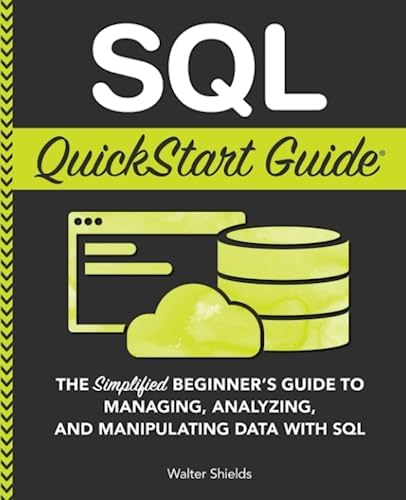
SQL QuickStart Guide: The Simplified Beginner's Guide to Managing, Analyzing, and Manipulating Data With SQL
| SELLER | SELLER SCORE | AMAZON FULFILLED | PRIME | FREE SHIPPING |
|---|---|---|---|---|
| Amazon.com | 9.68 | Yes | Yes | Yes |
You are staring at a massive, disorganized spreadsheet and realize that manual filtering is no longer a viable way to extract the insights your team needs. This is exactly where the SQL QuickStart Guide steps in to rescue your workflow. ClydeBank Media LLC has crafted a resource that strips away the intimidating jargon often found in database manuals, focusing instead on the practicalities of managing and manipulating data. It functions less like a dry textbook and more like a roadmap for navigating complex datasets. Whether you are trying to run your first query or need a refresher on data analysis techniques, this guide provides a streamlined path toward technical competence without the usual steep learning curve.
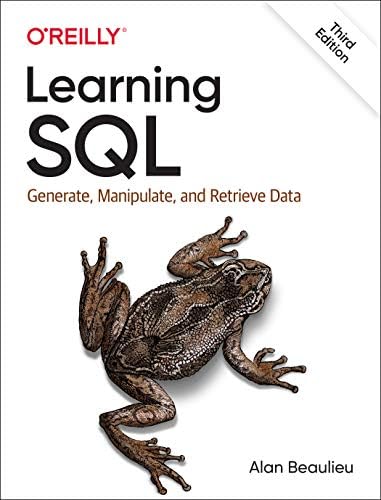
Learning SQL: Generate, Manipulate, and Retrieve Data
| SELLER | SELLER SCORE | AMAZON FULFILLED | PRIME | FREE SHIPPING |
|---|---|---|---|---|
| Amazon.com | 9.68 | Yes | Yes | Yes |
True data mastery requires more than just memorizing basic commands. It demands a deep understanding of how to actually manipulate and retrieve complex datasets. This O'Reilly Media guide moves past the surface-level tutorials that most beginners settle for, offering a structured approach to generating and managing data effectively. Instead of just skimming through syntax, you are guided through the actual logic required to handle real-world information architecture. It is a foundational resource for anyone looking to transition from a casual user to a proficient data professional. While the depth of technical detail is substantial, the progression remains logical enough to keep you from feeling overwhelmed as you build your skills.


Data Analytics, Data Visualization & Communicating Data: 3 books in 1: Learn the Processes of Data Analytics and Data Science, Create Engaging Data Vi...
| SELLER | SELLER SCORE | AMAZON FULFILLED | PRIME | FREE SHIPPING |
|---|---|---|---|---|
| Amazon.com | 9.68 | Yes | Yes | Yes |
You might assume a three-book bundle is just a collection of repetitive fluff, but this comprehensive set actually bridges the gap between raw numbers and persuasive storytelling. I found that instead of just teaching you how to crunch numbers, it forces you to think about the entire lifecycle of information. You start by mastering the fundamental processes of data science, move into the creative art of building engaging visualizations, and finish by learning how to actually present those findings to an audience. It is a rare trifecta that covers the technical, the visual, and the interpersonal skills required in modern analytics. For anyone looking to transition from a mere data processor to a data communicator, this collection offers a structured roadmap that feels much more cohesive than buying individual textbooks.

Six-Step Relational Database Design™: A step by step approach to relational database design and development Second Edition
| SELLER | SELLER SCORE | AMAZON FULFILLED | PRIME | FREE SHIPPING |
|---|---|---|---|---|
| Amazon.com | 9.68 | Yes | Yes | Yes |
Most aspiring developers settle for trial-and-error database structures that eventually collapse under their own complexity, but this guide offers a disciplined alternative. Six-Step Relational Database Design™ provides a structured, methodical framework that moves you away from guesswork and toward professional-grade development. Instead of just throwing tables together, you learn a repeatable process to ensure your data architecture is scalable and logically sound from the very first step. It is an essential resource for anyone tired of fixing broken schemas and ready to master the actual science of relational modeling. At a reasonable price point, it serves as a practical roadmap for transforming raw data requirements into a functional, high-performance database system.


Relational Database Design and Implementation: Clearly Explained
| SELLER | SELLER SCORE | AMAZON FULFILLED | PRIME | FREE SHIPPING |
|---|---|---|---|---|
| Amazon.com | 9.68 | Yes | Yes | Yes |
Aspiring database architects and backend developers require this specific text to bridge the gap between theoretical logic and practical application. Relational Database Design and Implementation: Clearly Explained by Morgan Kaufmann strips away the intimidating jargon that often plagues technical manuals, making complex normalization and schema design feel intuitive. I found that the structured approach helps you visualize how data flows through a system before you ever write a single line of SQL. It is a foundational resource that prioritizes clarity, ensuring you build scalable, efficient databases rather than just patching together messy tables. For anyone serious about mastering data integrity, this book serves as an essential roadmap for professional-grade implementation.


Database Design and Relational Theory: Normal Forms and All That Jazz
| SELLER | SELLER SCORE | AMAZON FULFILLED | PRIME | FREE SHIPPING |
|---|---|---|---|---|
| Amazon.com | 9.68 | Yes | Yes | Yes |
Most developers assume they understand data architecture until they encounter a messy, redundant schema that breaks under pressure. Database Design and Relational Theory: Normal Forms and All That Jazz by Apress tackles this exact headache by diving deep into the mathematical foundations of data organization. Instead of just teaching you how to write queries, this book focuses on the structural integrity required to build scalable systems. It demystifies complex concepts like normalization, ensuring you aren't just storing data, but doing so with precision. At its current price point, it serves as a highly accessible deep dive for anyone tired of patching leaky database designs and ready to master the actual science behind relational structures.


Mastering Access 365: An Easy Guide to Building Efficient Databases for Managing Your Data
| SELLER | SELLER SCORE | AMAZON FULFILLED | PRIME | FREE SHIPPING |
|---|---|---|---|---|
| Amazon.com | 9.68 | Yes | Yes | Yes |
Is your data currently scattered across a dozen messy spreadsheets that refuse to talk to one another? Mastering Access 365 offers a direct lifeline for anyone feeling overwhelmed by the complexities of relational databases. Instead of wading through dense technical manuals that feel like reading a dictionary, this guide approaches database construction with an emphasis on efficiency and practical application. It focuses on turning raw information into organized, manageable systems that actually work for your specific workflow. Whether you are a small business owner or a data enthusiast, the text simplifies the daunting task of building custom databases from the ground up. It is a straightforward companion for anyone ready to stop fighting their data and start mastering it.


Information Modeling and Relational Databases (The Morgan Kaufmann Series in Data Management Systems)
| SELLER | SELLER SCORE | AMAZON FULFILLED | PRIME | FREE SHIPPING |
|---|---|---|---|---|
| Willows Book Store | 9.93 | Yes | Yes | Yes |
Data architects and computer science students require this specific text to bridge the gap between abstract theory and practical database design. This installment in the Morgan Kaufmann Series in Data Management Systems serves as a rigorous deep dive into the structural logic that powers modern information systems. Instead of focusing on superficial coding shortcuts, the book prioritizes the foundational principles of relational modeling that ensure long-term data integrity. It is a heavy-duty academic resource that demands focus but rewards the reader with a sophisticated understanding of how complex datasets are organized. Whether you are preparing for advanced certification or designing a scalable backend architecture, the depth provided here is essential for anyone serious about mastering data management.

Relational Theory for Computer Professionals: What Relational Databases Are Really All About
| SELLER | SELLER SCORE | AMAZON FULFILLED | PRIME | FREE SHIPPING |
|---|---|---|---|---|
| Amazon.com | 9.68 | Yes | Yes | Yes |
You are staring at a complex schema design at 2:00 AM, realizing that your database structure is failing because you lack a fundamental understanding of the underlying logic. This O'Reilly Media text serves as the essential bridge between basic SQL commands and true architectural mastery. Instead of just teaching you how to write queries, it dives into the actual mechanics of what relational databases are really about. Since this is a used copy in good condition, it is an incredibly cost-effective way to grab a heavy-hitting technical resource without the premium price tag of a brand-new edition. It is a must-have for any developer tired of patching broken data models and ready to build scalable, theoretically sound systems.

SQL in a Nutshell: A Desktop Quick Reference
| SELLER | SELLER SCORE | AMAZON FULFILLED | PRIME | FREE SHIPPING |
|---|---|---|---|---|
| Amazon.com | 9.68 | Yes | Yes | Yes |
After weeks of use sitting at my desk, I have realized that having a physical reference guide can fundamentally change your workflow speed. SQL in a Nutshell: A Desktop Quick Reference serves as that essential companion for anyone navigating complex database queries without wanting to constantly toggle between browser tabs. It is designed to sit right alongside your keyboard, providing immediate access to syntax and commands when your focus is most intense. Instead of digging through documentation, you can glance down and find exactly what you need to keep your momentum going. It feels like a specialized tool for professionals who value precision and efficiency in their daily coding sessions.


Handbook of Relational Database Design
| SELLER | SELLER SCORE | AMAZON FULFILLED | PRIME | FREE SHIPPING |
|---|---|---|---|---|
| Revolver Market | 9.63 | No | No | No |
The Handbook of Relational Database Design serves as a definitive blueprint for anyone serious about mastering data architecture. This Addison-Wesley Professional publication moves beyond simple tutorials to offer deep, structural insights that are essential for building scalable systems. While many technical guides focus on specific software syntax, this book prioritizes the foundational logic required to design efficient, normalized databases. It is a substantial resource that feels more like a professional mentor than a standard textbook. It provides an accessible way to build a high-level theoretical framework that will serve you throughout your entire engineering career. If you want to stop guessing and start architecting, this is the reference you need on your shelf.

The New Relational Database Dictionary: Terms, Concepts, and Examples
| SELLER | SELLER SCORE | AMAZON FULFILLED | PRIME | FREE SHIPPING |
|---|---|---|---|---|
| Amazon.com | 9.68 | Yes | Yes | Yes |
Can a single reference guide truly bridge the gap between theoretical database concepts and practical implementation? The New Relational Database Dictionary by O'Reilly Media serves as that essential bridge for anyone navigating the complex landscape of data management. Rather than just listing definitions, this resource provides the necessary context through terms, concepts, and concrete examples that make abstract logic feel tangible. It is the kind of reliable companion you keep on your desk when you need to quickly clarify a specific architectural principle or ensure your technical vocabulary is precise. It offers a high level of utility for developers and data architects looking to solidify their foundational knowledge without getting lost in unnecessary fluff.

The Relational Model for Database Management: Version 2
| SELLER | SELLER SCORE | AMAZON FULFILLED | PRIME | FREE SHIPPING |
|---|---|---|---|---|
| -Bookworm- | 9.84 | No | No | No |
You are sitting in a quiet corner of a university library, staring at a complex schema that refuses to make logical sense. This is exactly where Addison-Wesley’s second edition of The Relational Model for Database Management becomes an indispensable companion for any serious student or engineer. Instead of wading through surface-level tutorials, you are diving deep into the foundational mathematical principles that govern how data actually interacts. It is a dense, rigorous text that prioritizes structural integrity over quick fixes, making it a vital resource for anyone trying to master the core logic of database design. While the subject matter is heavy, having this specific version on your desk ensures you are working from a standard of excellence in the field.

The primary reason to choose a relational database over a NoSQL alternative is the guarantee of ACID compliance (Atomicity, Consistency, Isolation, Durability). When evaluating a database, you must ensure it strictly adheres to these principles to prevent data corruption during crashes or concurrent access. If your application handles monetary transactions, inventory management, or user permissions, you cannot compromise on strict consistency. Look for engines that offer robust locking mechanisms and multi-version concurrency control (MVCC) to ensure that multiple users can read and write to the database simultaneously without creating 'dirty reads' or lost updates.
Relational databases have traditionally been known for vertical scaling—adding more CPU, RAM, or storage to a single server. However, modern requirements often demand horizontal scalability. When selecting a system, determine if it supports read replicas, which allow you to offload query traffic from the primary node to secondary nodes. Furthermore, investigate whether the database supports sharding (partitioning data across multiple machines) or if it offers a distributed SQL architecture. If you anticipate massive growth, a database designed for distributed environments will save you from a complete architectural overhaul in two years.
The strength of an RDBMS lies in its ability to perform complex joins across multiple tables. You should evaluate how the database handles sophisticated SQL queries and whether its optimizer is efficient at determining the fastest execution path. Beyond the engine itself, look at the indexing capabilities. A high-performance database should support various index types—such as B-tree, Hash, or GIN indexes—to optimize search speeds for different data types. If your workload involves heavy analytical processing (OLAP) rather than just simple transactional updates (OLTP), you may need a database specifically tuned for columnar storage or massive aggregations.
A database is only as good as your ability to maintain it. Consider the 'Total Cost of Ownership' by looking at the operational complexity. Does the database require a dedicated Database Administrator (DBA) to manage manual sharding and backups, or is it a managed service that handles patching, scaling, and failover automatically? Additionally, check the ecosystem: are there mature drivers for your programming language? Is there a wealth of community documentation and third-party monitoring tools available? A database with a massive community is often safer than a niche, high-performance engine that leaves you stranded when a production bug occurs.
Finally, never overlook the security layer. Your database must support granular Role-Based Access Control (RBAC), allowing you to restrict data access at the table, row, or even column level. Encryption is equally critical. Ensure the system supports encryption at rest (protecting the physical files) and encryption in transit (protecting data as it moves across the network). For industries governed by GDPR, HIPAA, or PCI-DSS, the database must provide robust audit logging to track who accessed what data and when.
Quick answers about Relational Databases before you buy.
Share of top-ranked products by brand, from our editorial analysis.
We've carried out a comprehensive analysis of 2,176 reviews on Relational Databases, using our selection criteria to identify the best options in the categories. Our findings reveal that most customers typically select Relational Databases priced around $35.37, with top brands including o'reilly media, morgan kaufmann, clydebank media llc, createspace independent publishing platform, apress and addison-wesley and addison-wesley professional.
Our team of expert editors reviewed these high-quality items and handpicked the top 13 Relational Databases for your consideration. We've also done extensive research on numerous sellers, identifying the best ones in the categories category — including amazon.com, willows book store and -bookworm- and revolver market.
We are dedicated to assisting our users in finding the right databases Products based on their needs, saving them considerable time when choosing which Relational Databases to buy. We take pride in the number of satisfied users we've helped through our thorough and insightful reviews.
Compare the top 13 picks at a glance — select a column to sort.


