#TOP1

Designing a database is far more than just drawing tables and defining primary keys. It is an exercise in architectural foresight. Whether you are building a high-frequency trading platform, a massive social media backend, or a simple content management system, the way you structure your storage layer dictates your application's scalability, latency, and data integrity. Database storage design books serve as the theoretical and practical blueprints for these critical decisions. Unlike standard programming manuals that focus on syntax, these specialized texts dive into the 'why' behind data modeling, indexing strategies, and distributed systems. Finding the right book requires moving beyond basic SQL tutorials and looking into the deep mechanics of how data is physically and logically organized to meet specific workload demands.
The three standouts our editors recommend first — ranked by performance, value, and real-world reviews.


Designing Data-Intensive Applications: The Big Ideas Behind Reliable, Scalable, and Maintainable Systems
| SELLER | SELLER SCORE | AMAZON FULFILLED | PRIME | FREE SHIPPING |
|---|---|---|---|---|
| AGIOS MIXAEL | 5.20 | Yes | Yes | Yes |
Modern software architecture often collapses under the weight of massive datasets and unpredictable traffic, leaving engineers scrambling to fix broken systems. Designing Data-Intensive Applications solves this chaos by providing a foundational framework for building reliable and scalable infrastructure. Instead of just teaching you how to use a specific database, this O'Reilly Media guide dives deep into the core principles that govern how data moves, stays consistent, and survives hardware failures. It is the kind of deep-dive resource you keep on your desk for years rather than reading once and tossing aside. Whether you are trying to understand distributed systems or just want to write more maintainable code, this book bridges the gap between theoretical computer science and practical, real-world engineering challenges.

Fundamentals of Data Engineering: Plan and Build Robust Data Systems
| SELLER | SELLER SCORE | AMAZON FULFILLED | PRIME | FREE SHIPPING |
|---|---|---|---|---|
| Amazon.com | 9.68 | Yes | Yes | Yes |
You might wonder if another technical manual is actually worth your time or if it will just end up gathering dust on a shelf. Fundamentals of Data Engineering: Plan and Build Robust Data Systems aims to prove that a structured approach to system architecture is a necessity rather than a luxury. This book focuses on the critical transition from simple data movement to building truly resilient, scalable infrastructures. Instead of just teaching you how to use specific tools, it pushes you to understand the underlying principles that keep data pipelines running smoothly under pressure. It is a solid investment for anyone looking to move past basic scripting and into the realm of professional-grade data architecture and system design.

Database Internals: A Deep Dive into How Distributed Data Systems Work
| SELLER | SELLER SCORE | AMAZON FULFILLED | PRIME | FREE SHIPPING |
|---|---|---|---|---|
| Amazon.com | 9.68 | Yes | Yes | Yes |
Most developers spend their entire careers interacting with databases without ever truly understanding the machinery humming beneath the surface. This O'Reilly Media deep dive pulls back the curtain on that mystery, moving far beyond simple query optimization to explore the fundamental architecture of distributed data systems. It is not just a manual. It is an architectural autopsy of how data actually moves, persists, and scales across complex networks. While the subject matter is dense, the clarity provided is essential for anyone looking to transition from a standard user to a systems engineer. Instead of just teaching you how to use a tool, it teaches you how to build the next generation of them, making it a cornerstone for serious backend professionals.


| SELLER | SELLER SCORE | AMAZON FULFILLED | PRIME | FREE SHIPPING |
|---|---|---|---|---|
| Amazon.com | 9.68 | Yes | Yes | Yes |

Database Reliability Engineering: Designing and Operating Resilient Database Systems
| SELLER | SELLER SCORE | AMAZON FULFILLED | PRIME | FREE SHIPPING |
|---|---|---|---|---|
| Amazon.com | 9.68 | Yes | Yes | Yes |
Database administrators and site reliability engineers cannot afford to ignore this definitive guide to system resilience. O'Reilly Media has delivered a deep dive into the architectural patterns required to keep modern data systems running under pressure. Instead of just teaching you how to write queries, this book focuses on the high-stakes world of designing and operating systems that actually survive real-world failures. It bridges the gap between theoretical database management and the practical, hands-on reality of maintaining uptime in distributed environments. It serves as a vital technical manual for anyone responsible for the integrity and availability of mission-critical data infrastructure.

| SELLER | SELLER SCORE | AMAZON FULFILLED | PRIME | FREE SHIPPING |
|---|---|---|---|---|
| CleverlyNovels | 5.68 | Yes | Yes | Yes |

Database Processing: Fundamentals, Design, and Implementation
| SELLER | SELLER SCORE | AMAZON FULFILLED | PRIME | FREE SHIPPING |
|---|---|---|---|---|
| Lakeside Book Merchant | 8.87 | No | No | No |
Aspiring database administrators and computer science students require this text to bridge the gap between theoretical concepts and practical application. Database Processing: Fundamentals, Design, and Implementation serves as a heavy-duty roadmap for anyone serious about mastering data architecture. While the price point reflects its status as a high-level academic resource, the depth of coverage regarding design and implementation makes it a foundational asset for a professional library. I found that having a structured guide from a reputable publisher like Pearson is essential when navigating the complexities of data management. It isn't just a casual read. It is a rigorous tool designed to build a professional-grade understanding of how data systems actually function in the real world.
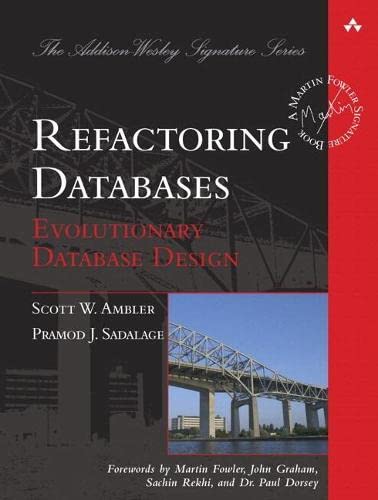

Refactoring Databases: Evolutionary Database Design (Addison-Wesley Signature Series (Fowler))
| SELLER | SELLER SCORE | AMAZON FULFILLED | PRIME | FREE SHIPPING |
|---|---|---|---|---|
| Amazon.com | 9.68 | Yes | Yes | Yes |
Refactoring Databases is the definitive blueprint for managing evolving data schemas without breaking your application. Most developers treat database changes as a terrifying, high-stakes event, but this Addison-Wesley Signature Series title teaches you how to treat them as a manageable, iterative process. It moves away from the rigid, upfront design models that often lead to technical debt and instead focuses on practical, evolutionary strategies. The prose is direct and professional, making it an essential companion for anyone working in agile environments where requirements shift constantly. Instead of fearing the next migration, you will learn how to approach schema changes with a structured, disciplined methodology that keeps your system resilient and scalable.
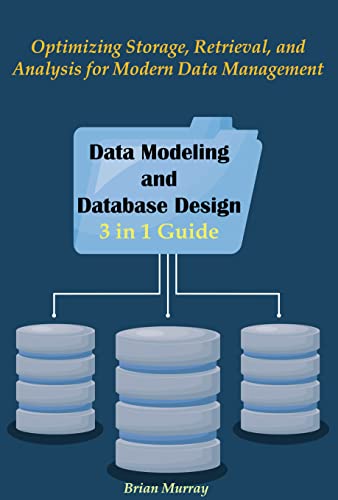
Data Modeling and Database Design: Optimizing Storage, Retrieval, and Analysis for Modern Data Management
| SELLER | SELLER SCORE | AMAZON FULFILLED | PRIME | FREE SHIPPING |
|---|---|---|---|---|
| Amazon.com Services LLC | 0.00 | No | No | No |
Data Modeling and Database Design stands as a vital resource for engineers looking to master modern data management. This digital ebook dives deep into the mechanics of optimizing storage and retrieval, which is essential for anyone building scalable systems. I found the focus on balancing analysis with efficient architecture to be its strongest asset. Instead of just teaching theory, it addresses the practicalities of how data actually flows through a modern ecosystem. At just under six dollars, it offers a remarkably low barrier to entry for high-level technical knowledge. It is a concise, focused deep dive that makes complex architectural concepts feel accessible and immediately applicable to real-world database optimization tasks.


Database Design and Relational Theory: Normal Forms and All That Jazz
| SELLER | SELLER SCORE | AMAZON FULFILLED | PRIME | FREE SHIPPING |
|---|---|---|---|---|
| Amazon.com | 9.68 | Yes | Yes | Yes |
Most developers assume they understand data architecture until they encounter a messy, redundant schema that breaks under pressure. Database Design and Relational Theory: Normal Forms and All That Jazz by Apress tackles this exact headache by diving deep into the mathematical foundations of data organization. Instead of just teaching you how to write queries, this book focuses on the structural integrity required to build scalable systems. It demystifies complex concepts like normalization, ensuring you aren't just storing data, but doing so with precision. At its current price point, it serves as a highly accessible deep dive for anyone tired of patching leaky database designs and ready to master the actual science behind relational structures.

Database Design Using Entity-Relationship Diagrams (Foundations of Database Design)
| SELLER | SELLER SCORE | AMAZON FULFILLED | PRIME | FREE SHIPPING |
|---|---|---|---|---|
| ayvax | 9.89 | Yes | Yes | Yes |
Mastering structural data modeling is significantly easier with this foundational text from Auerbach Publications. This specific copy of Database Design Using Entity-Relationship Diagrams serves as a critical resource for anyone looking to bridge the gap between abstract logic and functional database architecture. Since this is a used book in good condition, it offers a practical way to access specialized technical knowledge without the premium price tag of a brand-new academic release. It functions perfectly as a desk reference or a core study guide for students tackling the complexities of relational schemas. Having this level of instructional depth readily available in stock makes it a reliable choice for self-paced learners and professionals alike.

Data Modeling for MongoDB: Building Well-Designed and Supportable MongoDB Databases
| SELLER | SELLER SCORE | AMAZON FULFILLED | PRIME | FREE SHIPPING |
|---|---|---|---|---|
| Amazon.com | 9.68 | Yes | Yes | Yes |
Your application architecture is crumbling because your NoSQL schema was built on relational logic that simply doesn't scale. This is the exact wall developers hit when they transition from SQL to document-based systems without a roadmap. Technics Publications addresses this friction head-on in this guide, focusing on the structural integrity required to build supportable, high-performance databases. Instead of just teaching syntax, the book pushes you to rethink how data relationships function within a non-relational environment. It is a practical deep dive into the design patterns that prevent technical debt from accumulating as your dataset grows. For anyone tired of fighting their own database design, this resource provides the necessary framework to build systems that actually work under pressure.

Database Design and Implementation: Second Edition (Data-Centric Systems and Applications)
| SELLER | SELLER SCORE | AMAZON FULFILLED | PRIME | FREE SHIPPING |
|---|---|---|---|---|
| Amazon.com | 9.68 | Yes | Yes | Yes |
The crisp, academic weight of this Springer publication immediately signals that you are holding a serious technical resource. Database Design and Implementation: Second Edition serves as a foundational pillar for anyone navigating the complexities of data-centric systems and applications. Rather than offering surface-level tutorials, this text dives deep into the architectural logic required to build robust, scalable data environments. It feels less like a casual read and more like a professional roadmap for engineers who need to understand the underlying mechanics of how data lives and breathes within a system. At its price point, it stands as a substantial investment for students or practitioners looking to master the structural integrity of modern database management.

Professional Azure SQL Managed Database Administration: Efficiently manage and modernize data in the cloud using Azure SQL, 3rd Edition
| SELLER | SELLER SCORE | AMAZON FULFILLED | PRIME | FREE SHIPPING |
|---|---|---|---|---|
| Amazon.com | 9.68 | Yes | Yes | Yes |
Database administrators transitioning from on-premises environments to the cloud require this specific roadmap to avoid costly architectural mistakes. This third edition serves as a technical manual for anyone tasked with the high-stakes responsibility of modernizing data infrastructure within the Azure ecosystem. Instead of wading through scattered online tutorials, you get a cohesive strategy for managing and optimizing cloud-based SQL instances efficiently. It bridges the gap between traditional DBA skill sets and the specialized demands of managed services. At a price point, it is a practical investment for professionals who need to master cloud data modernization without the guesswork of trial and error.

Database Design Using Entity-Relationship Diagrams (Foundations of Database Design)
| SELLER | SELLER SCORE | AMAZON FULFILLED | PRIME | FREE SHIPPING |
|---|---|---|---|---|
| ayvax | 9.89 | Yes | Yes | Yes |
You are staring at a chaotic whiteboard filled with tangled lines and messy notes, trying to figure out how to structure a new relational database without causing a total system meltdown. This is exactly where Database Design Using Entity-Relationship Diagrams steps in to save your sanity. Instead of guessing how tables should connect, this guide walks you through the foundational logic needed to build a clean, scalable architecture. It moves past the surface-level syntax to focus on the actual blueprinting process that separates junior developers from seasoned architects. While it is a specialized text, it serves as an essential roadmap for anyone serious about mastering the structural integrity of data modeling.

Database Modeling and Design: Logical Design (The Morgan Kaufmann Series in Data Management Systems)
| SELLER | SELLER SCORE | AMAZON FULFILLED | PRIME | FREE SHIPPING |
|---|---|---|---|---|
| Amazon.com Services LLC | 0.00 | No | No | No |
Can a single architectural blueprint prevent a total data management catastrophe? Database Modeling and Design: Logical Design serves as that critical roadmap for anyone serious about structured data integrity. As part of the respected Morgan Kaufmann Series in Data Management Systems, this digital ebook dives deep into the essential logic required to build scalable, efficient databases. Because it is available for immediate download, you can skip the wait and start refining your schema designs right away. It offers a professional-grade deep dive into the complexities of logical modeling without the hefty cost of a physical textbook. It is an indispensable resource for students and engineers who need to master the transition from conceptual ideas to functional database structures.

The Book of FileMaker 6: Your One-Stop Guide to FileMaker Pro, Pro Unlimited, Developer, Server, and Mobile
| SELLER | SELLER SCORE | AMAZON FULFILLED | PRIME | FREE SHIPPING |
|---|---|---|---|---|
| nagpurkar | 5.23 | No | No | No |
Database architects and legacy system developers need this comprehensive manual to master the intricacies of the FileMaker ecosystem. This guide serves as a massive, all-in-one roadmap that bridges the gap between basic Pro usage and complex Server or Mobile implementations. Because it covers everything from Pro Unlimited to Developer tools, you won't find yourself hunting through fragmented online forums for answers. Even though this specific copy is a used book, it remains in good condition, making it a practical resource for anyone looking to deepen their technical proficiency without the premium price tag of a brand-new release. It is a dense, authoritative deep dive into a powerful development environment.

The first step in choosing a database design book is identifying whether you need to understand high-level conceptual modeling or low-level storage engine mechanics. If you are a software engineer or product manager, you likely need books focused on Logical Data Modeling. These texts teach you how to translate business requirements into normalized schemas, manage relationships, and ensure data consistency. However, if you are a database administrator (DBA) or a backend engineer working on high-performance systems, you should look for books on Physical Storage Design. These will cover B-trees, LSM-trees, page layouts, and how data is actually written to disk or memory. Choosing a high-level book when you need low-level optimization will leave you frustrated by a lack of technical depth.
The landscape of data storage has shifted from purely relational models to a diverse ecosystem of specialized engines. A modern, comprehensive guide should address the trade-offs between different storage paradigms. When browsing, look for books that discuss:
If a book only focuses on a single vendor or a single type of database, it may be too narrow for a general designer, though it might be excellent for a specialist.
The best database design books bridge the gap between academic computer science and real-world engineering. Purely theoretical books are excellent for understanding the mathematical foundations of relational algebra or CAP theorem implications, but they can feel disconnected from daily coding tasks. Conversely, 'cookbook' style books that only provide snippets of code often fail to teach you how to think through a design problem from scratch. Aim for books that present a design pattern or a theoretical principle and then immediately follow it with a practical use case or a performance benchmark. This dual approach ensures you understand not just how to implement a solution, but why that specific solution is the correct choice for a given workload.
In the modern era, 'design' is synonymous with 'scale.' A book that ignores the challenges of horizontal scaling, partitioning (sharding), and replication is outdated. When reviewing a book's table of contents, check for deep dives into indexing strategies—such as how different index types affect write latency—and concurrency control mechanisms like Multi-Version Concurrency Control (MVCC). A high-quality guide will teach you how to predict where your design will break as your dataset grows from megabytes to petabytes.
Quick answers about Database Storage Design Books before you buy.
Share of top-ranked products by brand, from our editorial analysis.
We've carried out a comprehensive analysis of 34 reviews on Database Storage Design Books, using our selection criteria to identify the best options in the specialty boutique. Our findings reveal that most customers typically select Database Storage Design Books priced around $54.99, with top brands including o'reilly media, pearson, technics publications, springer, apress and addison-wesley professional and auerbach publications.
Our team of expert editors reviewed these high-quality items and handpicked the top 17 Database Storage Design Books for your consideration. We've also done extensive research on numerous sellers, identifying the best ones in the specialty boutique category — including amazon.com, lakeside book merchant, amazon.com services llc, ayvax and agios mixael and cleverlynovels.
We are dedicated to assisting our users in finding the right design Products based on their needs, saving them considerable time when choosing which Database Storage Design Books to buy. We take pride in the number of satisfied users we've helped through our thorough and insightful reviews.
Compare the top 17 picks at a glance — select a column to sort.


