Identify the Scientific Discipline
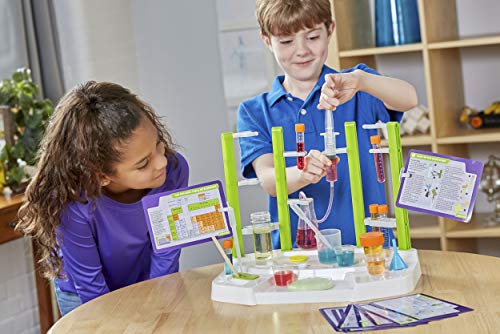
The first step in navigating this catalog is determining which branch of science aligns with the learner's current interests. Thames & Kosmos categorizes their offerings into distinct silos: Chemistry, Physics, Biology, and Engineering. Chemistry kits often range from simple acid-base reactions to complex crystal growing and molecular modeling. Physics kits tend to focus on mechanics, electricity, and optics, often involving building functional circuits or understanding the laws of motion. Biology kits generally lean toward microscopy and cellular structures. Selecting a kit that matches a pre-existing curiosity ensures higher engagement and prevents the frustration that comes from tackling a discipline that feels too abstract or disconnected from reality.
Evaluate Age Appropriateness and Complexity
This is perhaps the most critical decision factor. In the world of educational kits, 'age-appropriate' refers to both safety and cognitive load. A kit designed for an eight-year-old will prioritize large, easy-to-handle components and simplified instructions that focus on observation. Conversely, kits designed for teenagers or adults will involve precision measurements, complex mathematical calculations, and more sensitive chemical reagents. If a kit is too simple, the learner will quickly lose interest. If it is too advanced, the kit will end up gathering dust on a shelf. Always check the recommended age range, but also look at the 'skill level' indicators—some kits are labeled as introductory, while others are considered advanced or professional-grade.
Assess the Reusability and Consumables
One of the most common pitfalls in science kit shopping is failing to account for the 'consumable' aspect. Many chemistry kits require specific reagents—liquids, powders, or salts—that are used up during the experiments. Once these are gone, the kit's utility drops significantly. When making your selection, look for kits that either include a generous supply of these materials or provide clear instructions on how to replenish them using household items. On the other hand, physics and engineering kits often rely more on durable hardware, such as motors, gears, and wires, which offer much higher long-term value because the core components can be used for multiple different projects over several years.
Analyze the Educational Documentation
A high-quality educational kit is only as good as its manual. A mediocre kit provides a list of steps to follow. A superior kit provides a scientific framework. Look for kits that include a comprehensive manual containing detailed explanations of the 'why' behind the 'how.' The best kits encourage the scientific method: they prompt the user to form a hypothesis, conduct an experiment, observe the results, and draw a conclusion. If the documentation is purely instructional without being educational, you are essentially buying a toy rather than a learning tool. Seek out kits that include supplemental books or guides that dive deep into the history and theory of the subject matter.
Consider the Required Environment
Finally, consider the practicalities of where the science will take place. Chemistry kits, particularly those involving reactions or odors, require a well-ventilated area and a stable, flat workspace. Biology kits involving microscopes require excellent lighting and a vibration-free surface. Engineering kits often require a bit of 'maker space' where tools can be spread out. Matching the kit to your available home environment ensures that the scientific exploration is a seamless and enjoyable experience rather than a logistical headache.