#TOP1

Epistemology, the branch of philosophy concerned with the nature, origin, and limits of human knowledge, is not a category you shop for like consumer electronics. You are not looking for 'specs'. You are looking for frameworks of reality. Whether you are a student attempting to grasp the foundational structures of belief, or a seasoned thinker looking to challenge the boundaries of skepticism, selecting the right epistemological text or resource requires a deep understanding of the intellectual tradition you wish to inhabit. This guide is designed to help you navigate the dense thicket of certainty, doubt, and justification that defines this discipline.
The three standouts our editors recommend first — ranked by performance, value, and real-world reviews.

| SELLER | SELLER SCORE | AMAZON FULFILLED | PRIME | FREE SHIPPING |
|---|---|---|---|---|
| Amazon.com | 9.68 | Yes | Yes | Yes |


| SELLER | SELLER SCORE | AMAZON FULFILLED | PRIME | FREE SHIPPING |
|---|---|---|---|---|
| Amazon.com | 9.68 | Yes | Yes | Yes |

| SELLER | SELLER SCORE | AMAZON FULFILLED | PRIME | FREE SHIPPING |
|---|---|---|---|---|
| Amazon.com | 9.68 | Yes | Yes | Yes |
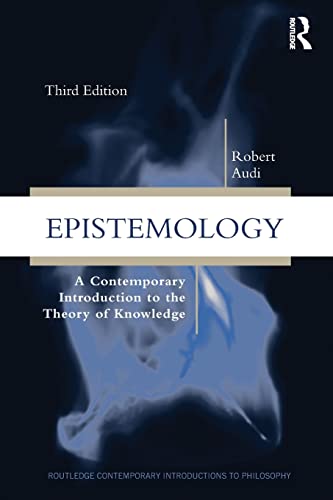
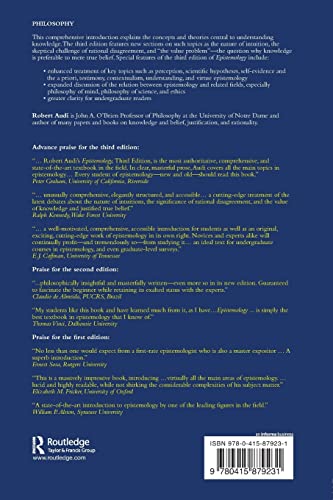
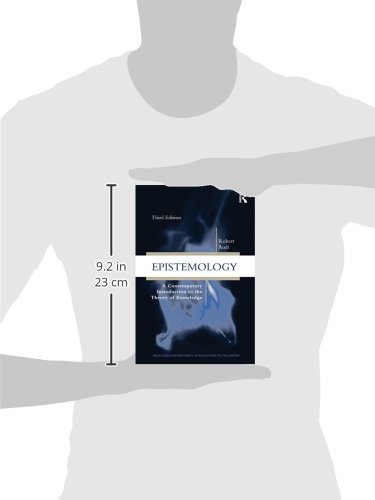
| SELLER | SELLER SCORE | AMAZON FULFILLED | PRIME | FREE SHIPPING |
|---|---|---|---|---|
| ayvax | 9.89 | Yes | Yes | Yes |


| SELLER | SELLER SCORE | AMAZON FULFILLED | PRIME | FREE SHIPPING |
|---|---|---|---|---|
| Amazon.com | 9.68 | Yes | Yes | Yes |


| SELLER | SELLER SCORE | AMAZON FULFILLED | PRIME | FREE SHIPPING |
|---|---|---|---|---|
| Amazon.com | 9.68 | Yes | Yes | Yes |

| SELLER | SELLER SCORE | AMAZON FULFILLED | PRIME | FREE SHIPPING |
|---|---|---|---|---|
| Amazon.com | 9.68 | Yes | Yes | Yes |

| SELLER | SELLER SCORE | AMAZON FULFILLED | PRIME | FREE SHIPPING |
|---|---|---|---|---|
| Amazon.com Services LLC | 0.00 | No | No | No |
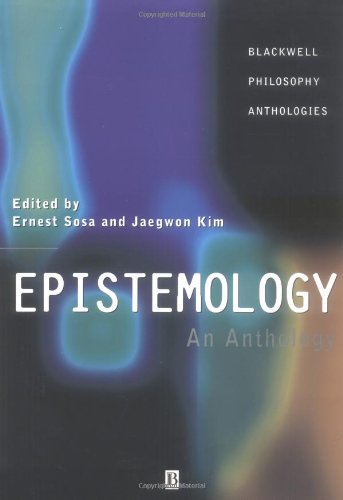
Epistemology: An Anthology (Blackwell Philosophy Anthologies)
| SELLER | SELLER SCORE | AMAZON FULFILLED | PRIME | FREE SHIPPING |
|---|---|---|---|---|
| StarMarketDirect | 5.68 | Yes | Yes | Yes |
Most people assume studying the nature of knowledge requires a massive library, but this single volume manages to condense an entire field of inquiry into one accessible place. This Blackwell Philosophy Anthology serves as a concentrated powerhouse for anyone diving into the complexities of belief and justification. Since this is a used copy in good condition, you are getting a high-level academic resource without the typical premium price tag of a brand-new textbook. It feels less like a dry manual and more like a curated conversation between history's greatest thinkers. Whether you are a student or just a curious mind, having these essential texts organized in one volume makes the daunting task of mastering epistemology feel much more manageable.

| SELLER | SELLER SCORE | AMAZON FULFILLED | PRIME | FREE SHIPPING |
|---|---|---|---|---|
| Amazon.com | 9.68 | Yes | Yes | Yes |


| SELLER | SELLER SCORE | AMAZON FULFILLED | PRIME | FREE SHIPPING |
|---|---|---|---|---|
| Amazon.com | 9.68 | Yes | Yes | Yes |

| SELLER | SELLER SCORE | AMAZON FULFILLED | PRIME | FREE SHIPPING |
|---|---|---|---|---|
| Amazon.com | 9.68 | Yes | Yes | Yes |

| SELLER | SELLER SCORE | AMAZON FULFILLED | PRIME | FREE SHIPPING |
|---|---|---|---|---|
| Amazon.com Services LLC | 0.00 | No | No | No |

| SELLER | SELLER SCORE | AMAZON FULFILLED | PRIME | FREE SHIPPING |
|---|---|---|---|---|
| Amazon.com | 9.68 | Yes | Yes | Yes |

Knowledge: A Very Short Introduction (Very Short Introductions)
| SELLER | SELLER SCORE | AMAZON FULFILLED | PRIME | FREE SHIPPING |
|---|---|---|---|---|
| Amazon.com | 9.68 | Yes | Yes | Yes |
Intellectual curiosity deserves a roadmap as precise as this one. This paperback volume from Oxford University Press serves as a masterclass in distilling complex epistemological concepts into something genuinely digestible without sacrificing academic rigor. I found that the English text manages to bridge the gap between dense scholarly debate and accessible reading, making it a perfect companion for anyone looking to sharpen their understanding of how we know what we know. It is a slim, portable guide that fits easily into a bag, making it ideal for deep thinking during a commute or a quiet afternoon. At its current price point, it offers an incredible amount of intellectual value for a relatively small investment in your personal library.

An Introduction to Metaphysics (Cambridge Introductions to Philosophy)
| SELLER | SELLER SCORE | AMAZON FULFILLED | PRIME | FREE SHIPPING |
|---|---|---|---|---|
| Amazon.com | 9.68 | Yes | Yes | Yes |
An Introduction to Metaphysics is a masterclass in clarity for anyone tackling the most abstract questions of existence. As a cornerstone of the Cambridge Introductions to Philosophy series, this textbook manages to strip away the intimidation factor often found in academic heavyweights. I found that it moves through complex ontological concepts without losing the reader in unnecessary jargon, making it an ideal companion for both undergraduate students and curious lifelong learners. It functions less like a dense, impenetrable manual and more like a guided tour through the fundamental nature of reality. At a price point, it serves as an accessible entry point into high-level philosophical discourse that feels both authoritative and approachable.


Social Epistemology: Essential Readings
| SELLER | SELLER SCORE | AMAZON FULFILLED | PRIME | FREE SHIPPING |
|---|---|---|---|---|
| Amazon.com | 9.68 | Yes | Yes | Yes |
Academic researchers and philosophy students require this collection to truly grasp how collective knowledge functions in a modern world. This Oxford University Press anthology serves as a foundational pillar for anyone diving into the complexities of social belief and communal truth. Because this specific copy is a used book in good condition, it offers a much more accessible entry point into high-level academic discourse without the heavy price tag of a brand-new hardcover. It is a dense, intellectually rigorous resource that remains in stock and ready for immediate study. If you are building a library centered on epistemology, this volume is a non-negotiable addition to your shelf.

The first decision factor in selecting epistemological material is determining which tradition aligns with your current inquiry. Epistemology is not a monolith. It is a battlefield of competing schools of thought. If you are interested in how we acquire knowledge through sensory experience, you should prioritize works rooted in Empiricism. If you find yourself questioning the innate structures of the mind that make experience possible, look toward Rationalism. For those interested in the social construction of truth and how power dynamics influence what is accepted as 'fact,' you must venture into Social Epistemology or Post-structuralist frameworks. Choosing a text outside your preferred tradition is an excellent way to sharpen your critical thinking, but if your goal is foundational mastery, start within a cohesive school of thought.
One of the most common mistakes is conflating primary philosophical treatises with secondary commentaries. A primary source is the direct voice of a philosopher—think of the rigorous, often difficult prose of Descartes, Locke, or Kant. These are essential for those who want to engage with the 'raw' logic of the thinkers themselves. However, if you are new to the field, jumping straight into primary texts can be overwhelming and counterproductive. In this case, you should seek out high-quality secondary sources: scholarly commentaries, historical overviews, and pedagogical introductions. These resources provide the necessary context, define technical terminology (such as 'a priori' vs. 'a posteriori'), and map out the historical progression of arguments, making them indispensable for building a coherent mental model before tackling the masters.
When reviewing a text or a collection of essays, look at how the author handles the problem of justification. A strong epistemological work does not merely state what we know. It meticulously investigates why we are justified in believing it. Pay close attention to how a resource addresses the 'Skepticism Problem.' Does the work offer a robust defense against the possibility of radical doubt, or does it lean into the uncertainty? For a rigorous study, look for materials that engage with contemporary debates, such as the Gettier problem or reliabilism. If a text avoids the hard questions of error and doubt, it is likely a superficial survey rather than a deep philosophical investigation.
Epistemology exists on a spectrum ranging from historical and literary explorations to highly technical, analytic investigations. Some works are written with a focus on the history of ideas, using narrative and historical context to explain how concepts evolved. Others are written in the style of formal logic, utilizing symbolic notation and precise linguistic analysis to dissect the structure of propositions. Decide whether you want a 'broad view' (historical/continental) or a 'deep dive' (analytic/logical). If you prefer structured, step-by-step argumentation, lean toward analytic philosophy. If you prefer the interconnectedness of human experience and history, look toward continental approaches.
Quick answers about Epistemology Philosophy before you buy.
Share of top-ranked products by brand, from our editorial analysis.
We've carried out a comprehensive analysis of 436 reviews on Epistemology Philosophy, using our selection criteria to identify the best options in the categories. Our findings reveal that most customers typically select Epistemology Philosophy priced around $34.31, with top brands including ivp academic, wiley-blackwell, routledge, nal and rowman & littlefield publishers and prometheus.
Our team of expert editors reviewed these high-quality items and handpicked the top 17 Epistemology Philosophy for your consideration. We've also done extensive research on numerous sellers, identifying the best ones in the categories category — including amazon.com and amazon.com services llc and ayvax.
We are dedicated to assisting our users in finding the right philosophy Products based on their needs, saving them considerable time when choosing which Epistemology Philosophy to buy. We take pride in the number of satisfied users we've helped through our thorough and insightful reviews.
Compare the top 17 picks at a glance — select a column to sort.


