#TOP1

Epistemology, the branch of philosophy concerned with the nature, origin, and limits of human knowledge, is one of the most intellectually demanding yet rewarding fields of study. Whether you are investigating the foundations of belief, the distinction between truth and opinion, or the reliability of sensory perception, selecting the right text is critical. Because epistemology ranges from ancient skepticism to modern Bayesian probability and social epistemology, a generic approach to reading will likely lead to frustration. A well-chosen book serves as a roadmap through the labyrinth of how we know what we claim to know.
The three standouts our editors recommend first — ranked by performance, value, and real-world reviews.
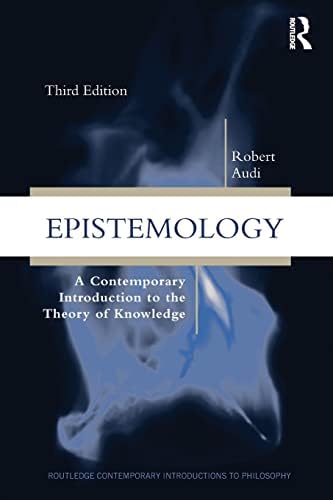

| SELLER | SELLER SCORE | AMAZON FULFILLED | PRIME | FREE SHIPPING |
|---|---|---|---|---|
| Amazon.com | 9.68 | Yes | Yes | Yes |
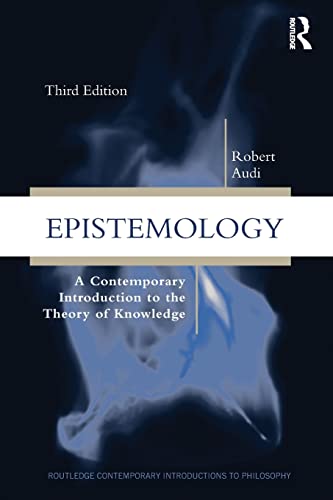
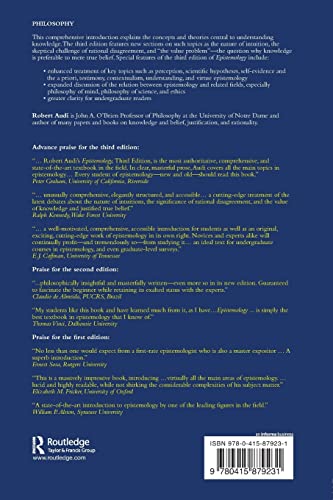
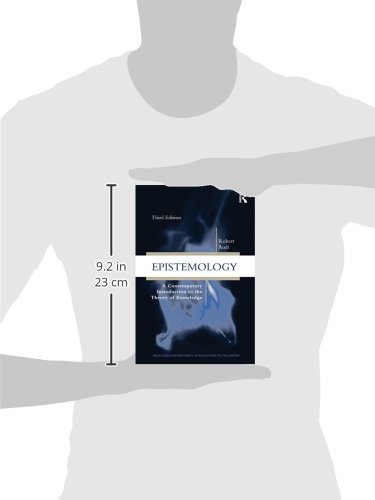
| SELLER | SELLER SCORE | AMAZON FULFILLED | PRIME | FREE SHIPPING |
|---|---|---|---|---|
| ayvax | 9.89 | Yes | Yes | Yes |


| SELLER | SELLER SCORE | AMAZON FULFILLED | PRIME | FREE SHIPPING |
|---|---|---|---|---|
| Amazon.com | 9.68 | Yes | Yes | Yes |


| SELLER | SELLER SCORE | AMAZON FULFILLED | PRIME | FREE SHIPPING |
|---|---|---|---|---|
| Amazon.com | 9.68 | Yes | Yes | Yes |

| SELLER | SELLER SCORE | AMAZON FULFILLED | PRIME | FREE SHIPPING |
|---|---|---|---|---|
| Amazon.com | 9.68 | Yes | Yes | Yes |


| SELLER | SELLER SCORE | AMAZON FULFILLED | PRIME | FREE SHIPPING |
|---|---|---|---|---|
| Amazon.com | 9.68 | Yes | Yes | Yes |

| SELLER | SELLER SCORE | AMAZON FULFILLED | PRIME | FREE SHIPPING |
|---|---|---|---|---|
| Amazon.com Services LLC | 0.00 | No | No | No |

| SELLER | SELLER SCORE | AMAZON FULFILLED | PRIME | FREE SHIPPING |
|---|---|---|---|---|
| JOHN WILEY AND SONS INC | 0.00 | No | No | No |


| SELLER | SELLER SCORE | AMAZON FULFILLED | PRIME | FREE SHIPPING |
|---|---|---|---|---|
| Amazon.com | 9.68 | Yes | Yes | Yes |


| SELLER | SELLER SCORE | AMAZON FULFILLED | PRIME | FREE SHIPPING |
|---|---|---|---|---|
| Amazon.com | 9.68 | Yes | Yes | Yes |
| SELLER | SELLER SCORE | AMAZON FULFILLED | PRIME | FREE SHIPPING |
|---|---|---|---|---|
| Amazon.com Services LLC | 0.00 | No | No | No |

| SELLER | SELLER SCORE | AMAZON FULFILLED | PRIME | FREE SHIPPING |
|---|---|---|---|---|
| Amazon.com | 9.68 | Yes | Yes | Yes |

| SELLER | SELLER SCORE | AMAZON FULFILLED | PRIME | FREE SHIPPING |
|---|---|---|---|---|
| Amazon.com | 9.68 | Yes | Yes | Yes |
| SELLER | SELLER SCORE | AMAZON FULFILLED | PRIME | FREE SHIPPING |
|---|---|---|---|---|
| Amazon.com Services LLC | 0.00 | No | No | No |

| SELLER | SELLER SCORE | AMAZON FULFILLED | PRIME | FREE SHIPPING |
|---|---|---|---|---|
| Amazon.com | 9.68 | Yes | Yes | Yes |

| SELLER | SELLER SCORE | AMAZON FULFILLED | PRIME | FREE SHIPPING |
|---|---|---|---|---|
| Amazon.com | 9.68 | Yes | Yes | Yes |

Knowledge: A Very Short Introduction (Very Short Introductions)
| SELLER | SELLER SCORE | AMAZON FULFILLED | PRIME | FREE SHIPPING |
|---|---|---|---|---|
| Amazon.com | 9.68 | Yes | Yes | Yes |
Intellectual curiosity deserves a roadmap as precise as this one. This paperback volume from Oxford University Press serves as a masterclass in distilling complex epistemological concepts into something genuinely digestible without sacrificing academic rigor. I found that the English text manages to bridge the gap between dense scholarly debate and accessible reading, making it a perfect companion for anyone looking to sharpen their understanding of how we know what we know. It is a slim, portable guide that fits easily into a bag, making it ideal for deep thinking during a commute or a quiet afternoon. At its current price point, it offers an incredible amount of intellectual value for a relatively small investment in your personal library.

An Introduction to Metaphysics (Cambridge Introductions to Philosophy)
| SELLER | SELLER SCORE | AMAZON FULFILLED | PRIME | FREE SHIPPING |
|---|---|---|---|---|
| Amazon.com | 9.68 | Yes | Yes | Yes |
An Introduction to Metaphysics is a masterclass in clarity for anyone tackling the most abstract questions of existence. As a cornerstone of the Cambridge Introductions to Philosophy series, this textbook manages to strip away the intimidation factor often found in academic heavyweights. I found that it moves through complex ontological concepts without losing the reader in unnecessary jargon, making it an ideal companion for both undergraduate students and curious lifelong learners. It functions less like a dense, impenetrable manual and more like a guided tour through the fundamental nature of reality. At a price point, it serves as an accessible entry point into high-level philosophical discourse that feels both authoritative and approachable.

The first decision factor in selecting an epistemology book is your current level of philosophical literacy. If you are new to the field, avoid jumping straight into dense, technical monographs on 'Internalism vs. Externalism.' Instead, look for introductory surveys or anthologies. These books provide a historical overview, tracing the lineage from Plato’s 'Justified True Belief' to contemporary debates. If you are an advanced student or practitioner, you should bypass surveys and look for specialized treatises that focus on a single problem, such as the Gettier problem, virtue epistemology, or the problem of induction.
Epistemology is not a monolith. It is divided into various traditions and methodologies. When browsing, consider which lens interests you most:
A significant divide in modern epistemology is the use of formal tools. Some books utilize heavy mathematical modeling, probability theory, and Bayesian logic to explain how beliefs are updated. These are excellent for readers with a background in mathematics or cognitive science. Conversely, conceptual epistemology relies on linguistic analysis and thought experiments to probe the definitions of terms like 'certainty' and 'evidence.' Choose a book based on whether you prefer solving equations or dissecting semantic nuances.
Modern scholarship has shifted from asking 'How does an individual know?' to 'How do groups know?' When selecting a book, check the table of contents to see if it covers Social Epistemology. This subfield examines testimony, peer disagreement, and the role of institutions in the distribution of knowledge. If your interest lies in how misinformation spreads or how scientific communities reach consensus, ensure the text addresses these collective dimensions rather than focusing solely on the solitary thinker.
For serious students, the quality of the book's scholarly apparatus is a deciding factor. Look for texts that include extensive bibliographies, indices, and footnotes. A good epistemology book does not exist in a vacuum. It should point you toward the primary sources and the ongoing debates that surround its central claims. A book with a robust index is particularly helpful in this field, as it allows you to quickly cross-reference complex concepts like 'a priori' knowledge or 'epistemic luck.'
Quick answers about Epistemology Philosophy Books before you buy.
Share of top-ranked products by brand, from our editorial analysis.
We've carried out a comprehensive analysis of 419 reviews on Epistemology Philosophy Books, using our selection criteria to identify the best options in the politics & social sciences. Our findings reveal that most customers typically select Epistemology Philosophy Books priced around $25.97, with top brands including rowman & littlefield publishers, nal, ivp academic, wiley-blackwell, oxford university press and routledge and bloomsbury academic.
Our team of expert editors reviewed these high-quality items and handpicked the top 18 Epistemology Philosophy Books for your consideration. We've also done extensive research on numerous sellers, identifying the best ones in the politics & social sciences category — including amazon.com, amazon.com services llc and john wiley and sons inc and ayvax.
We are dedicated to assisting our users in finding the right philosophy Products based on their needs, saving them considerable time when choosing which Epistemology Philosophy Books to buy. We take pride in the number of satisfied users we've helped through our thorough and insightful reviews.
Compare the top 18 picks at a glance — select a column to sort.


