Understanding Airflow: CFM vs. Static Pressure
The most common mistake when selecting an AC Infinity fan is looking exclusively at CFM (Cubic Feet per Minute). While CFM tells you the volume of air the fan can move in an open space, it does not account for the resistance your air must fight through. If you are installing a fan into a ducting system with multiple bends, carbon filters, or oscillating vents, you are dealing with 'static pressure.'
For high-resistance setups, such as those utilizing thick activated carbon filters for odor control, you must prioritize fans designed with higher static pressure capabilities. A fan with a high CFM rating but low static pressure will see its performance plummet the moment you attach a filter, leading to heat buildup and stagnant air pockets. Always calculate your space volume and then select a fan that offers a significant buffer to account for this resistance.
The Intelligence Factor: Controller Ecosystems
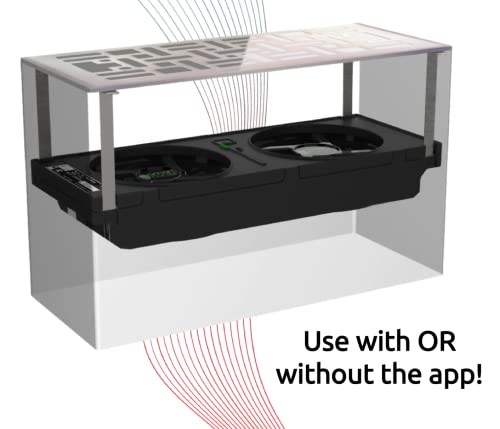
What sets this brand apart is the integration of smart controllers. When shopping, you need to decide if you want a standalone unit or a fully integrated ecosystem. Their controllers allow you to set specific triggers based on temperature or humidity. For example, instead of running a fan at 100% power constantly (which is loud and wastes energy), you can program the fan to ramp up only when a thermal probe detects a specific threshold.
Consider whether you need Wi-Fi connectivity for remote monitoring. If your environment is in a separate room or a basement, the ability to adjust fan speeds via a smartphone app is a massive advantage for long-term stability. If you are on a budget, a manual speed controller might suffice, but you lose the 'set it and forget it' precision that prevents environmental crashes.
Noise Profiles and PWM Control
In many environments, noise is a dealbreaker. AC Infinity utilizes PWM (Pulse Width Modulation) technology, which allows for much smoother speed transitions and quieter operation compared to traditional voltage controllers. When reviewing fan options, look for those that offer a wide range of speed increments. A fan that can run at a whisper-quiet 20% speed during the night cycle while still providing enough circulation is far superior to a fan that only has 'Off' and 'High' settings.
Keep in mind that as you increase the speed to combat higher temperatures, the decibel level will rise exponentially. If your workspace is also a living area, prioritize larger diameter fans running at lower speeds. Larger fans can move the same amount of air as smaller fans while spinning much more slowly and quietly.
Ducting and Compatibility
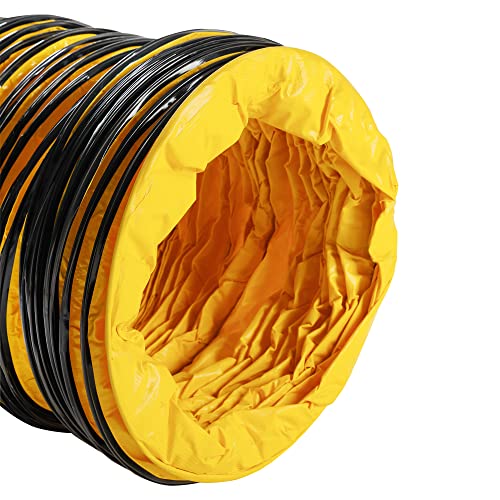
Finally, ensure the physical dimensions match your existing infrastructure. Fans are typically categorized by diameter (4-inch, 6-inch, 8-inch, etc.). However, do not forget to consider the length of the ducting. Longer runs of flexible ducting increase friction, meaning you may need to step up one size in fan diameter to maintain the same effective airflow you would get with a shorter, more direct setup. Matching the fan's output to the physical constraints of your ventilation path is the final step in a professional-grade installation.