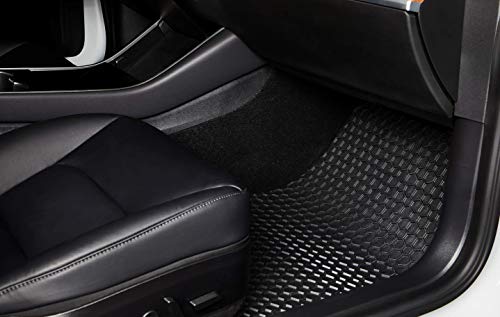
Material Composition and Durability
The primary reason to invest in professional-grade mats is the material quality. You should look for high-density, thermoplastic elastomer (TPE) or heavy-duty rubber compounds. These materials are preferred because they offer a balance of flexibility and rigidity. A mat that is too stiff will fail to contour to the footwell, leaving gaps where liquid can seep through. Conversely, a mat that is too soft will bunch up under your heels, creating a tripping hazard or interfering with pedal operation. Ensure the material is resistant to extreme temperature swings—you want a mat that remains pliable in freezing winters but won't become gummy or emit strong chemical odors during a scorching summer heatwave.
Coverage Area and Precision Fit
There is a significant difference between 'universal fit' mats and 'custom-contour' mats. Universal mats are often cheaper and can be trimmed with scissors, but they rarely provide complete protection. For true heavy-duty use, look for mats that feature high sidewalls. These raised edges are crucial for trapping liquids, sand, and spilled coffee, preventing them from running off the mat and soaking into the underlying vehicle carpet. When evaluating a set, consider whether the design covers the entire footwell, including the area under the pedals, to ensure that dirt cannot migrate into the crevices of your car's floor.
Surface Texture and Cleaning Ease
A great floor mat must be easy to clean, but it also needs to be functional while in use. Look for a surface texture that provides grip. Deep grooves or a pebbled pattern are excellent for trapping mud and snow, keeping the debris contained within the channels. However, avoid designs with overly complex, jagged patterns that are difficult to rinse out. The ideal mat is one where you can simply pull it out, hose it down, and have it dry relatively quickly. If a mat has deep, narrow valleys, it may trap fine silt that requires a brush to remove, which adds maintenance time.
Safety and Installation Security
Safety is the most critical factor in your decision. A floor mat that slides forward can wedge itself under the brake or accelerator pedal, which is a catastrophic failure. Always check for integrated retention systems. This might include heavy-duty nibbed backing that grips the carpet, or specialized clips that lock into your vehicle's existing floor anchors. If you are opting for a custom-fit style, ensure the mat's geometry respects the clearance of your pedals. A mat that feels 'locked in' is worth the extra investment to prevent any possibility of movement during driving.
Recommendation Logic
When making your final selection, use this logic: If you are a professional in a dirty trade (construction, landscaping, etc.), prioritize maximum sidewall height and high-density rubber. If you are a commuter looking for a cleaner aesthetic, look for a matte finish that hides scuffs well. Regardless of your use case, never compromise on the retention system. A mat that stays in place is the only mat that truly protects your vehicle.